Thomas Edison never worked in Dearborn, yet his most famous workshop stands there today. Henry Ford, his close friend, moved the Menlo Park lab from New Jersey to Michigan in the late 1920s.
Ford even hauled in New Jersey soil so the buildings would sit on the same dirt Edison walked on. For Michiganders, this is one of the most surprising pieces of history in the state, and it sits just a short drive from Detroit.
A New Jersey Lab With a Michigan Address
The sign out front may say Menlo Park, but the mailing address tells a different story. Menlo Park Laboratory sits inside Greenfield Village in Dearborn, MI 48124, in the United States.
Greenfield Village is part of The Henry Ford, a museum complex that collects American history under one roof and across many acres. The lab is one of the village’s best-known historic structures.
For Michigan families in the Detroit area, the trip is short. Folks coming from Lansing, Grand Rapids, or Flint can treat it as an easy day trip.
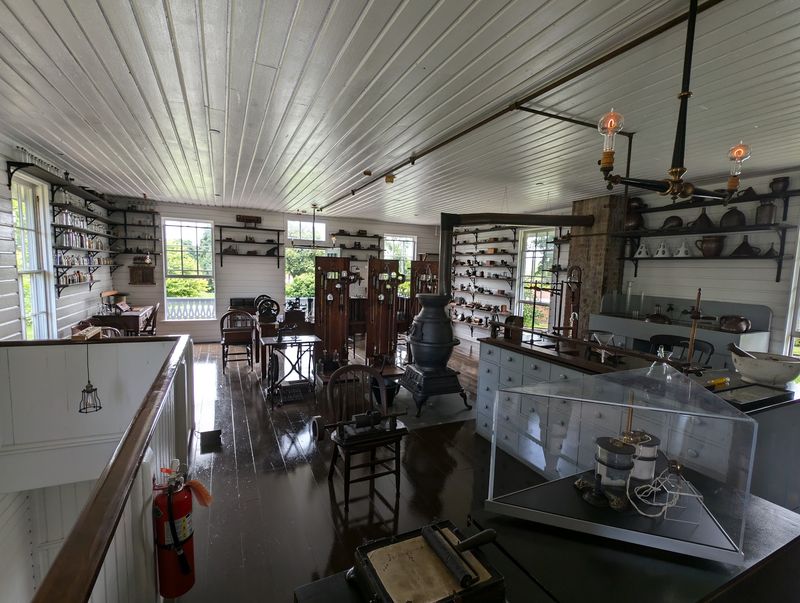
The building is a long, white, two-story wooden structure. It looks plain from the outside, which surprises many first-timers.
That plain look is part of the point. Edison wanted a working space, not a showpiece.
Inside that simple frame, some of the biggest ideas of the 1800s took shape. The next sections explain how it ended up in Michigan.
Edison’s Invention Factory
Long before Silicon Valley, there was a small New Jersey village with big plans. Thomas Edison opened his Menlo Park lab in 1876.
He called it a place for steady invention. His team worked on new devices at a pace few had seen before.
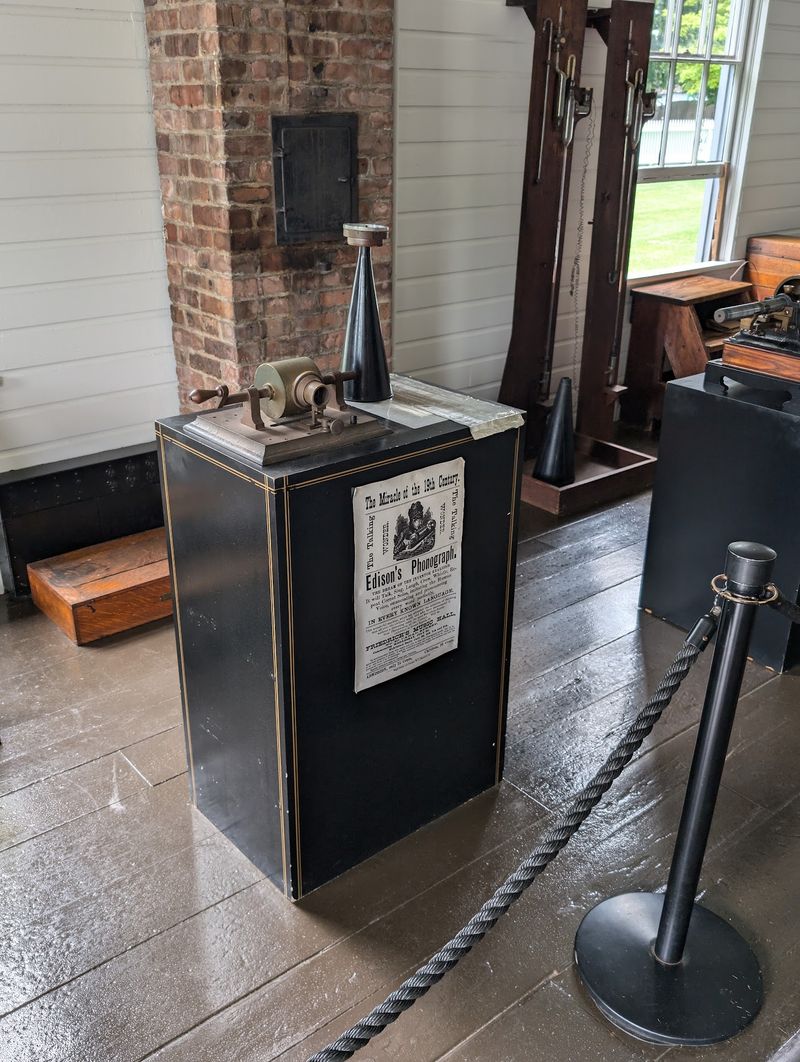
The phonograph came out of Menlo Park in 1877. The machine could record and play back sound, which amazed people at the time.
Edison’s work on a practical incandescent light bulb also happened there. In 1879, his team tested a bulb that burned for many hours.
Those achievements earned Edison a famous nickname. Newspapers called him the Wizard of Menlo Park.
The lab is often described as the first organized research and development facility. Teams, tools, and supplies were all gathered in one spot to solve problems.
That model shaped how companies still invent things today. Not bad for a wooden building in a farming area.
Henry Ford’s Gift to a Friend
Friendship can move mountains, or at least a laboratory. Henry Ford admired Thomas Edison deeply.
Ford had once worked for an Edison company in Detroit. Edison encouraged Ford’s early ideas about cars, and the two later became close friends.
When Ford built Greenfield Village, he wanted to honor American inventors and everyday life. Edison’s lab was at the top of his list.
By the late 1920s, the original Menlo Park site had fallen into poor shape. Ford collected the surviving buildings and parts and brought them to Dearborn.
He then rebuilt the complex as closely as possible to how it looked in Edison’s busiest years. Missing pieces were reconstructed.
The timing mattered. The rebuilt lab became part of a celebration in 1929 marking fifty years since the light bulb breakthrough.
Edison himself came to Dearborn for the event. The friendship story is a big reason this spot feels personal, not just historic.
Yes, Even the Dirt
Most collectors stop at furniture. Henry Ford kept going all the way down to the ground.
Ford had soil from the New Jersey site shipped to Dearborn. It was spread around the rebuilt lab so the buildings would rest on original Menlo Park earth.
That detail is the reason for the headline of this article. It is also one of the favorite trivia facts shared on tours.
Why go that far? Ford wanted the setting to be as authentic as he could make it.
He also gathered old equipment, bottles, and parts from the site. Some were dug up from old trash areas near the original lab.
The result is a re-creation with an unusual level of care. It is hard to find another historic building in Michigan with a backstory quite this dedicated.
Kids especially enjoy hearing that a famous car maker moved truckloads of dirt across several states. It turns a history lesson into a fun story they remember.
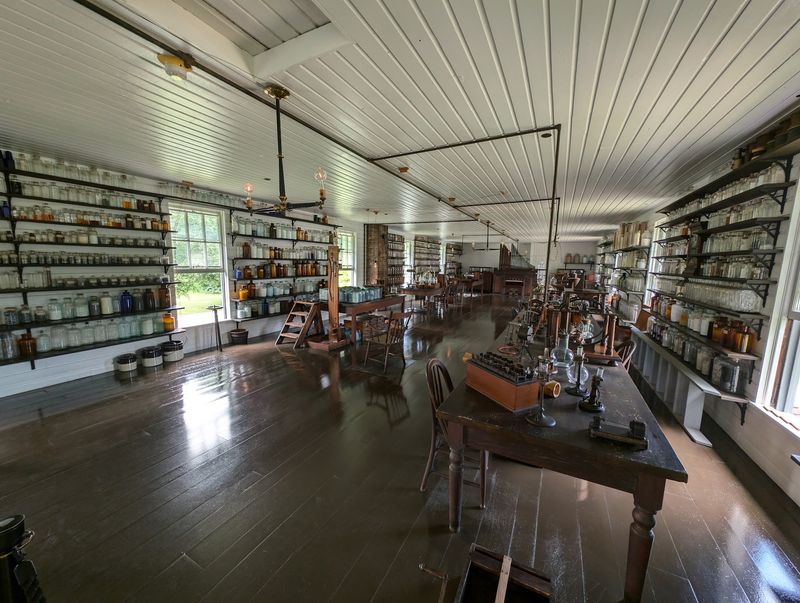
The Second Floor Workroom
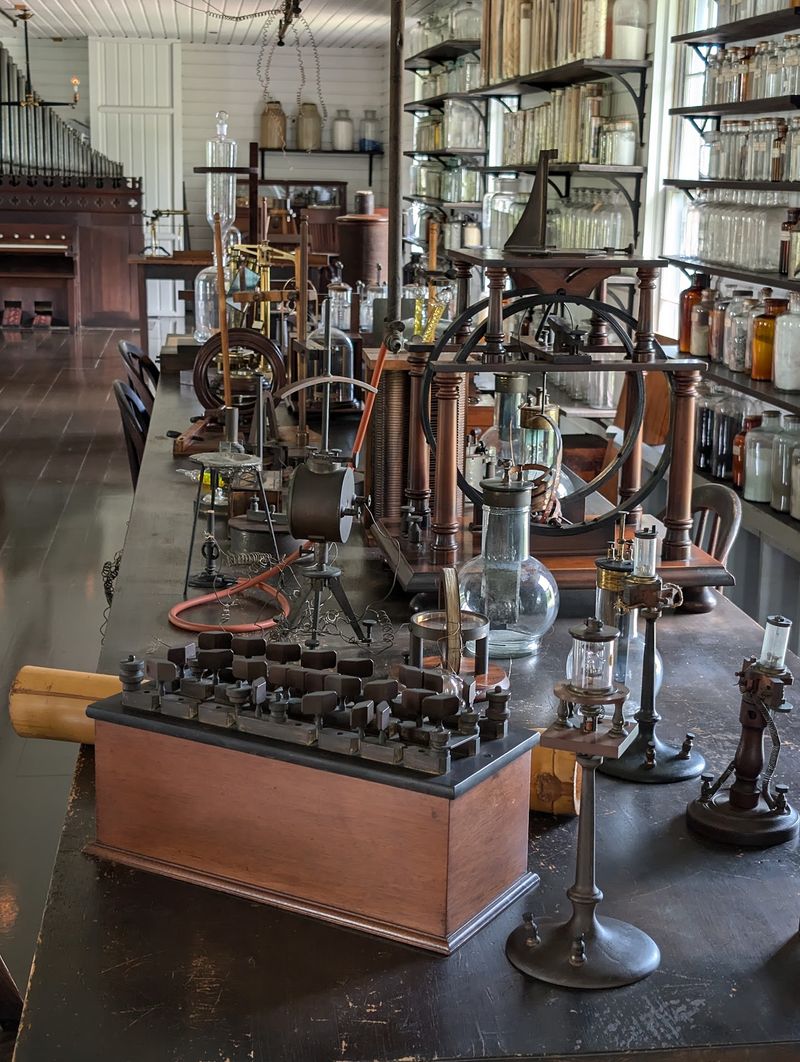
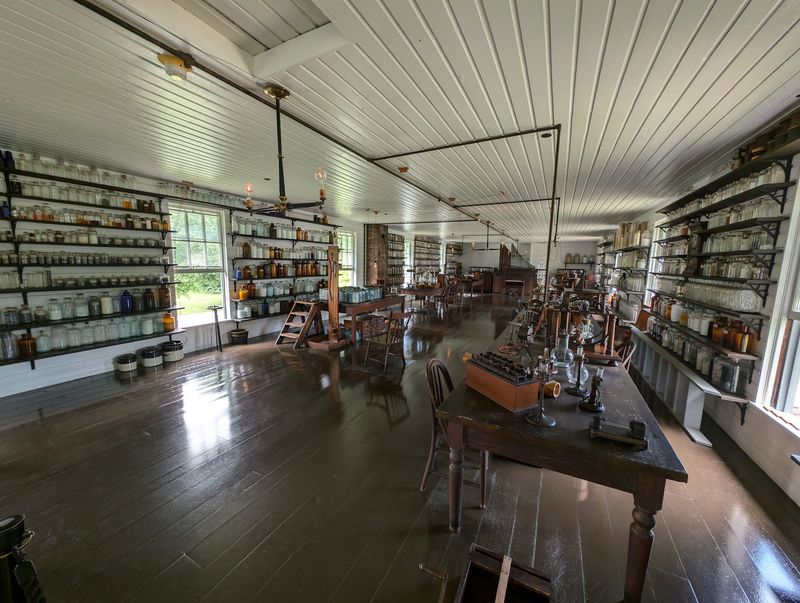
Upstairs is where the real magic happens, historically speaking. The second floor holds the long main workroom.
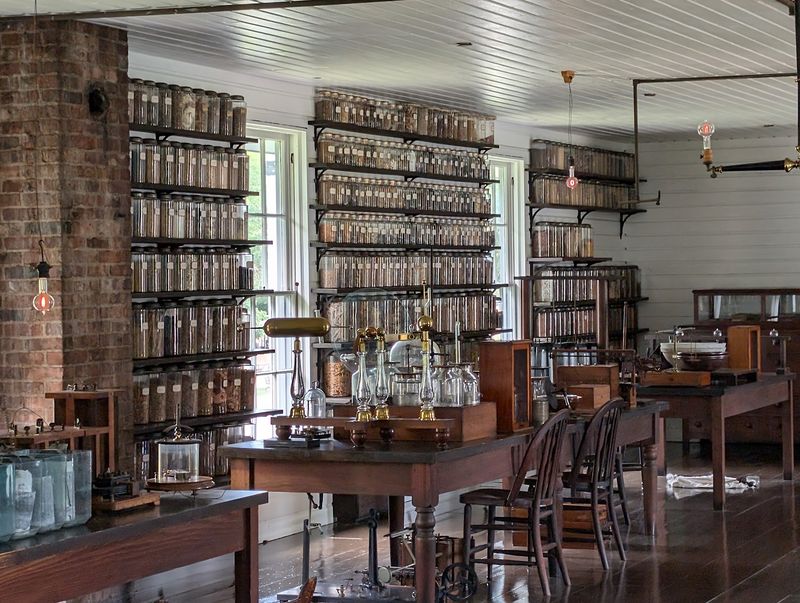
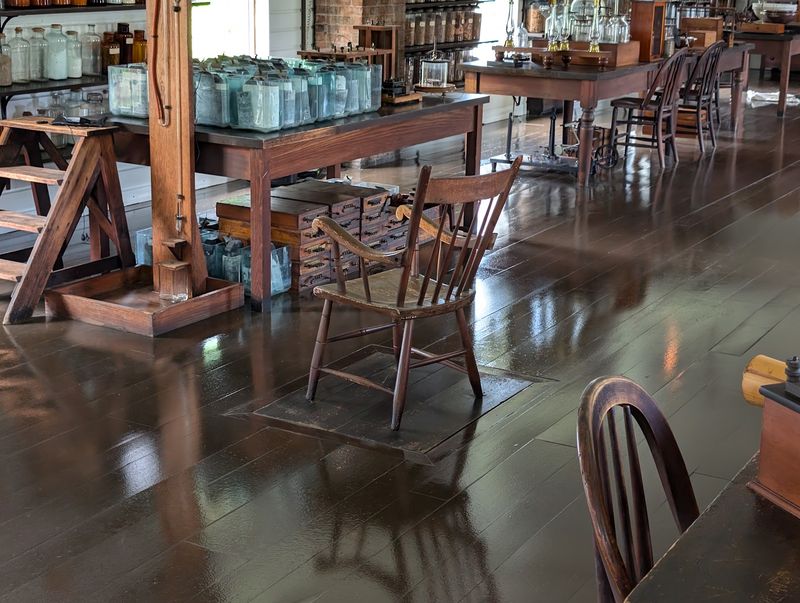
Rows of shelves are lined with glass bottles and jars. Wooden tables hold tools and equipment like those Edison’s team used.
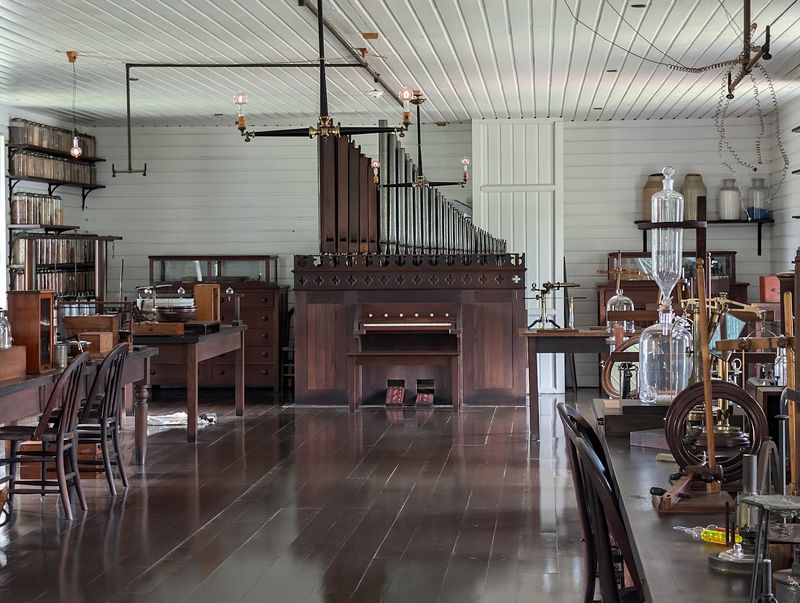
At the far end of the room stands a pipe organ. Workers reportedly gathered around it for music during long late-night sessions.
That little fact shows the human side of invention. Edison’s crew worked hard, but they also took breaks together.
The room is set up to show what a busy research space looked like in the late 1870s. Light streams in through many windows, since daylight was useful for work back then.
Staff in the building often explain the experiments that took place here. Their stories help connect the objects to the inventions.
Many guests linger upstairs longer than they planned. The room has a lot to take in, so slowing down pays off.
Phonograph and Light Bulb Moments
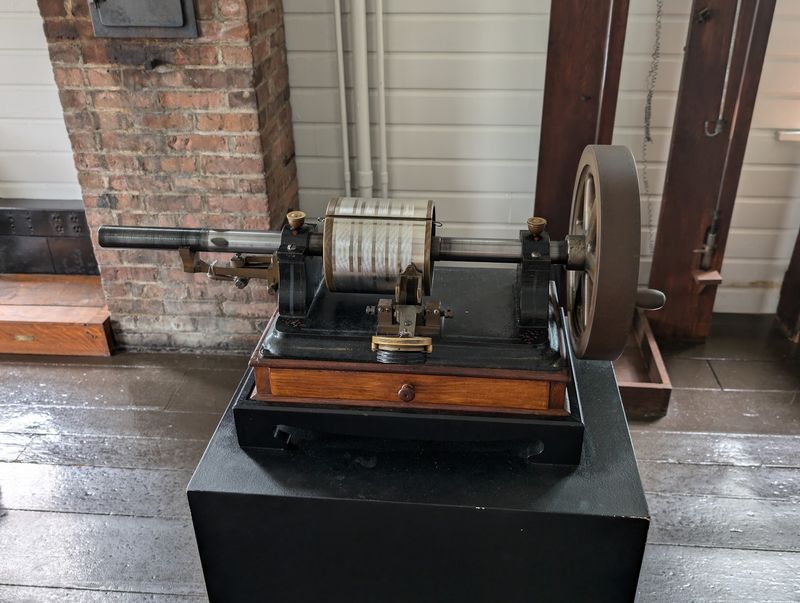
Two inventions put this lab in the history books, and both get attention here. The phonograph and the light bulb are central to the story.
The tinfoil phonograph was a simple machine with a hand crank. It used foil wrapped on a cylinder to capture sound.
Edison reportedly recited Mary Had a Little Lamb as an early test. That nursery rhyme became part of recording history.
The light bulb work was a team effort. Edison’s crew tested many materials before finding a filament that lasted.
Carbonized material eventually worked well enough to prove the idea. That success helped lead to electric lighting in homes and cities.
Demonstrations may be offered during a visit, though programs can change. It is wise to check the official website before heading out.
Seeing where these ideas began makes them feel less distant. A light switch at home suddenly has a much bigger backstory.
More Buildings Around the Lab
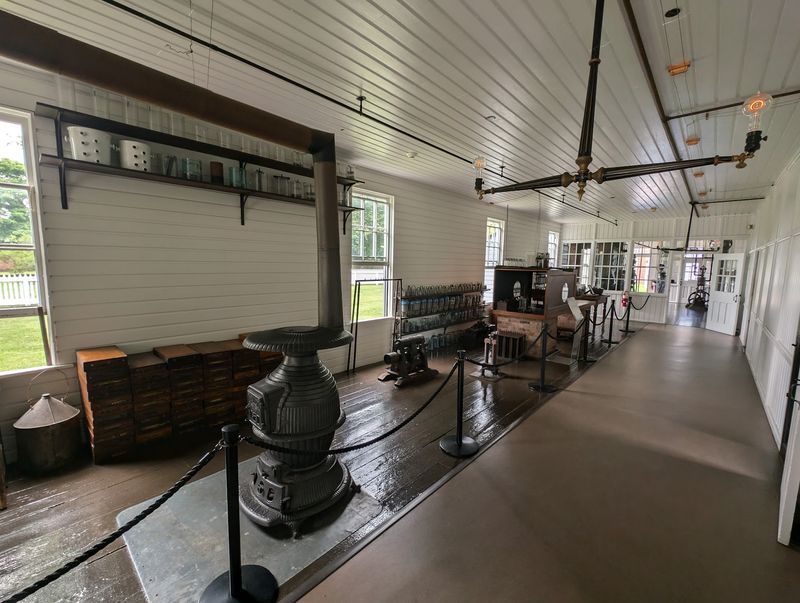
The lab did not stand alone in New Jersey, and it does not stand alone in Dearborn either. Several related buildings make up the Menlo Park area of Greenfield Village.
A brick office and library building sits nearby. It served as a place for business work and reference books.
A machine shop was also part of the complex. Skilled workers there built the parts needed for experiments.
Other small structures show how much support the main lab needed. Invention required materials, power, and plenty of hands.
Walking between these spaces shows the full scale of Edison’s operation. It was closer to a small campus than a single workshop.
Families can spend a good chunk of time in this corner of the village. Each building adds a new layer to the story.
Exact access to each structure can vary by day. Signs and staff in the area help point the way.
Who Gets the Most Out of It
Curious kids and history buffs tend to love this stop equally. The lab has something for nearly every age.
Students learning about inventors can see the real story come alive. Teachers often use Greenfield Village for field trips for that reason.
Retirees who enjoy American history will find plenty of detail. The Ford and Edison friendship adds a Michigan angle that feels close to home.
Science fans get a look at how early research teams worked. The room layout itself explains a lot.
The atmosphere is calm and focused compared with louder attractions. It suits people who like to ask questions and read signs.
Young children may need help understanding the big ideas. Short stories about the dirt and the pipe organ can keep them interested.
For multigenerational trips, this spot works well. Grandparents and grandkids can learn something together, which is a nice bonus.
Making a Day of Greenfield Village
A visit to the lab comes with a big bonus. It sits inside Greenfield Village, so there is much more to explore.
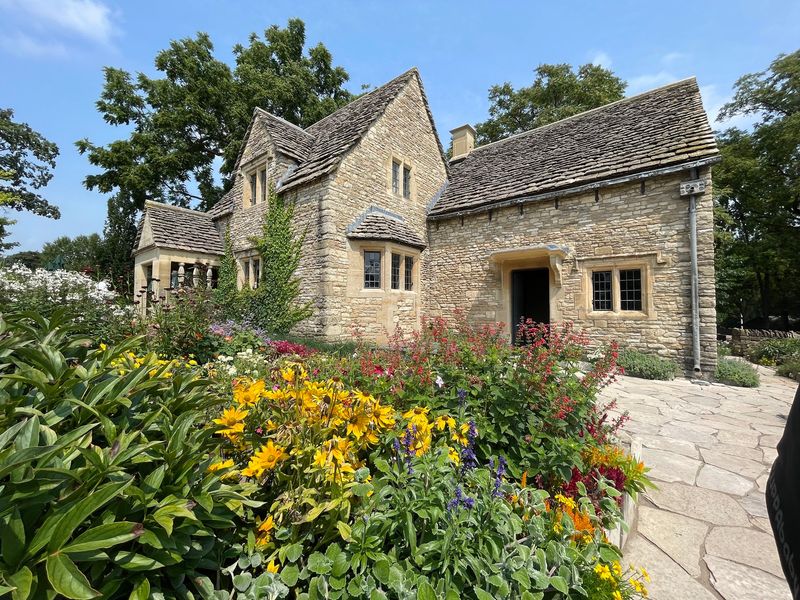
The village includes historic homes, shops, and workplaces gathered from around the country. Many tie into American innovation and daily life.
The Wright brothers’ cycle shop is also in the village. Henry Ford moved it from Ohio, another sign of his collecting habit.
Rides in historic vehicles and on a train are often offered, though some may cost extra. Details are best confirmed on the official site.
Plan for several hours if seeing the whole village. Comfortable shoes are a smart choice, since the grounds are spread out.
The Henry Ford Museum of American Innovation sits nearby too. Some families pair the two over a weekend.
Starting at the lab and branching outward makes a natural route. The Edison story sets the tone for everything else.
Practical Notes Before You Go
Good planning saves gas and time. Since the lab is inside Greenfield Village, entry requires village admission.
Greenfield Village typically operates on a seasonal schedule, with the main season running in warmer months. Hours and open days can change, so checking ahead matters.
Ticket prices vary by age and date and may change from year to year. The official website at thehenryford.org lists current rates.
Members of The Henry Ford often get admission included. Frequent visitors may find a membership worth it.
Dearborn is easy to reach by car from much of southeast Michigan. Parking is available on site, though a fee may apply.
Weekends and special events can get busy. Arriving early can make the lab visit calmer.
A quick look at the website the night before helps avoid surprises. That small step keeps the day on track.
Worth the Drive for Curious Michiganders
Few places let Michiganders stand where a world-changing idea began, without leaving the state. This lab makes it possible.
The building itself is modest. The story behind it is anything but.
Edison’s team changed how people hear, see, and invent. Henry Ford’s loyalty brought that history to Dearborn, dirt and all.
The visit fits well into a family day trip. It pairs naturally with the rest of Greenfield Village.
Budget-minded families should check current prices and plan for a full day to get the most value. Seasonal hours make timing important.
History lovers will leave with fresh trivia to share. Kids may leave wanting to build something of their own.
That might be the best result of all. A lab built for invention is still sparking ideas, now in Michigan.