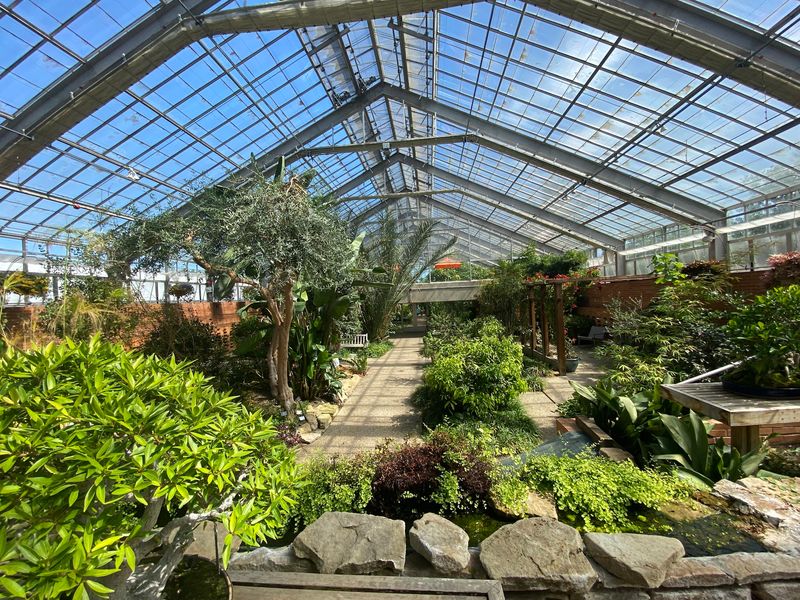
Plenty of Michiganders drive past Ann Arbor every year without knowing that a sprawling world of plants sits just off a quiet county road. There are deserts and tropical rooms under glass, trees older than your grandparents trimmed to the size of a coffee table, and nearly three miles of trails winding through prairie and woods.
The best part for budget road-trippers is simple: admission is free, and the only real cost is a few dollars for parking. It is the kind of outing that works in February, in October, and on a slow summer afternoon.
Families, retirees, photographers, and plant lovers all find something to do here. Keep reading to learn where it is, what to see first, when to go, and the one trail tip every Michigander should know before lacing up.
A Free Garden on Dixboro Road
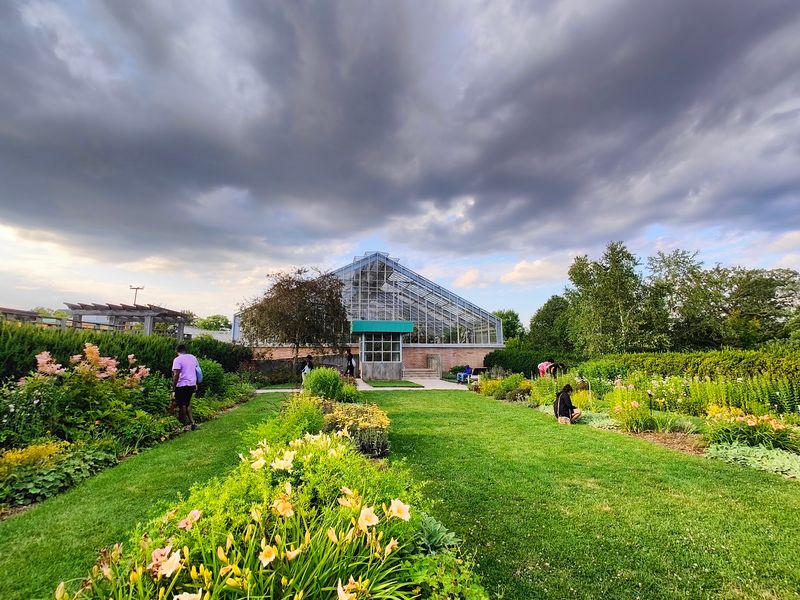
The mystery has a name, and it is Matthaei Botanical Gardens. You will find it at 1800 N Dixboro Rd, Ann Arbor, MI 48105, on the northeast side of town.
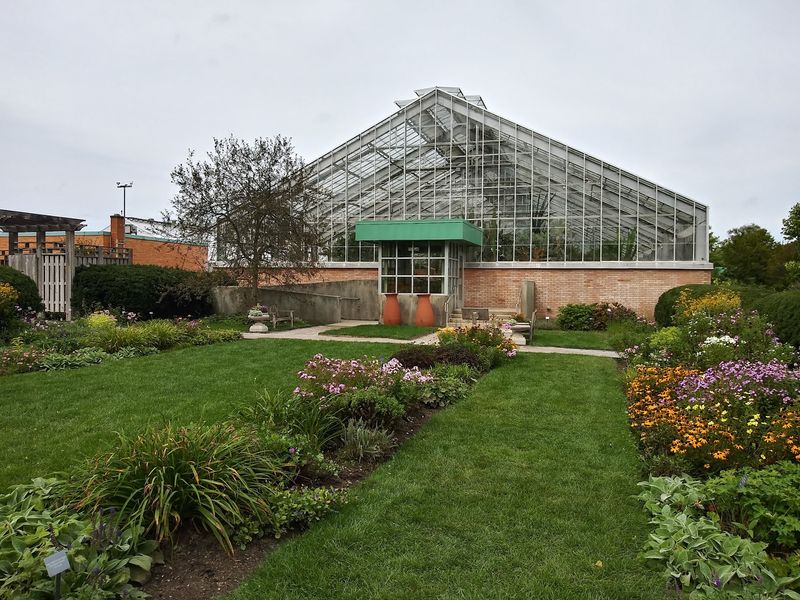
Run by the University of Michigan, the site combines sprawling gardens, woods, and prairies with a visitor center, a gift shop, and a conservatory. It is a botanical garden first, but it also works as a nature preserve for anyone who just wants a long, quiet walk.
Here is the headline for Michigan families watching their wallets. Admission to the gardens is free.
Parking is the main expense, listed at about $6 for the day or $2.40 per hour, and prices may vary over time. Gifts are optional, so a whole afternoon can cost less than a fast food lunch.
The place is far from a secret to locals, with thousands of glowing comments and an average of 4.8 stars. Yet for many Michiganders living a couple of hours away, it still flies under the radar.
That gap is exactly why it deserves a spot on your next day trip list. The drive pays off, and the next sections show just how much ground there is to cover.
University Roots and a Living Classroom
Some gardens are built for show, and this one was built to teach. The University of Michigan runs the property, and that academic connection shows up nearly everywhere you look.
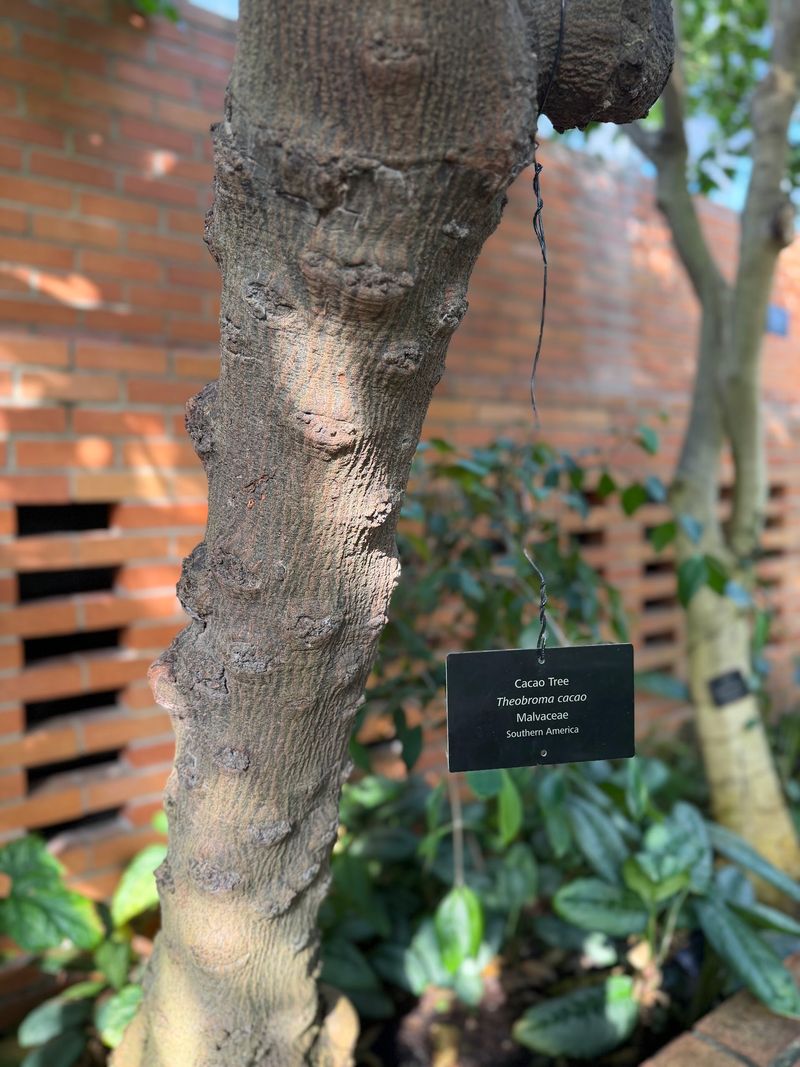
Plants in the arboretum carry labels explaining where they come from. Plaques and signs along the trails share facts and bits of history about the landscape around you.
School groups make regular trips here. Docents lead field trips, and teachers praise how organized and knowledgeable the guides are.
The grounds also hold the UM sustainability farm and the Native Student Association Garden. Those spaces add another layer to the visit, showing how the land supports research and community work.
Native plant nursery days pop up on occasion, along with educational events throughout the year. Memberships are available too, for anyone who plans to come back often.
Homeschool families, curious retirees, and kids who ask a hundred questions all fit right in. Learning here never feels like homework, which might be the smartest trick the university pulls off.
Three Climates Under One Roof
Two minutes. That is about how long it takes to go from desert plants to a humid tropical room inside the conservatory.
The building holds three attached greenhouse rooms: tropical, temperate, and arid. Each one shows off plants you may know well alongside rare species you have probably never heard of.
Cacti and unusual flowers fill the arid room. It is also the only room that skips the misting system, which sprays the other spaces roughly every fifteen minutes.
The tropical room has an elevated seating area with tables, though it is often taken. The temperate room offers a handful of benches and a small children’s play table with folding stools.
For Michiganders, the timing is the real value. A February visit here turns a gray winter weekend into a trip somewhere far warmer, without a plane ticket.
Plant lovers have spotted gardenia and Osmanthus here, flowers that are tough to find elsewhere in the state. Regulars notice small improvements every few visits, so the conservatory keeps giving people reasons to return.
Tiny Trees With Big Birthdays
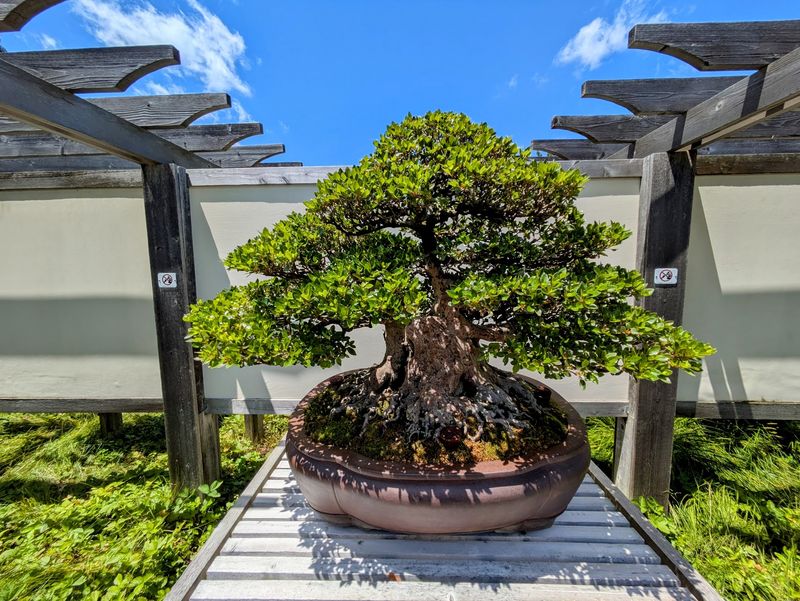
Small trees, long résumés. The bonsai garden is the single most talked about feature on the property, and it earns the attention.
Some of these trees are older than the people looking at them. They stay small through careful shaping and care that can stretch across generations.
Plenty of first-timers arrive thinking bonsai are a special kind of tree. They leave knowing these plants are hand-shaped and tended for years, sometimes hundreds of them, to reach their current form.
The collection draws praise from casual guests and longtime plant fans alike. Words like impressive and amazing come up again and again.
A few strong specimens also appear indoors, so the bonsai experience is not limited to fair weather. That makes it a reliable stop no matter what Michigan throws at you.
Give yourself extra time here. Each tree rewards a slow second look, and the details are easy to miss on a quick pass.
Prairie Paths and Fleming Creek
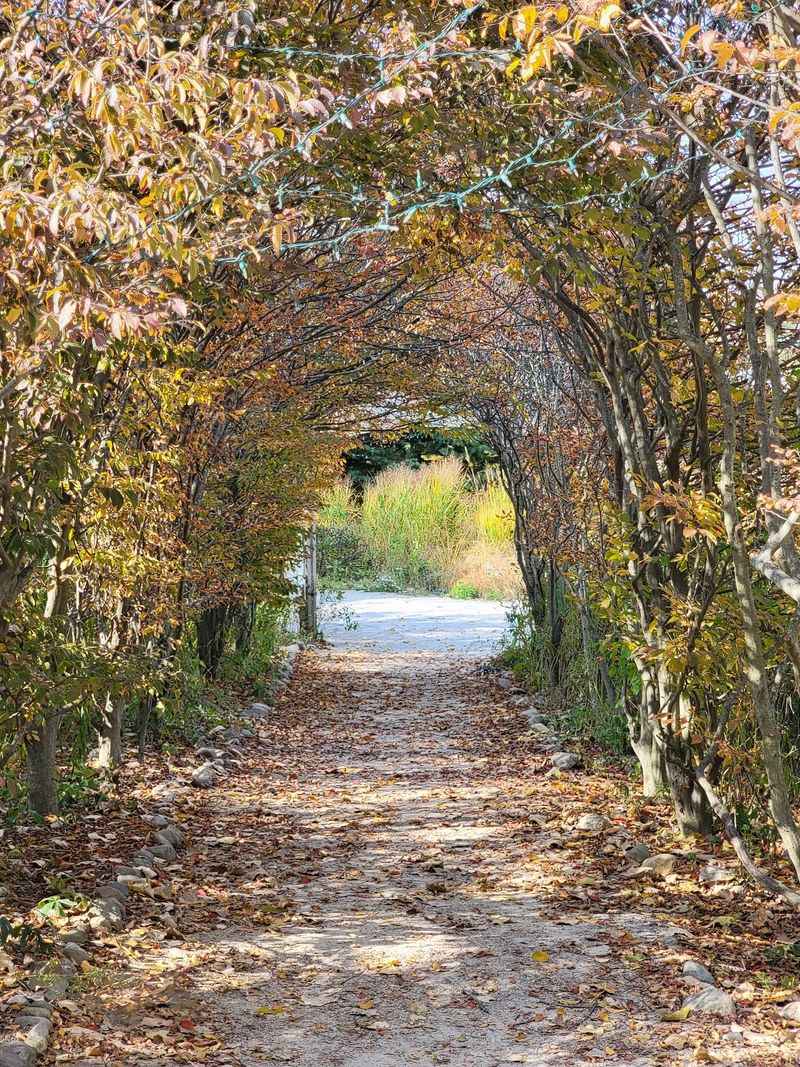
Almost three miles of trails wait beyond the buildings. They are the most mentioned part of the whole property, even more than the bonsai.
The prairie and Fleming Creek trails are quiet and easy to walk. A path along the water stands out as a favorite for many who come.
Routes can be short or long, so you can shape the outing around your energy level. That flexibility suits grandparents, young kids, and serious walkers in the same group.
A pond sits beside a small hill topped with viewing binoculars. A bridge crosses a stream that feeds the pond, and picnic tables and benches appear now and then along the way.
There are hiking and biking paths as well. The trails stay well kept, and fall color can be a strong draw.
Bird watchers like the spot, too. Even on busy days, the outdoor areas tend to feel calm and uncrowded, which is rare for a free attraction near a college town.
The Rattle You Should Respect
Here is the trail tip promised at the start. Michigan’s small but venomous massasauga rattlesnakes are regularly seen on these grounds.
Signs posted around the property point this out. The snakes are generally harmless when left alone and will rattle as a warning if you get close.
That rattle is quiet because the snakes are small, so keep an eye on the ground. Closed shoes are a must, and boots are an even better choice on the trails.
Good walking shoes are a smart idea anyway, given the miles of paths. Watch your footing and give any snake plenty of space.
These rattlesnakes are an important part of the local ecosystem. Respecting their home is part of the deal when you explore a natural area like this one.
None of this should scare families away. With sturdy footwear and a little attention, the trails stay a highlight rather than a hazard.
Kids, Peonies, and a Hallway Gallery
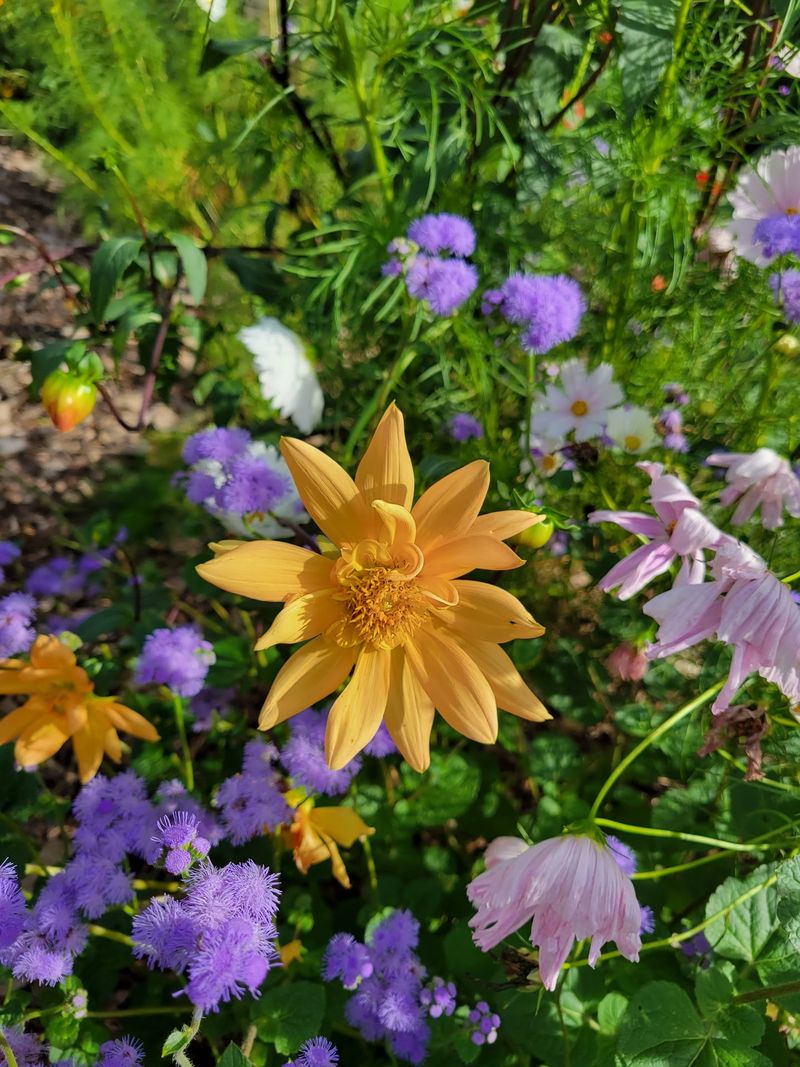
Little explorers get their own corner of the property. The children’s garden is a Montessori-style outdoor play area built for hands-on discovery.
It gives younger kids a spot to burn energy while adults catch their breath. Families often spend a few relaxed hours here together.
Spring brings a big reason to plan ahead. The gardens host a peony bloom event each spring that draws plenty of attention.
Outdoor formal gardens fill out in summer, and they are a favorite with photographers. Engagement sessions and summer wedding ceremonies happen here, though the public still wanders the grounds during those times.
Indoors, a row of paintings lines the hallway. Many people do not expect an art display at a botanical garden, which makes it a pleasant bonus.
The gift shop near the entrance sells books, coloring books, and nature kits. Stock rotates over time, so even regulars may find something new.
Hours, Parking, and Access Tips
Planning matters, especially for a long drive. The gardens are closed on Mondays.
From Tuesday through Sunday, hours run from 10 AM to 4:30 PM. Wednesday is the exception, with doors open until 8 PM, making it the best pick for a later start.
Indoor hours are also posted on the official website, so check before heading out. Schedules can change around holidays and events.
Parking runs about $6 for the day or $2.40 per hour, and the lot usually has open spots. Admission stays free.
Wheelchair users will find the site fully accessible. One note: the outdoor gardens use a lot of small gravel, which can be tricky in a manual chair.
Plan on at least a few hours. Covering almost everything can take four hours, and seeing every corner may stretch closer to six or seven.
Why the Drive Is Worth It
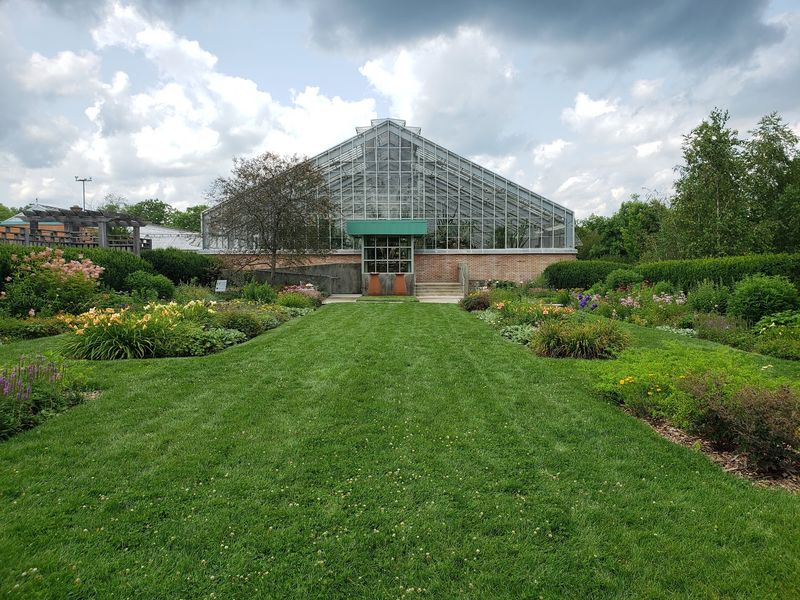
Few Michigan outings check this many boxes for so little money. Free admission, cheap parking, and a full day of things to see make a hard combination to beat.
The conservatory handles winter. The trails handle spring through fall, and the bonsai garden gives everyone a reason to slow down.
Quiet seekers find benches and tables for reading or writing among the plants. Families find a children’s garden, and photographers find year-round greenery.
People with mobility needs and temperature sensitivity have called it a lifeline during hard winters. That says a lot about how welcoming the place is.
Many regulars come back monthly just to watch the seasons change. Staff keep the grounds clean, well marked, and well maintained.
For Michiganders within an hour or two of Ann Arbor, the advice is simple: make the drive. Bring sturdy shoes, a friend, and enough time to wander without watching the clock.