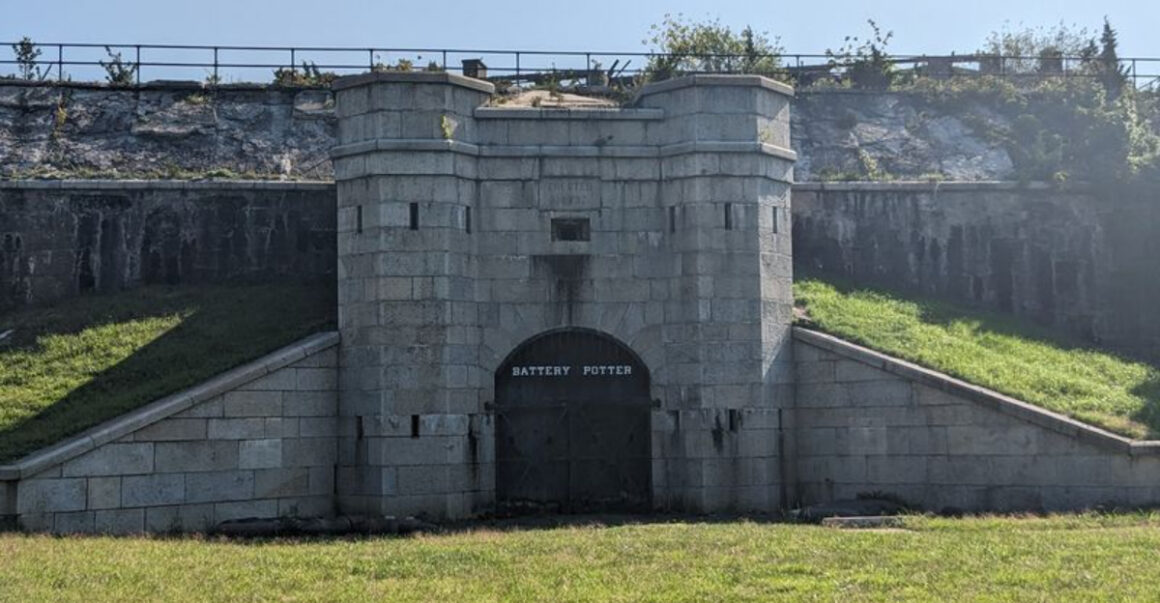
Sandy Hook has a talent for sneaking up on people. Plenty of visitors come for the beaches, the breezy bike rides, or the skyline views across the water, then suddenly find themselves standing in the middle of one of the most fascinating historic sites in New Jersey.
Fort Hancock is not some tiny plaque-and-cannon stop you breeze through in ten minutes.
It is a full-on former Army post with old gun batteries, weathered barracks, officers’ homes, parade grounds, and a lighthouse that has been doing its job since before the United States was even a country.
The setting only makes it better. One minute you are looking at brick military buildings and concrete defenses, and the next you are staring out at dunes, bay water, and open sky.
That contrast is exactly the magic here. If you like your history with a salty breeze, a little drama, and plenty to explore, this is one day trip that delivers.
Why Fort Hancock Still Feels Like a Step Back in Time
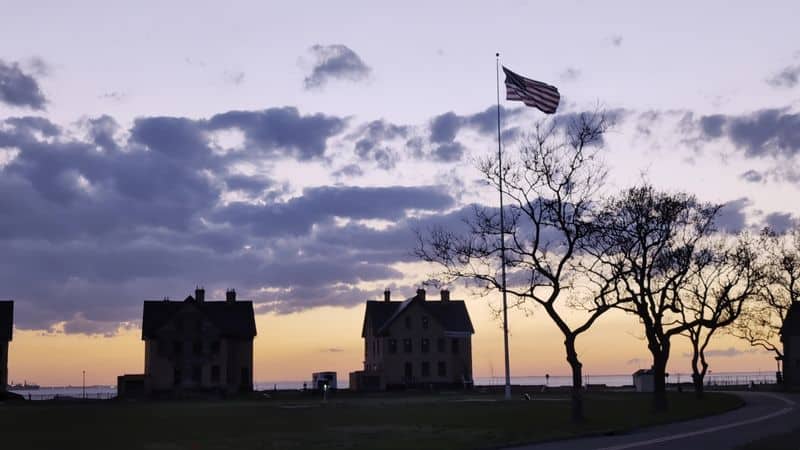
There are historic sites that feel polished and distant, and then there is Fort Hancock, which still carries the slightly haunting, wonderfully lived-in atmosphere of a place that once had a real daily rhythm. The old buildings are not tucked away behind ropes or buried inside a museum wing.
They stretch across the landscape in rows, giving you the sense that soldiers, officers, and lighthouse keepers only stepped away a moment ago. You can walk past red-brick quarters, wide lawns, and military structures that still make the original purpose of the place easy to read.
That is what makes it land so well. It does not feel like a history lesson with the edges sanded down.
It feels like a military post that has aged in public, right out in the salt air. Fort Hancock was developed as part of the coastal defense system protecting the entrance to New York Harbor, and much of that historic setting still survives in a way that is unusually immersive for New Jersey.
The Strategic New Jersey Outpost That Once Guarded New York Harbor
It is easy to underestimate Sandy Hook until you remember where it sits. This narrow strip of land helped control access to New York Harbor, which made it a serious strategic location for generations.
Fort Hancock was formally named in 1895, with the first modern batteries coming online in the 1890s as part of a nationwide push to strengthen coastal defenses. From here, military planners could monitor and defend one of the busiest and most important harbor entrances on the East Coast.
That bigger context gives the site its punch. You are not wandering some random old fort near the beach.
You are standing in a place designed to protect a major American gateway. The military story at Sandy Hook also stretches beyond one era, connecting colonial navigation, late 19th-century artillery, wartime readiness, and even missile defense in the 20th century.
For history lovers, that layered timeline is half the fun. Fort Hancock does not just represent one chapter.
It gives you a whole stack of them in one walkable place.
What Makes Battery Gunnison One of the Fort’s Most Memorable Stops
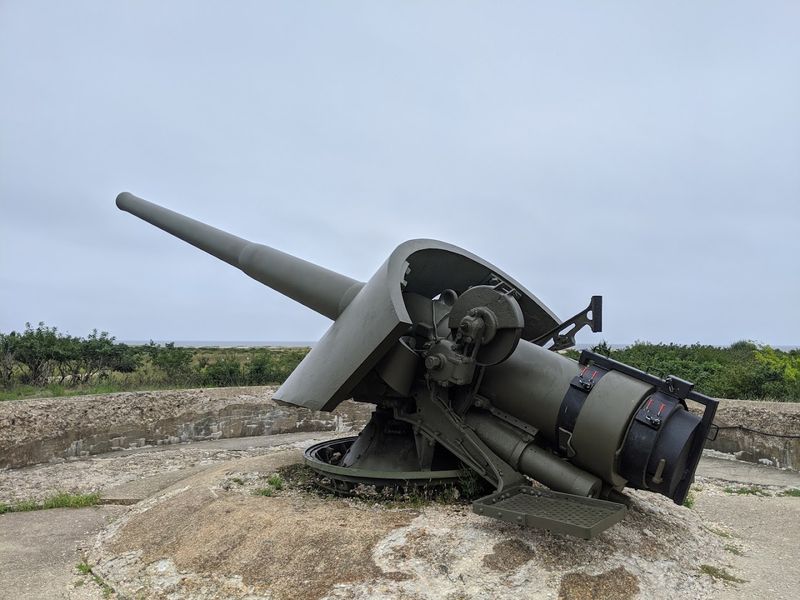
Even if you do not usually geek out over military hardware, Battery Gunnison tends to win people over fast. The structure has real presence, and once you get close, it becomes clear why this spot is such a standout.
The battery still retains two rare six-inch guns, which is a big deal because so many similar defenses were stripped, demolished, or altered beyond recognition over time.
Here, you can actually look at the machinery and get a feel for the scale, precision, and seriousness of coastal defense in the fort’s active years.
It is not abstract. It is right there in steel and concrete.
Better yet, the site has been restored to reflect its World War II-era appearance, so it offers more than just ruins and guesswork. Battery Gunnison has that sweet spot mix of visual drama and historical substance.
It looks impressive in photos, sure, but in person it gives you the rare feeling that you are seeing something remarkably close to the real thing rather than a vague echo of it.
The Stories Still Lingering Along Officers Row

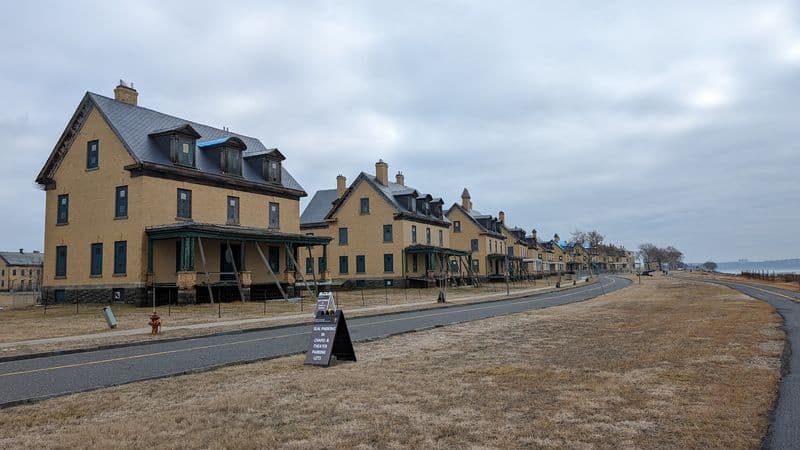
Few parts of Fort Hancock bring the human side of the post into focus quite like Officers Row. These handsome homes are a reminder that military history is not only about artillery, alarms, and defense strategy.
It is also about the people who lived on base, raised families here, kept routines, and built a community in a place defined by duty and isolation.
Walking past the houses, you can almost picture front porches in use, children on the lawns, and officers moving between domestic life and military work.
That is what makes this stretch of the fort so compelling. The architecture softens the harder edges of the site and shows how layered daily life must have been.
The nearby museum and restored house exhibits help connect those dots, offering a clearer sense of what it meant to live at Sandy Hook rather than simply serve there. For visitors, this area adds texture.
It turns Fort Hancock from a defensive complex into a place with personality, routines, and stories that still cling to the landscape.
Why the Sandy Hook Lighthouse Deserves a Stop on Your Visit
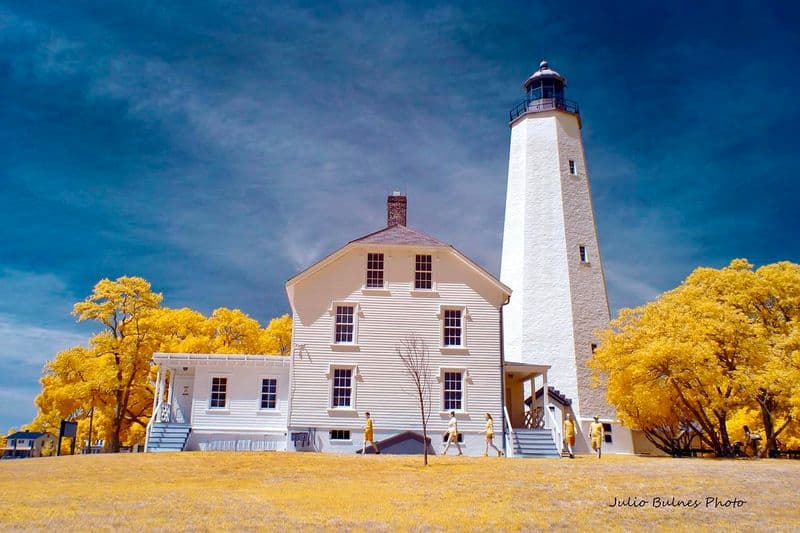
Skipping the lighthouse would be like going to a diner and ignoring the fries. Yes, Fort Hancock is the main event, but the Sandy Hook Lighthouse is part of what makes the whole visit feel special.
First lit on June 11, 1764, it is recognized by the National Park Service as the oldest operating lighthouse in the nation, which is the kind of detail that instantly upgrades a casual outing into a brag-worthy one.
The tower predates the American Revolution, and it still stands there doing exactly what it was built to do: guide ships toward New York Harbor.
That continuity is hard not to admire. The setting helps too.
The lighthouse has a clean, sturdy beauty, and the surrounding grounds make an easy contrast to the heavier military architecture nearby. Visiting both in the same trip gives you two sides of Sandy Hook’s history at once.
One side watched for danger. The other helped mariners get home safely.
Together, they tell a fuller story of this remarkable peninsula.
How Fort Hancock Blends Military History With Coastal Beauty
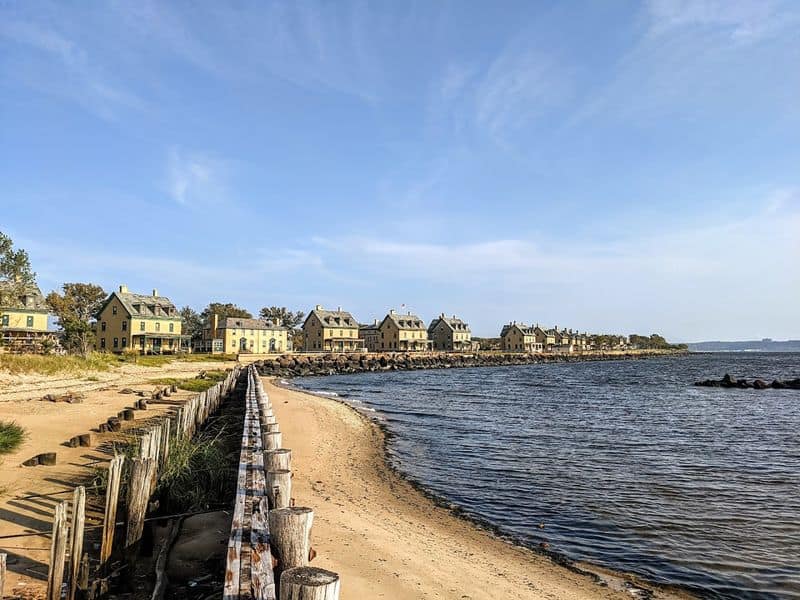
Not every historic site gets this lucky with its backdrop. Fort Hancock sits in a setting that feels almost unfairly photogenic, with dunes, beaches, bay views, and sea air softening what could otherwise be a stark military landscape.
That contrast is the secret sauce. You can spend part of your visit peering into gun emplacements and studying brick barracks, then turn around and catch gulls wheeling over the water.
The site never lets you forget that all this history unfolded on a narrow, wind-beaten spit of land surrounded by shifting sand and tide. Sandy Hook’s geography is not just scenic.
It is central to why the fort, lighthouse, and maritime structures existed here in the first place. Even the lighthouse’s position has changed relative to the tip of Sandy Hook over time because of littoral drift, which says a lot about how dynamic this place has always been.
It is one of those rare New Jersey outings where the landscape and the history are equally interesting and constantly playing off each other.
The Best Ways to Explore the Grounds Like a History Lover

The smartest way to do Fort Hancock is to slow down just enough to notice how much is packed into the grounds. This is not a sprint-through site.
It rewards wandering, backtracking, and letting your eye get pulled from one structure to the next. Start with the historic core so you can get your bearings, then move toward one of the batteries and make time for the lighthouse area too.
That route gives you architecture, military engineering, and maritime history in one sweep.
History lovers should also keep an eye out for the little details that make the visit feel less generic: old signage, the spacing of the buildings, the way the roads and lawns lay out the former post, the sheer heft of the concrete defenses.
Fort Hancock is open within the Sandy Hook unit of Gateway National Recreation Area, and some interpretive sites and museum spaces run on limited hours, so it pays to check what is open before you go. A little planning helps, but curiosity does most of the work here.
Why This Sandy Hook Landmark Belongs on Every New Jersey Bucket List
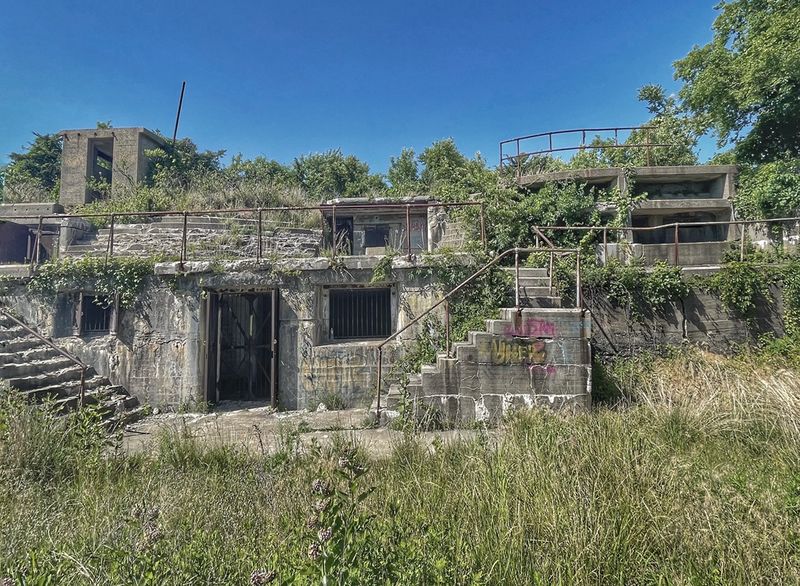
New Jersey has no shortage of shore destinations, but Fort Hancock offers something a lot of them do not: a day trip that feels genuinely distinct.
You get beach-town scenery without the usual boardwalk template, and you get serious history without the stuffiness that can make some heritage sites feel like homework.
There is scale here, variety here, and enough texture to keep both casual visitors and full-blown history nerds happy. One part of the appeal is that the site does not try too hard.
The old buildings, batteries, parade grounds, and lighthouse speak for themselves. Another part is location.
Being out on Sandy Hook gives the whole experience a windswept, edge-of-the-map quality that sticks with you long after you leave. If your idea of a great New Jersey outing includes scenery, stories, and the pleasure of finding something that feels a little overlooked, Fort Hancock absolutely earns a place on the list.
It is local history with muscle, atmosphere, and just the right amount of salt in the air.