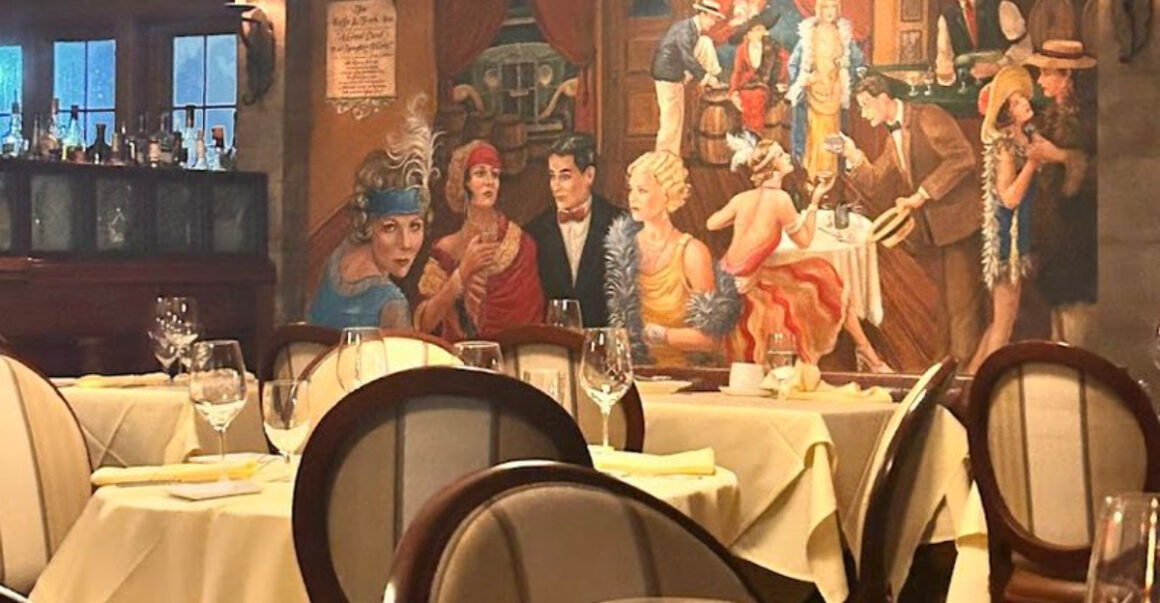
Atlantic City has never been shy about spectacle, but Knife and Fork Inn plays a different game. Tucked at the meeting point of Atlantic, Pacific, and Albany avenues, this white-stucco landmark feels less like a trendy night out and more like a surviving piece of the city’s wilder past.
Opened in 1912 as an exclusive men’s drinking and dining club, it lived through Prohibition, political power plays, celebrity dinners, and a major restoration that leaned hard into its old-school roots. Walk in, and the mood shifts immediately.
The ceilings soar, the wood glows, the cocktails arrive with purpose, and suddenly dinner feels like an event again.
A night at Knife and Fork Inn feels like old Atlantic City come alive
Few places in Atlantic City still carry themselves with this much old-money swagger. Knife and Fork Inn has been part of the city’s story since 1912, when it opened as a private club for powerful local men, including figures tied to the city’s early political machine.
That alone would make it interesting. What makes it memorable is how alive it still feels.
This is not a preserved relic sitting behind velvet rope. It is a working restaurant where the past shows up in the architecture, the mood, and the little rituals of a long dinner done properly.
The location matters too. It stands where Atlantic, Pacific, and Albany avenues converge, so it feels planted in the middle of old Atlantic City history rather than dropped in later for effect.
Even before the first sip or first course, the place gives off the sense that it has seen things, and honestly, it probably has.
The building alone makes this restaurant worth the trip
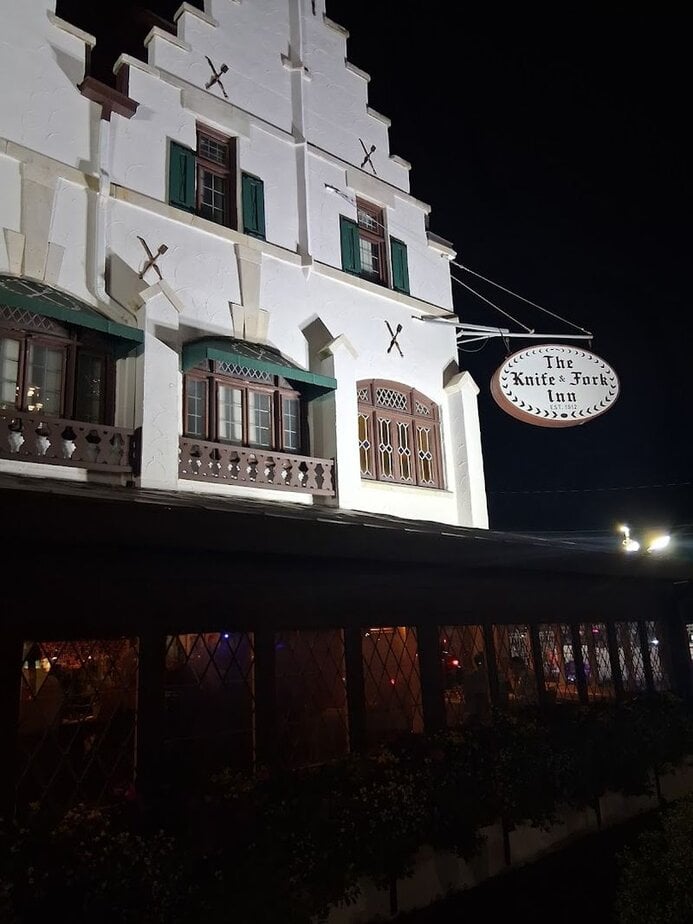
From the curb, this place already has main-character energy. The exterior is bright white stucco with a red-tiled roof and dramatic gables that make it stand out in a city better known for casino flash than architectural restraint.
Then you step inside and the details start doing the real work. The 2005 renovation was designed specifically to recapture the look and feel of the restaurant’s Prohibition-era roots, bringing back rich mahogany millwork, hand-painted ceilings, a sweeping staircase, and lush dining rooms.
In other words, the building is not merely old. It has been carefully restored to feel like itself again.
That is a big difference, and you can sense it right away. Nothing feels gimmicky or stage-set fake.
The rooms have weight. The materials have age.
Even the layout suggests a time when dinner out meant dressing up, sitting down, and staying awhile. Atlantic City has plenty of loud entrances.
This one wins by not needing to shout.
Inside the Prohibition-era charm that still defines the dining room
The atmosphere here lands somewhere between supper club, grand old inn, and the kind of place where secrets once traveled faster than the cocktails.
Historically, the second floor included curtained dining alcoves and a separate ladies lounge, while upper floors were used for gambling and other not-so-innocent pursuits.
During Prohibition, members reportedly kept the drinks flowing until federal agents finally raided the bar and destroyed its contents. That backstory could easily turn into kitsch somewhere else.
Here, it just deepens the room. You can feel the restaurant’s past without being hit over the head with it.
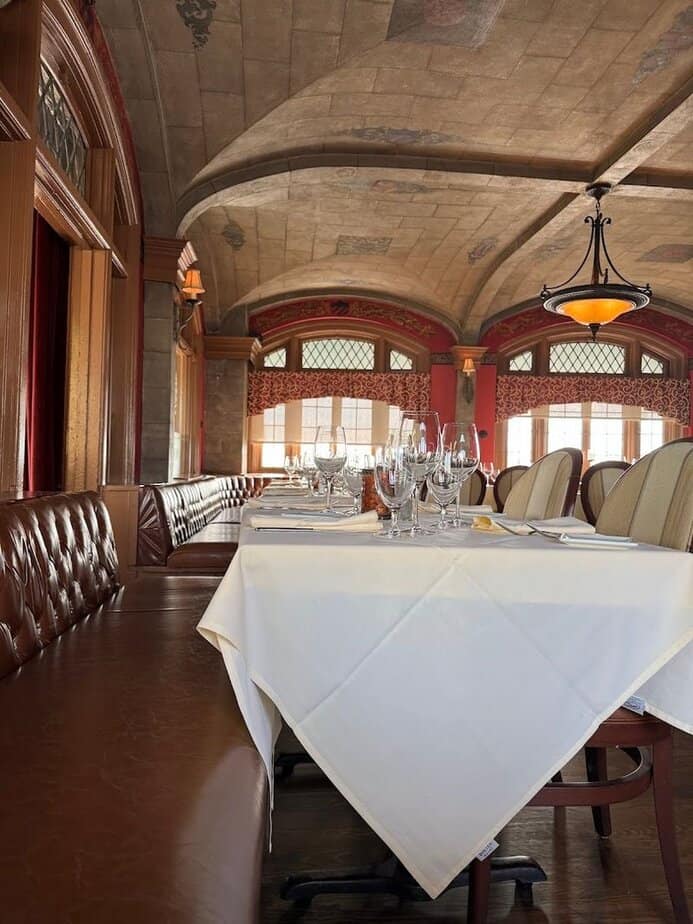
The vaulted ceilings, arched windows, warm wood, and formal dining rooms all work together to create a sense of occasion that feels earned. It is elegant, yes, but not stiff.
You do not need to whisper. You just naturally sit up a little straighter.
That is the sweet spot this place hits so well. It feels historic without turning the evening into homework.
Steaks seafood and cocktails are part of the throwback appeal
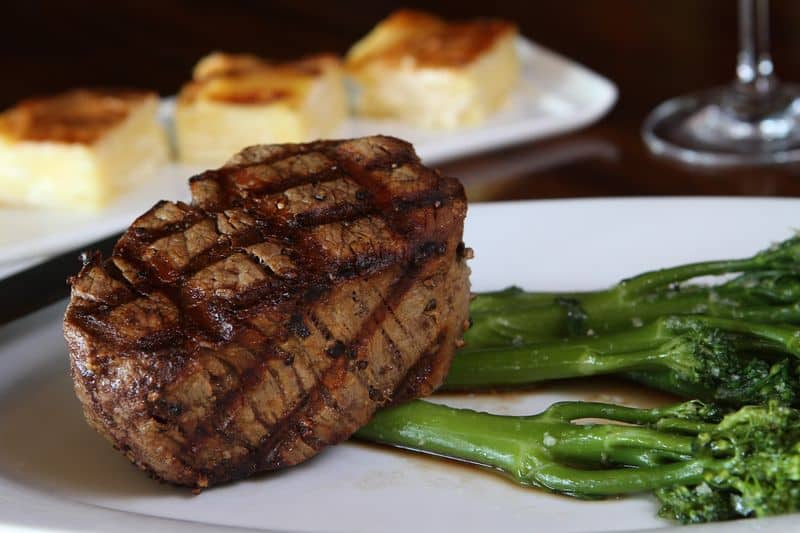
A room this good would be wasted on forgettable food, and thankfully that is not the case here. Knife and Fork Inn leans into classic steakhouse territory with the confidence of a place that knows exactly what people came for.
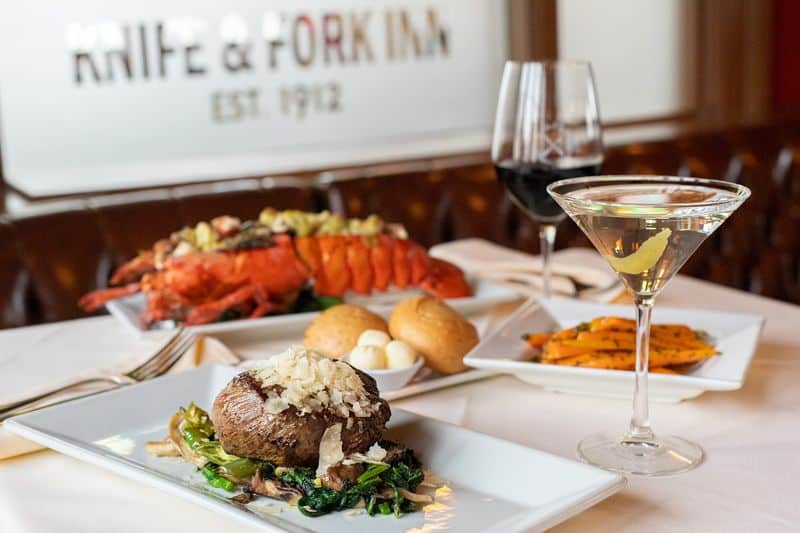
The current menu runs from oysters on the half shell, shrimp cocktail, and lobster bisque to halibut, king salmon, jumbo lump crab cake, lobster Thermidor, and a surf-and-turf style beef and reef with lobster tail and filet mignon.
Even the side dishes sound properly indulgent, from pommes soufflé to goat cheese au gratin potatoes.
Then there are the drinks, which keep the old-school mood going without feeling dusty. The cocktail list includes a house drink called The 1912 and a High Roller Manhattan built with WhistlePig rye, Cardamaro, Antica, and walnut bitters.
That is exactly the right kind of drama for a place with this history. Dinner here is not trying to reinvent the wheel.
It is polishing it beautifully.
Why this historic spot still stands out in a city built on spectacle
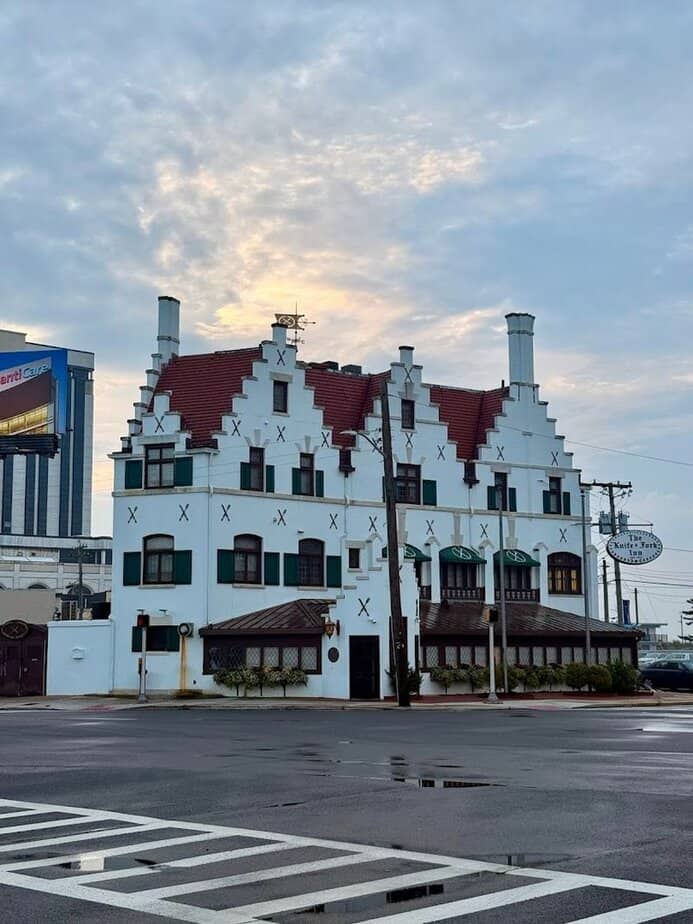
Atlantic City is full of places that try very hard to get your attention. Knife and Fork Inn does something smarter.
It lets its history, design, and consistency do the talking. Over the decades, it has survived Prohibition, the Depression, changing ownership, the arrival of casino culture, a closure in 1997, a reopening in 1999, and a major revival under the Dougherty family.
Along the way, it built a guest list that included politicians, wealthy vacationers, and celebrities such as Frank Sinatra, Bob Hope, and Vic Damone. It even appeared in the film Atlantic City, with Burt Lancaster and Susan Sarandon dining on the porch now known as the Terrace.
That kind of résumé could make a place self-important. Instead, it gives the restaurant a grounded kind of confidence.
In a town that constantly reinvents itself, this is one of the rare spots that feels anchored. It stands out because it knows exactly what it is and never needed a neon sign to prove it.