
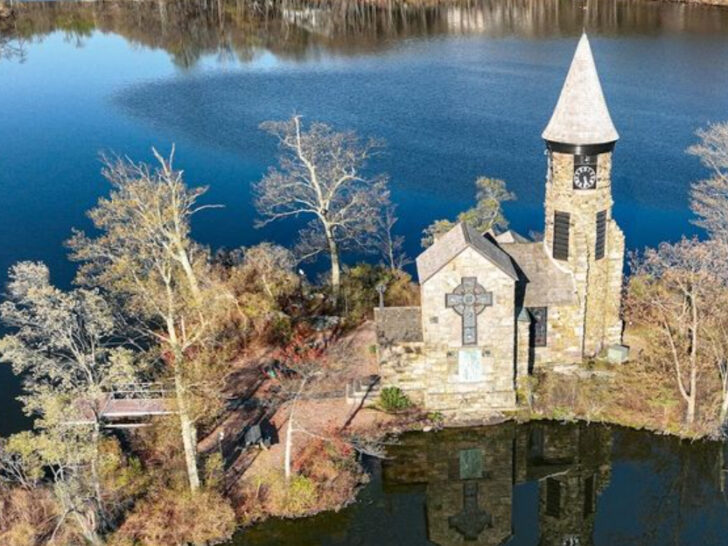
You expect grand old churches to sit on a town square or at least near a road. St. Hubert’s Chapel does neither.
Tucked away in Kinnelon, this tiny stone chapel sits on its own island, surrounded by water, trees, and the kind of hush that makes you instinctively lower your voice. Getting there by boat only adds to the mystique.
Then there’s the design history, which includes Louis Comfort Tiffany and enough Gilded Age backstory to make the place feel even more unreal. In a state better known for diners, boardwalks, and busy highways, this little chapel feels like a beautiful plot twist.
It’s one of those New Jersey spots that seems almost made up until you actually see it.
Why St. Hubert’s Chapel Feels Like a Fairy Tale in Real Life
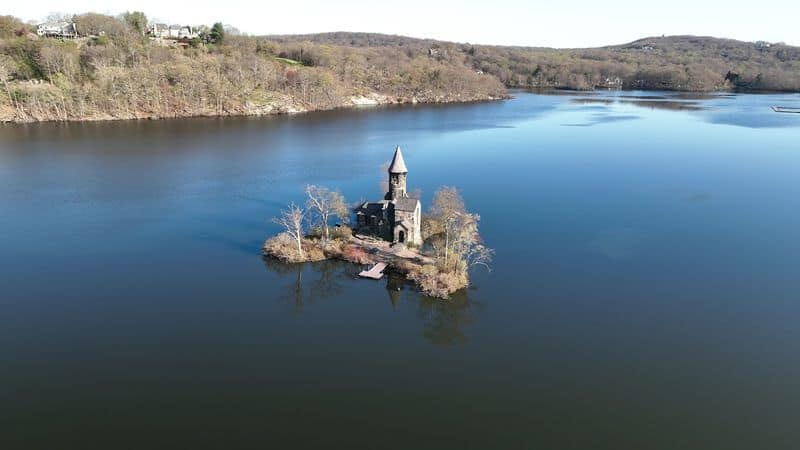
This is the kind of place that makes even lifelong New Jersey residents do a double take. A small stone chapel on its own island already sounds fictional, and then you see the steep rooflines, the ivy-friendly walls, and the surrounding lake, and it somehow gets even better.
Nothing about it feels ordinary or overexposed. Part of the magic is the scale.
St. Hubert’s Chapel isn’t huge or flashy. It’s compact, tucked into the landscape, and all the more memorable because of it.
Instead of trying to dominate its setting, it looks like it belongs there, like it rose out of the rocks and trees on its own. Then there’s the stillness.
Water softens everything. The wooded shoreline closes in around the lake.
In the right light, the whole place looks less like a landmark and more like a secret. New Jersey has plenty of surprises, but this one feels especially improbable in the best possible way.
The Boat Ride That Makes This New Jersey Chapel Even More Special
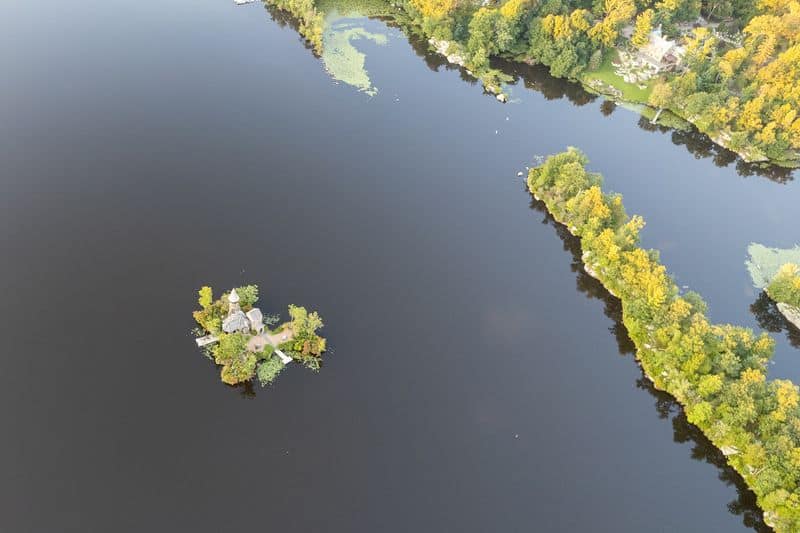
Half the charm starts before you even arrive. You do not simply stroll up to St. Hubert’s Chapel from a parking lot with a coffee in hand.
The chapel sits on Chapel Island in Lake Kinnelon, and that extra layer of separation changes the whole experience. Reaching it by boat makes the visit feel more intentional, more memorable, and honestly a little dramatic.
There’s something old-school and cinematic about approaching a chapel across the water. The building appears gradually, framed by trees, stone, and reflections on the lake.
That slow reveal matters. It gives the place an entrance worthy of its reputation.
It also helps preserve the mood. No traffic noise.
No busy sidewalk scene. No strip mall energy sneaking in from around the corner.
Just water, quiet, and this beautiful little structure waiting on the island. In a densely packed state where so much feels accessible in the most practical way possible, a place that requires a boat automatically feels rarer, stranger, and a lot more magical.
How Louis Comfort Tiffany Helped Turn a Tiny Chapel Into a Masterpiece
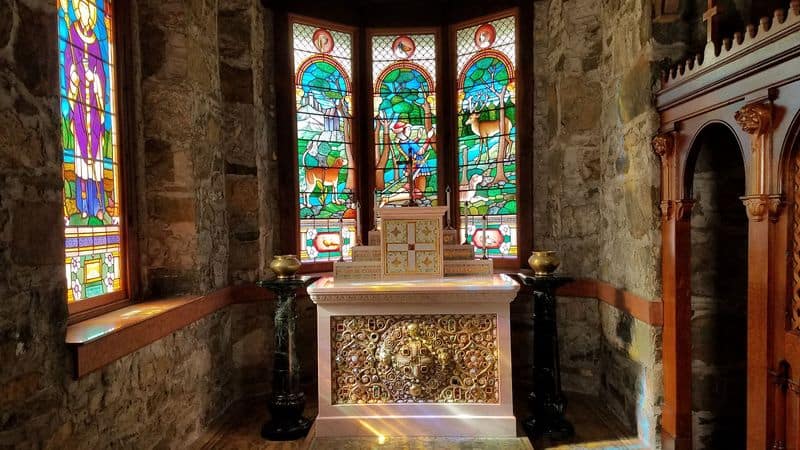
The chapel’s size might be modest, but the design pedigree is not. St. Hubert’s is tied to Louis Comfort Tiffany, one of the most recognizable names in American decorative arts, and that connection gives the building an entirely different layer of significance.
Suddenly this isn’t just a pretty lakeside chapel. It’s a place shaped by serious artistic ambition.
Tiffany’s involvement is part of why the chapel feels so carefully considered. The details matter here.
Materials, light, color, proportion—nothing reads as accidental. Even from the outside, you get the sense that this was meant to be more than a simple place of worship.
It was supposed to be beautiful, atmospheric, and deeply personal. That artistic sensibility still comes through more than a century later.
The chapel doesn’t rely on size to impress anyone. It wins you over with craftsmanship and mood.
In a state full of historic buildings, St. Hubert’s stands apart because it combines intimacy with design-world credibility, which is not exactly a combination you run into every weekend.
The Gilded Age Story Behind This Hidden Kinnelon Landmark

A lot of New Jersey history hides in plain sight, but this one comes with genuine Gilded Age flair. St. Hubert’s Chapel was built for Francis S.
Kinney, the tobacco magnate behind the vast Kinney estate in Kinnelon. That estate, known as Smoke Rise, reflected the era’s appetite for grand retreats, curated landscapes, and architecture that made a statement without needing a downtown audience.
The chapel was created as a memorial to Kinney’s son, which gives the site a more intimate and emotional origin than you might expect from a Gilded Age project. That mix of wealth, grief, artistry, and setting is part of what makes the place so compelling.
It isn’t just decorative. It has a personal story at its core.
And unlike plenty of old mansions and estate structures that now feel detached from their original context, this chapel still feels rooted in its world. The lake, the island, the surrounding woods—they all help preserve the mood of another era without turning the place into a museum piece.
What Makes the Island Setting So Unforgettable in Every Season
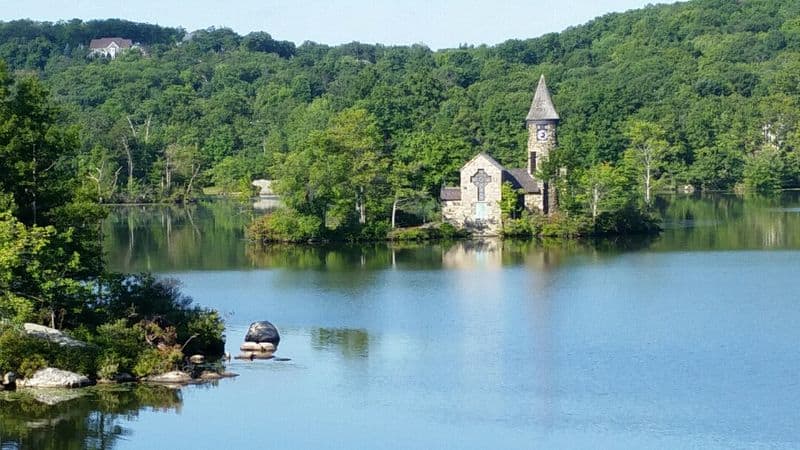
Plenty of historic sites look good in one perfect month and then fade into the background the rest of the year. This one changes character with the seasons and somehow stays impressive in all of them.
In spring, the lake and surrounding greenery make the chapel look freshly discovered. Summer gives it that full, lush, almost hidden-in-the-woods feeling.
Fall might be the real showstopper. North Jersey knows how to do foliage, and a stone chapel ringed by fiery trees is almost unfair.
The reflections in the water only make it more photogenic. Then winter shows up and strips everything back, which works in the chapel’s favor too.
Bare branches, gray skies, maybe a dusting of snow—the whole place takes on a quieter, more haunting beauty. That seasonal range is part of why the setting sticks with people.
It never feels flat or generic. The island location creates its own little world, and each season rewrites the atmosphere without taking away the charm.