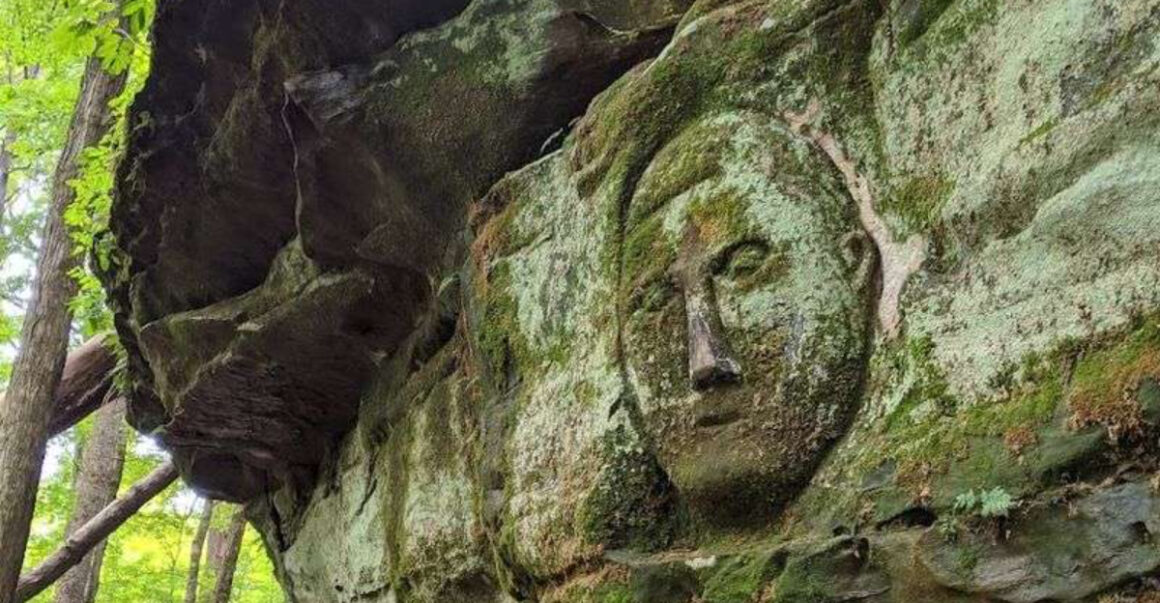
Hidden in Hinckley Reservation, Worden’s Ledges feels like stumbling into a secret gallery carved into sandstone. The forest hush gives way to faces, ships, and dates etched right into the rock, each with a story that invites you closer.
It is short, easy to reach, and unforgettable, especially when leaves crunch underfoot or moss brightens after rain. If you have ever wanted a hike that doubles as a treasure hunt, this is your place.
1. Finding the Loop and First Impressions
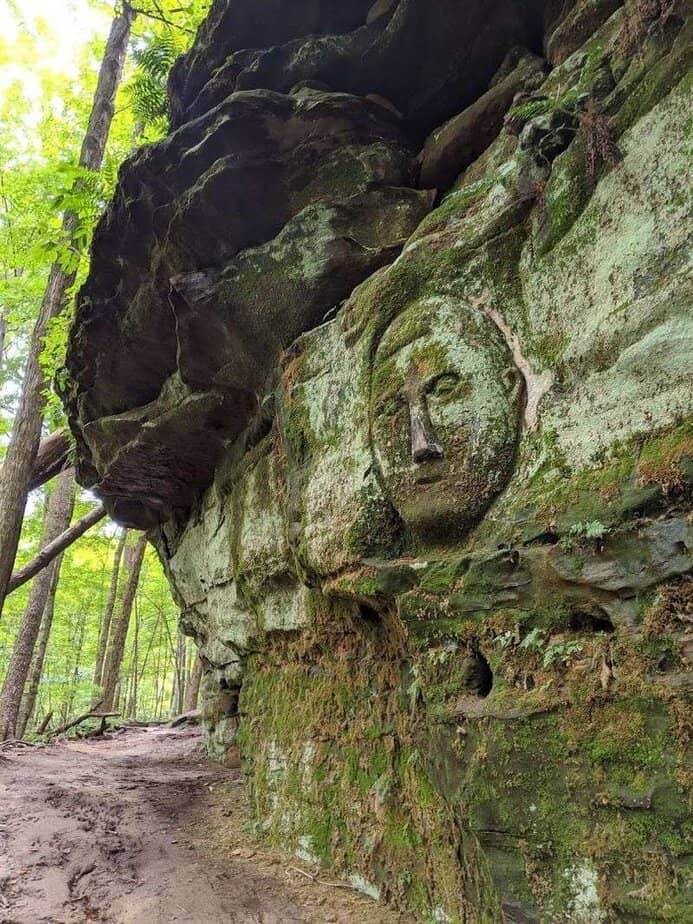
Start at the small parking area along Wordens Ledges Loop Trail and follow the raccoon markers into the woods. The path feels ordinary for a moment, then the sandstone rises and everything changes.
Your eyes adjust to shadows, moss, and carved edges peeking from the rock.
The loop is short, but do not rush. Listen to leaves crunch, watch for roots, and let your curiosity slow your steps.
Reviews call it peaceful, even on busy days, and the quiet makes carvings feel newly discovered.
Wear sturdy shoes, especially after rain, because the trail gets muddy and slick. Accessibility is limited, and there is typically a portable toilet near the trailhead.
Bring water, patience, and a treasure hunter’s mindset.
2. The Iconic Ship Carving

Among the first wow moments, the ship carving seems to float across the sandstone. Lines are so crisp you can trace the rigging with a fingertip, imagining the artist’s patience and steady hand.
In soft light, the grooves catch shadows and bring the hull to life.
Stand back and let your brain fill in the sails. Then move closer to study tool marks and weathered edges.
You will notice moss highlighting details, like a painter adding depth.
Photograph from an angle to avoid glare, and keep hands gentle to protect the stone. The ship feels timeless, a tribute to adventure hidden in Ohio woods.
It is a perfect reminder to slow down and look twice.
3. Faces in the Stone

Turn a corner and faces emerge from stone like characters stepping out of a dream. Some smile, some stare, and a few feel almost solemn.
The expressions change with light, giving you new emotions every step.
Visitors call the faces magical and haunting, and both fit. You might find yourself whispering, as if not to disturb them.
Focus your camera on the eyes, then reframe to include surrounding ledges for context.
Respect the carvings by staying off fragile overhangs. These works have weathered decades of seasons and deserve gentle admiration.
If the trail is quiet, pause and listen to birdsong while the faces watch over the forest. Moments like this make the loop unforgettable.
4. Moss, Texture, and Light
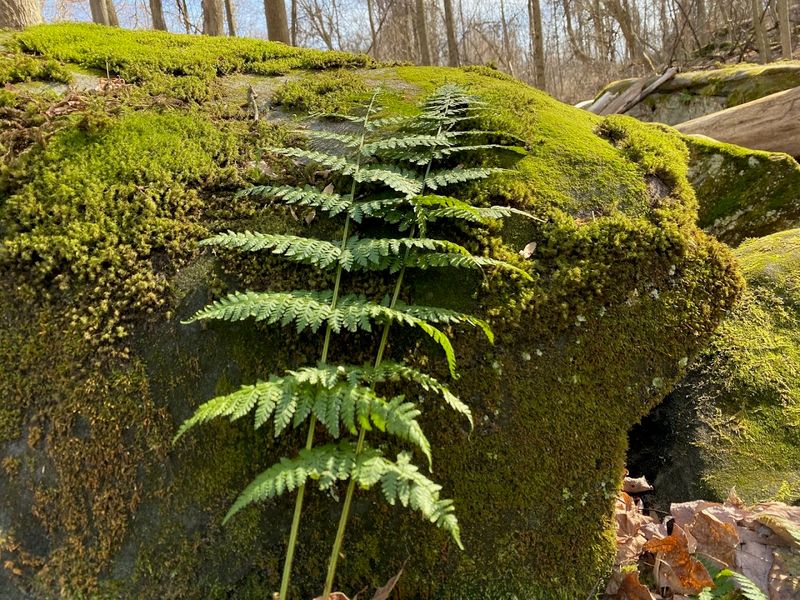
Even between sculptures, the ledges themselves are art. Berea sandstone stacks in layers, softened by moss and lichen, creating textures that photograph beautifully.
When sun filters through leaves, every groove becomes dramatic.
Try visiting after a light rain when greens glow and details pop. Step carefully near wet rock, and frame shots with a low angle to emphasize height.
Fallen leaves add color, especially in October, when crunching footsteps create a soundtrack.
Look for tiny ecosystems: ferns tucked in crevices, mushrooms on damp logs, and spiderwebs strung like silver threads. These small wonders make the short loop feel bigger.
You are not just hunting carvings, you are learning how the forest paints the stone daily.
5. History, Heart, and Local Lore
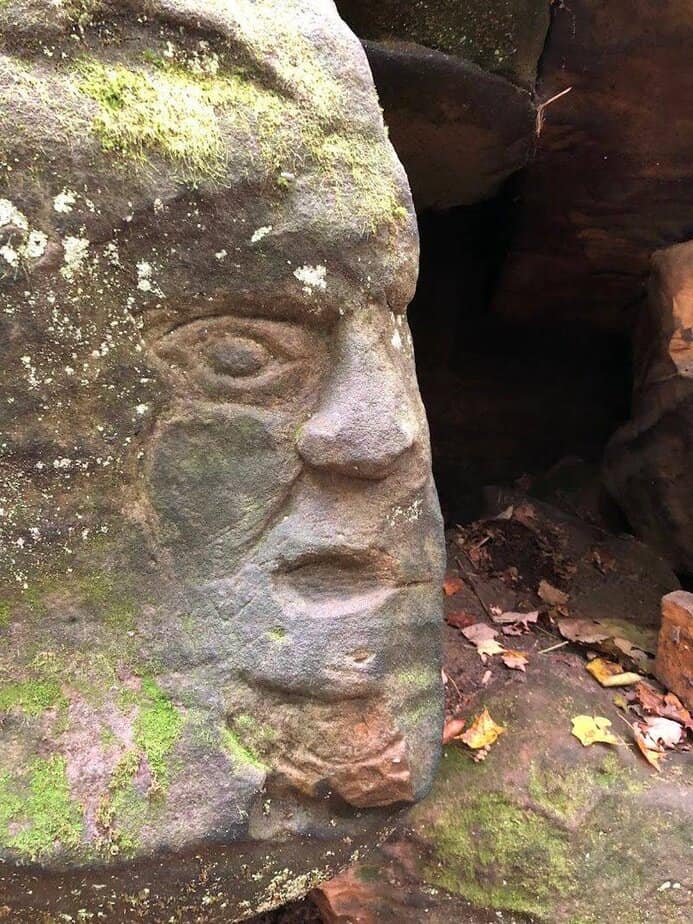
Stories say a grieving artist carved here to honor love and memory, working in the woods inherited through family ties. That backstory gives the place its pulse.
You are not just seeing stone, you are stepping into a tribute shaped by devotion.
Local reviews mention carvings over a century old, names, dates, and symbols etched with care. While details vary, the sentiment remains: a labor of heart healing in quiet forest.
Read plaques where available and cross-check park resources for context.
Let that history guide your pace. Speak softly, tread lightly, and consider what endures.
The carvings feel intimate, like letters chiseled to time. You leave with gratitude, carrying a gentler way of looking at the world.
6. Trail Tips and Safety Basics
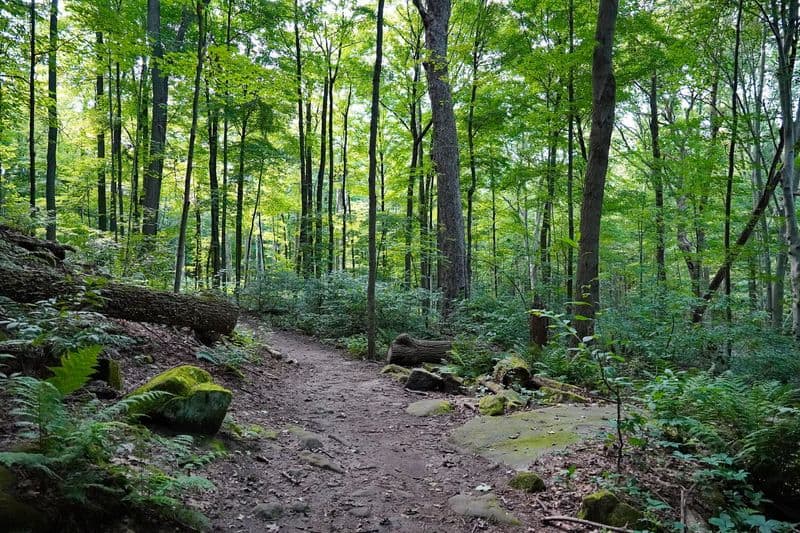
Expect mud after rain and occasional slick rock. Wear hiking shoes with grip, and consider trekking poles if balance is tricky.
The loop is short, but roots and drops demand attention.
Parking is limited, and facilities are minimal, usually a portable toilet at the trailhead. The trail itself is not wheelchair accessible.
Keep dogs leashed, pack out trash, and yield to equestrians on nearby bridle paths.
Cell service can dip in the hollows, so download a map or note the raccoon blazes. If you tend to get turned around, take photos of intersections.
You will enjoy the carvings more when you feel prepared and unhurried, especially during busy fall weekends.
7. Best Times to Visit and Nearby Pairings
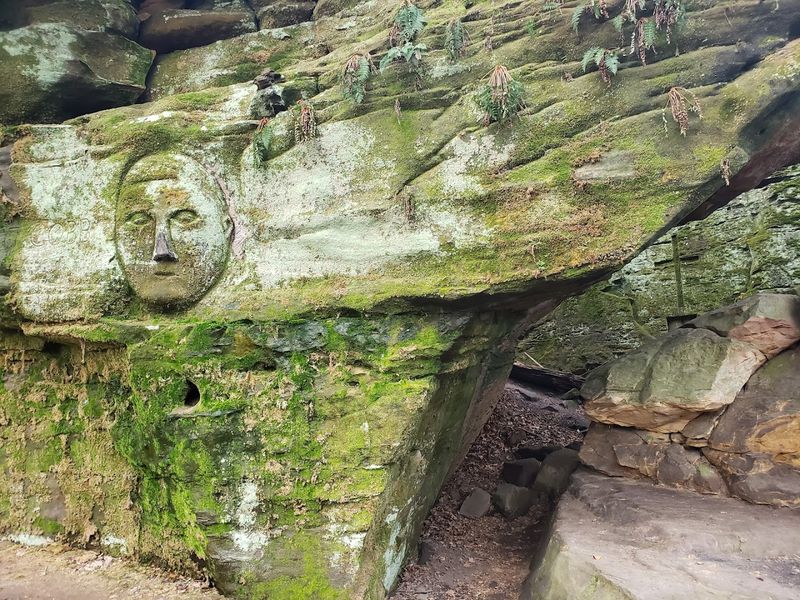
Morning light is magic, catching carvings in gentle contrast before crowds arrive. Fall brings color and crisp air, while spring wildflowers pop along the forest floor.
Summer shade keeps the loop pleasantly cool.
If you come in March, you might glimpse buzzards riding thermals nearby, a Hinckley tradition. Pair your visit with the reservation’s boathouse area or a quiet picnic at a table near the lot.
Keep the ledges your main event, though, so you do not rush the details.
Plan 45 to 90 minutes depending on photos and exploring. Bring water, curiosity, and respect for the sandstone.
You will leave refreshed, with stories etched as clearly as the carvings themselves.