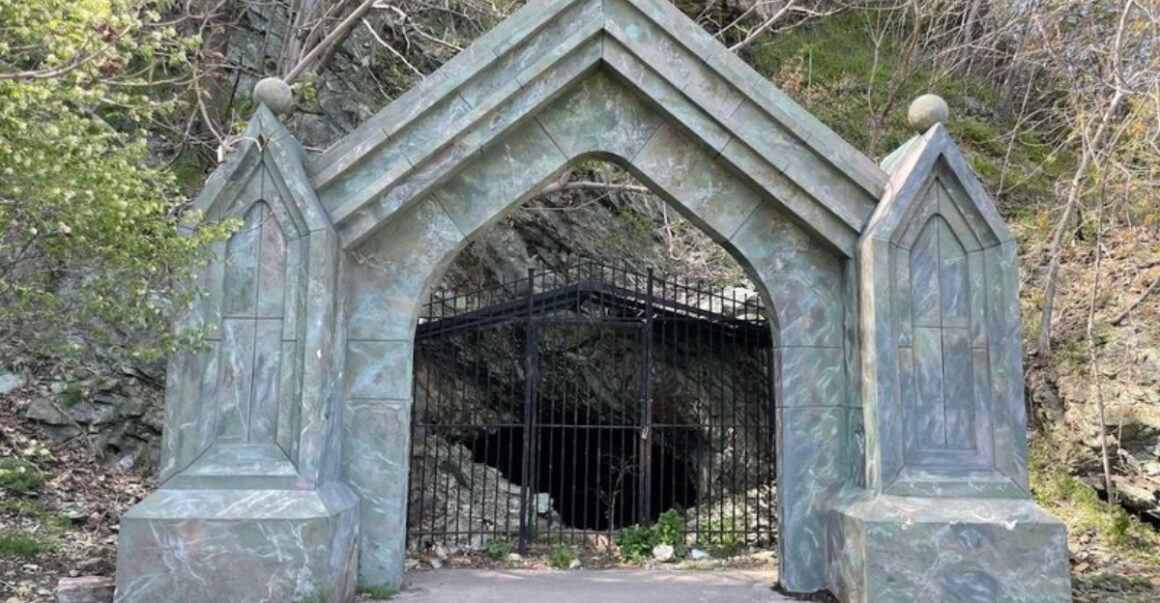
Most people walking Hoboken’s waterfront are busy admiring Manhattan views, not looking for traces of one of the strangest cold cases in 19th-century America. But tucked along the edge of town is Sybil’s Cave, a small stone landmark with an outsized backstory.
Built in 1832 as a scenic grotto around a spring, it later became forever linked to the death of Mary Rogers, a young woman whose 1841 murder was never solved. The case exploded in newspapers, inspired Edgar Allan Poe, and turned this quiet corner of New Jersey into a place where local history feels a little unsettled.
Nearly two centuries later, the cave still gives off that rarest thing in the Garden State: a genuinely eerie echo.
The Hidden Hoboken Landmark With a Dark Past
Tucked beside the Hudson, Sybil’s Cave does not look like the kind of place that would end up in America’s crime lore. It began as something far more elegant.
The Stevens family created it in 1832 as a decorative grotto around a natural spring. In its early years, people came here for scenery, fresh air, and the novelty of spring water served near the waterfront.
Then history took a hard left turn. In 1841, the site became linked to the death of Mary Rogers, whose body was found nearby in the Hudson after she vanished from New York.
That association stuck. Today, even with traffic, joggers, and skyline views all around it, the cave still carries the weird energy of a place that knows too much.
It is tiny, yes, but it has one of the biggest shadows in New Jersey history.
How Sybil’s Cave Became One of New Jersey’s Strangest Attractions
Back in the mid-1800s, this was not some forgotten oddity behind a fence. Sybil’s Cave was a bona fide attraction.
The spring inside was once treated as a selling point, and the area around it drew visitors looking for a pleasant stop within walking distance of early Hoboken. A restaurant nearby served refreshments, which tells you everything you need to know: this was less spooky landmark, more fashionable outing.
What makes it so fascinating now is the contrast. The cave was built as a little piece of romantic landscape design, yet it ended up folded into a sensational murder case and a whole layer of local folklore.
That tension is what keeps people curious. It is not grand like Liberty Hall or stately like Princeton’s old buildings.
It is stranger than that. Sybil’s Cave feels like the kind of New Jersey site you almost walk past, then spend the next hour Googling because the backstory is too wild to ignore.
The Summer a Young Woman’s Death Changed Everything
In July 1841, Mary Rogers disappeared after telling her fiancé she was going to visit family. Three days later, her body was found in the Hudson near Hoboken, and the case immediately became headline material.
Rogers was already well known in New York, where she had worked in a tobacco shop and attracted plenty of public attention. Once news broke, the story ballooned into one of the era’s most talked-about mysteries.
That is the moment Sybil’s Cave stopped being just a picturesque spot and became something darker. The exact circumstances of Rogers’s death were fiercely debated, and the investigation never produced a definitive answer.
Rumors multiplied. The press fed them.
Competing theories kept circulating. For Hoboken, the case attached a permanent chill to one small stretch of shoreline.
A place designed for leisure was suddenly tied to violence, speculation, and one of those historical questions that refuses to stay settled. That shift is really the heart of the cave’s eerie pull.
Why the Mary Rogers Case Still Haunts the Hudson Waterfront
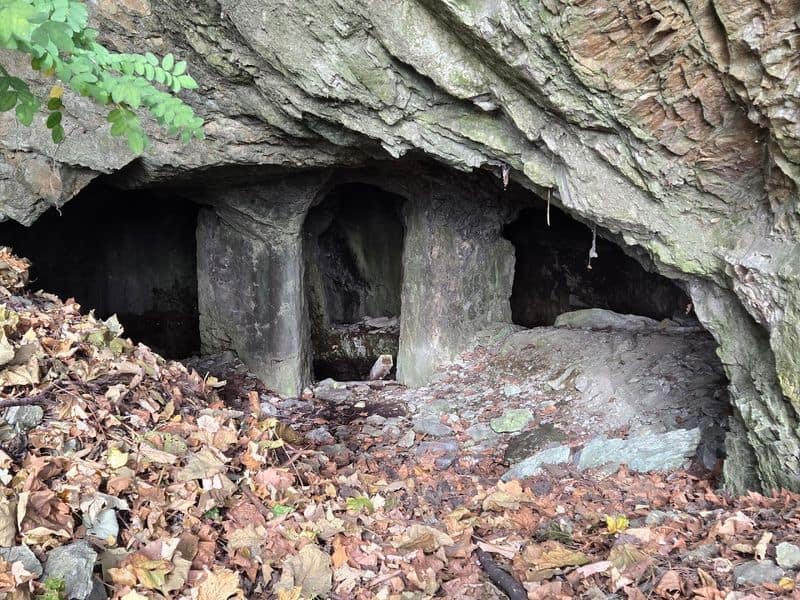
Cold cases linger for a reason, and this one has all the ingredients. Mary Rogers was young, famous in her own time, and surrounded by rumor almost immediately.
Her death touched off endless theories, from random violence to more complicated explanations, but nothing ever closed the case for good. Even now, the most honest description is the least satisfying one: it remains unsolved.
That unresolved quality is exactly why the story still clings to Hoboken’s waterfront. If there had been a clear confession or a neat courtroom ending, Sybil’s Cave might be just another historical footnote.
Instead, the uncertainty became the legend. Add in the river, the old newspapers, the public obsession, and the fact that Mary Rogers’s fiancé later died near the cave after leaving a note, and the whole thing takes on a distinctly gothic charge.
The skyline may be modern, but this corner of town still feels like it belongs partly to another century, one that never quite explained itself.
The Edgar Allan Poe Connection That Deepens the Mystery

Plenty of true-crime stories fade. This one picked up literary immortality.
Mary Rogers’s case became the basis for Edgar Allan Poe’s 1842 story “The Mystery of Marie Rogêt,” which reworked the murder into fiction and extended its reach far beyond New York and New Jersey. Poe is widely credited with pioneering detective fiction, so the connection is not just spooky trivia.
It puts Sybil’s Cave on the edge of one of the genre’s foundational moments. The really interesting part is that Poe treated the case almost like an investigation on the page.
He did not simply borrow the mood. He mined the public facts and tried to reason through them in story form.
That means the cave’s legacy stretches in two directions at once. It is part local landmark, part literary afterimage.
For readers, that makes the site feel even richer. You are not only standing near a real unsolved mystery.
You are also standing near a place that helped shape how mystery stories themselves would be written.
What Visitors Can Still See at Sybil’s Cave Today

Do not expect a dramatic cavern experience. The version of Sybil’s Cave visible today is more restrained, which somehow makes it creepier.
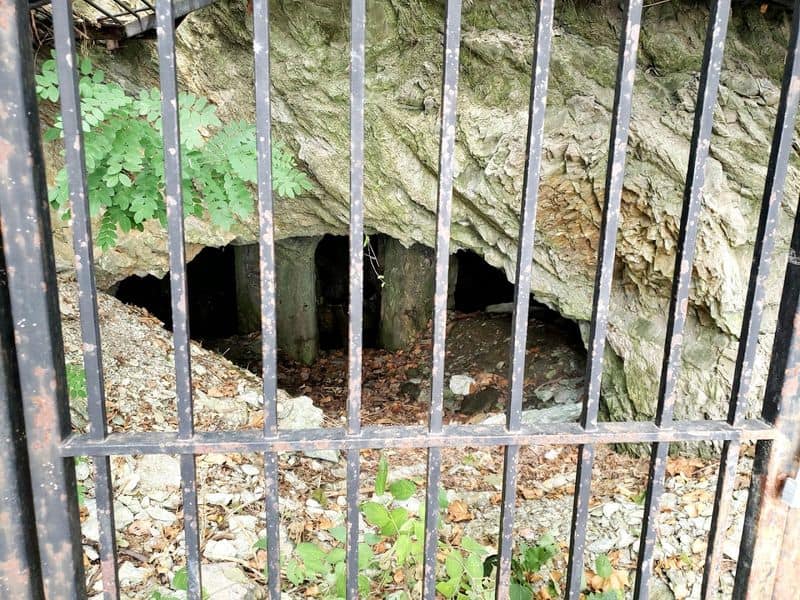
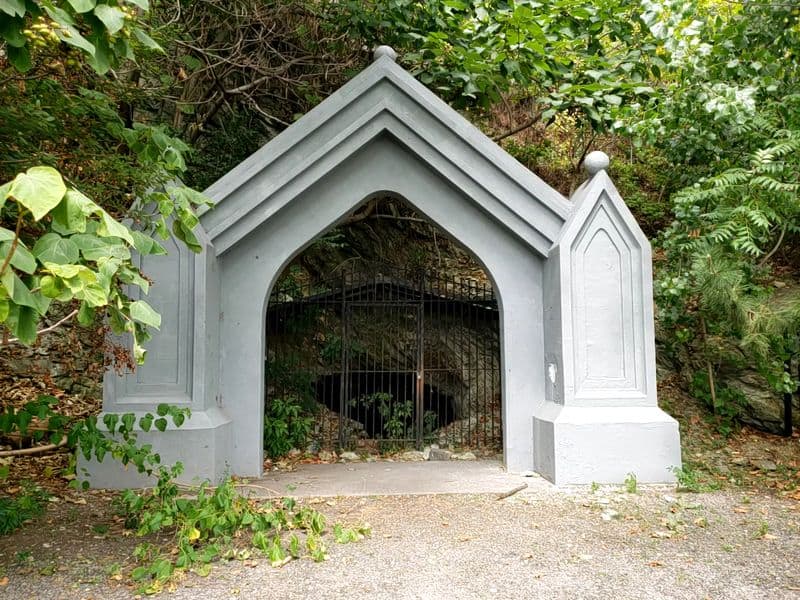
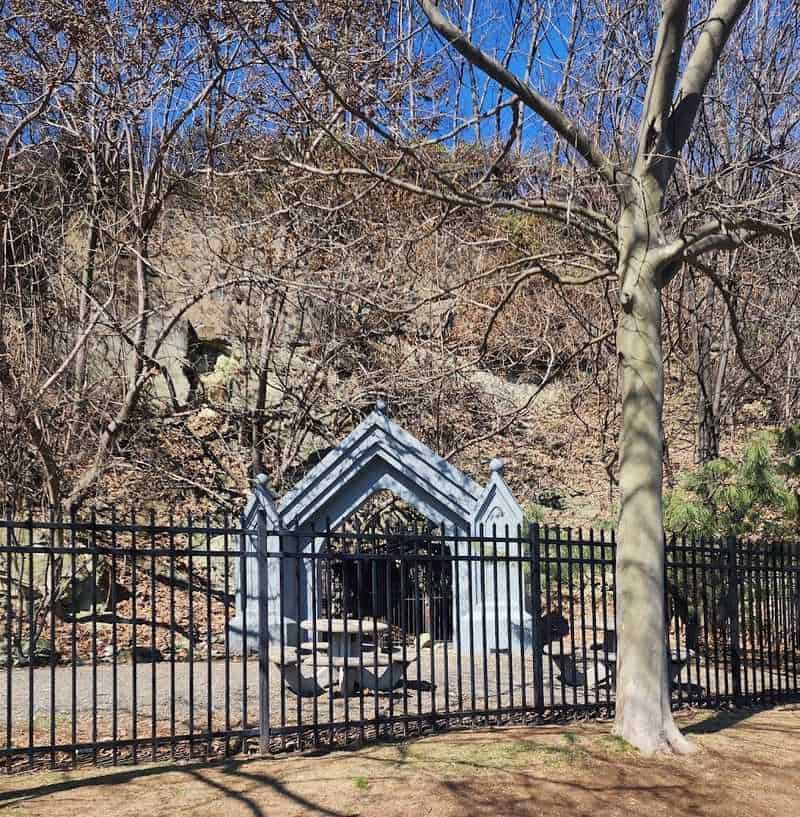
The original site was altered over time, especially after major changes to the waterfront, and the cave itself is now marked by a cast-stone arch and protective fencing that keeps people out. Still, it is absolutely worth a look.
The setting does a lot of the work. You have Sinatra Drive, the river, the Manhattan backdrop, and then this odd little historic remnant sitting there with a story far bigger than its footprint.
It is easy to miss if you are not looking for it, which only adds to the appeal. This is not a polished museum piece demanding your attention.
It is more like a secret with a plaque-shaped alibi. Hoboken has no shortage of waterfront highlights, but few come with this much history packed into one stone-framed pause.
Why This Unsolved Story Still Fascinates New Jersey History Lovers
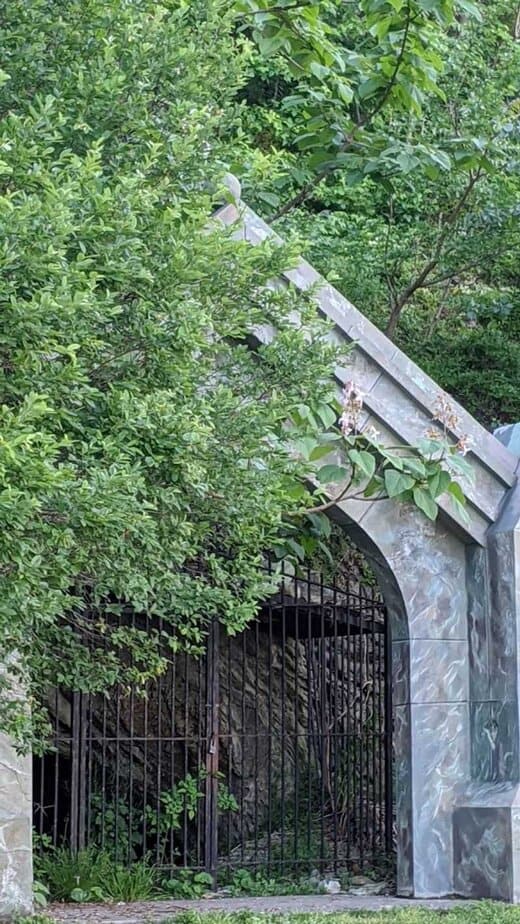
Some places are memorable because they are beautiful. Others stick because they are unresolved.
Sybil’s Cave lands squarely in the second category. It brings together several things New Jersey history fans love: an old waterfront setting, a genuinely strange local story, a brush with literary fame, and a mystery that still has no tidy ending.
That mix gives the site staying power. It is not just a landmark.
It is a conversation starter with masonry. There is also something distinctly Jersey about it.
This is not some huge, theatrical ruin. It is compact, a little hidden, and easy to underestimate until you know what happened there.
That feels right for a state full of places that reveal their best stories only after a second glance. Sybil’s Cave rewards that curiosity.
The more you learn, the stranger it gets. And because no one ever fully solved the case tied to it, the site still holds onto a kind of historical static.
Not loud. Not flashy.
Just enough to keep echoing.