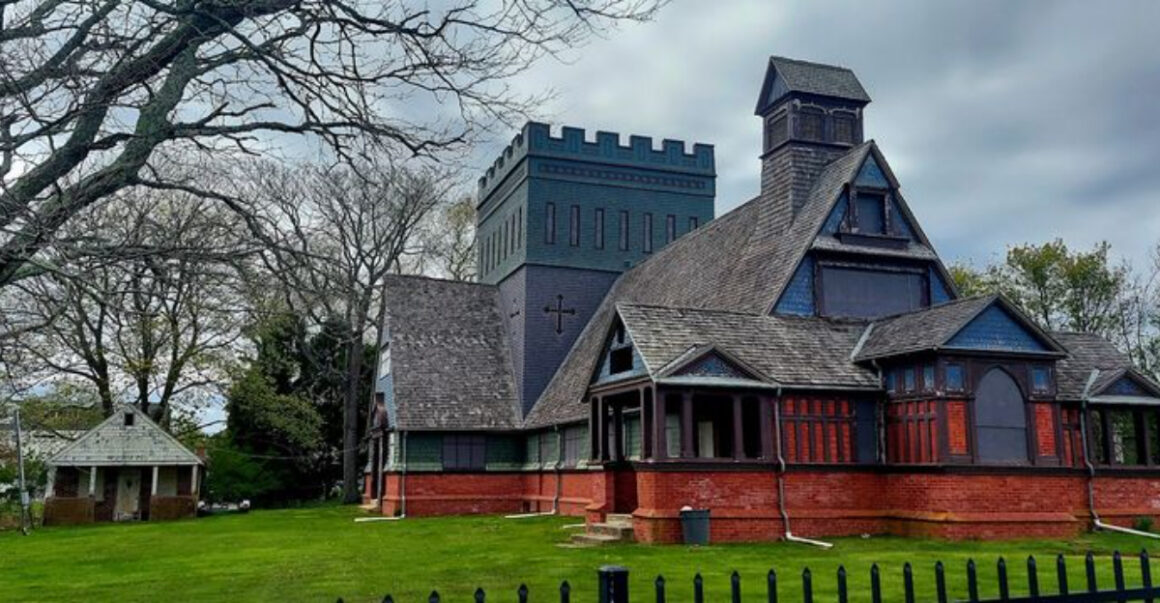
Long Branch has no shortage of stories, but this one feels almost too good to be true. Just steps from the shore sits a small wooden chapel with a very big résumé: seven U.S. presidents once attended services here.
Known today as the Church of the Presidents, the building began life in 1879 as St. James Episcopal Chapel, serving the summer crowd that turned Long Branch into one of the country’s most fashionable seaside escapes.
What makes it even more compelling is that it is not some grand marble monument. It is intimate, weathered, and richly detailed, the kind of place that rewards a slow look.
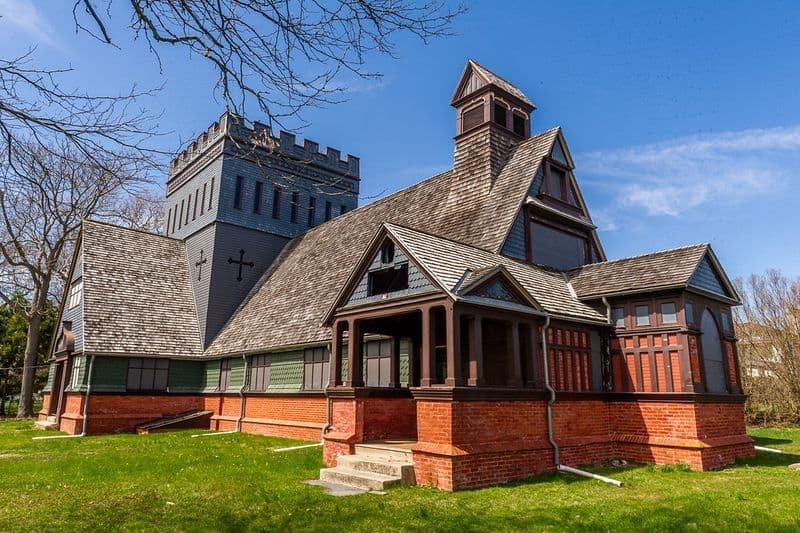
Its steep rooflines, woodwork, stained glass, and layered history give it the storybook presence people often associate with Carpenter Gothic churches, even as preservation sources also describe the design in Shingle Style terms.
However you label it, this Long Branch landmark has presence.
Tucked Along Ocean Avenue Is One of New Jersey’s Most Unusual Historic Churches
Most people hear “presidential history” and picture Washington, D.C., not a beach city in Monmouth County. That is exactly what makes this place such a delight.
The Church of the Presidents does not overwhelm you with scale. It wins you over with character.
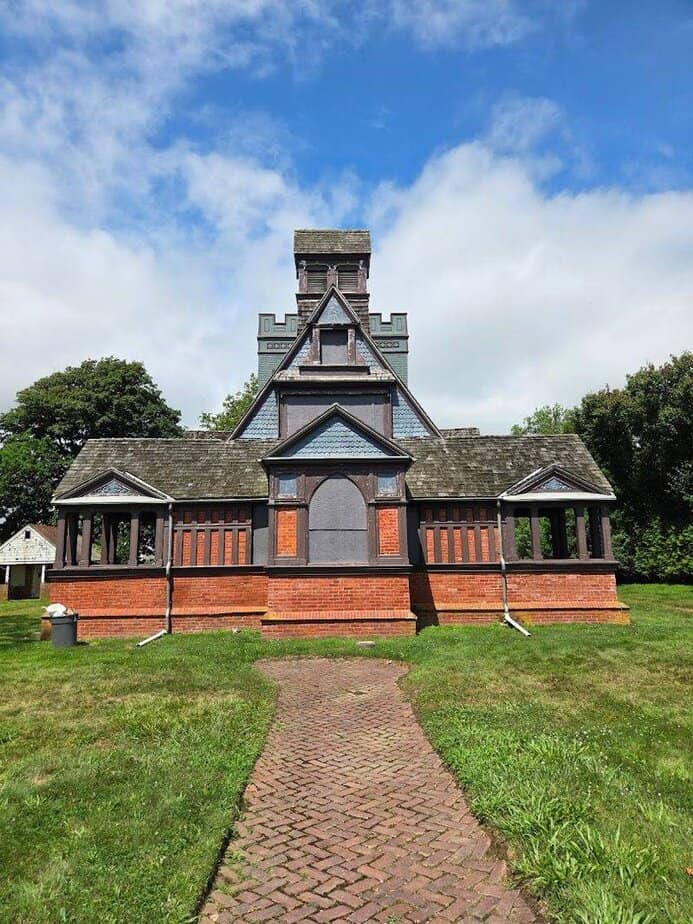
Sitting in Long Branch’s Elberon section, the chapel feels deeply tied to an era when the Jersey Shore doubled as a summer stage for America’s elite, politicians included.
Built in 1879 as St. James Episcopal Chapel, the church was created for seasonal worshippers spending the warm months along the coast.
Long Branch was booming then, packed with cottages, hotels, and well-heeled visitors who treated the shore as their summer headquarters. The chapel became part of that world, which explains how such a modest wooden building ended up woven into national history.
That contrast is the magic of it. You are looking at a neighborhood-scale church with a past that brushes up against the White House.
In New Jersey terms, that is a pretty unbeatable combination.
Why Seven Presidents Ended Up Worshipping in Long Branch
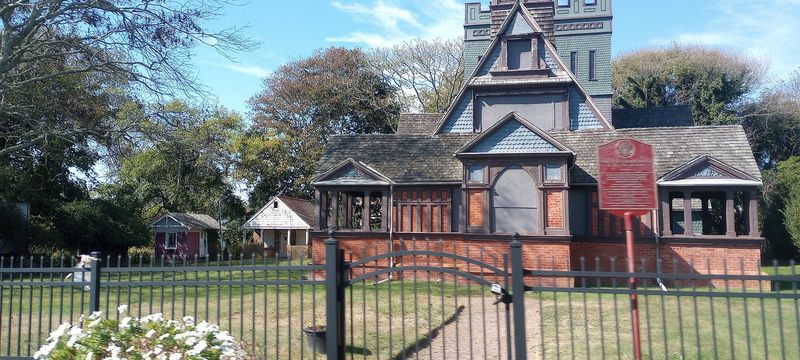
It sounds wildly specific, but the explanation is surprisingly simple. In the late 19th century and into the early 20th, Long Branch was one of the country’s premier seaside resorts.
Presidents did not pass through by accident. They vacationed here, stayed here, entertained here, and in some cases essentially conducted public life from here during the summer season.
That resort culture turned local institutions into nationally significant ones. The church became associated with presidential worshippers including Ulysses S. Grant, Rutherford B. Hayes, James A. Garfield, Chester A. Arthur, Benjamin Harrison, William McKinley, and Woodrow Wilson.
Once that list attached itself to the building, the nickname was inevitable. What is especially fun is how local the story still feels.
This is not a palace built for presidents alone. It was a functioning chapel that happened to serve a community where presidents showed up.
Long Branch was simply that important at the time. The result is a piece of shore history that reveals how central New Jersey once was to the summer social and political map of the country.
The Story Behind the Church of the Presidents Name
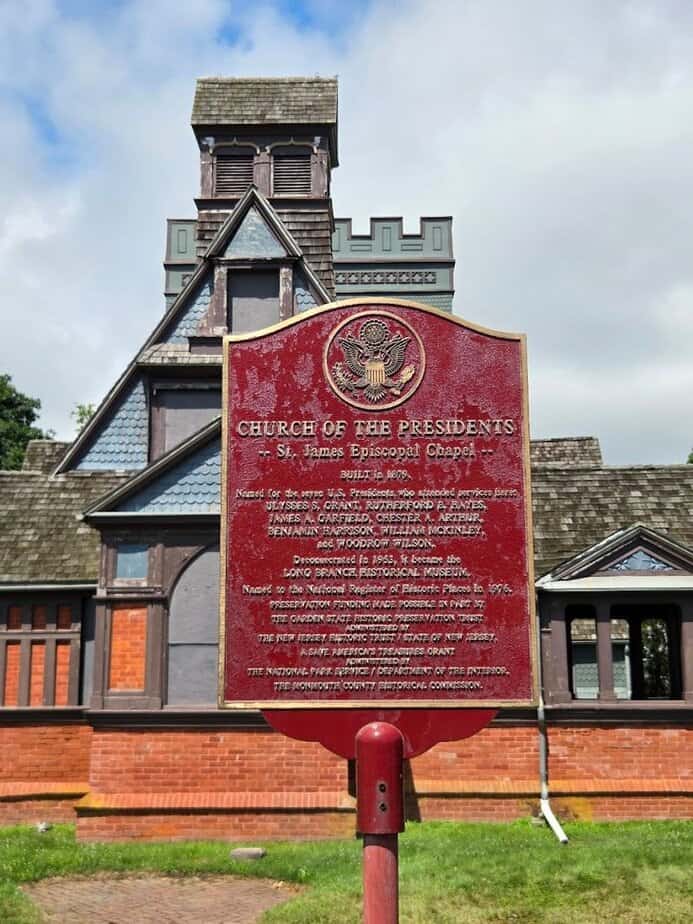
No committee had to workshop this nickname for months. Once enough presidents passed through the doors, the building practically branded itself.
Originally called St. James Episcopal Chapel, the church picked up the more memorable name because of the extraordinary roster of summer worshippers tied to Long Branch’s golden resort years. And honestly, the nickname works because it sounds a little dramatic while also being completely accurate.
Long Branch hosted presidents before and after Garfield, and the church became one of the clearest surviving reminders of that era. It also helps that “Church of the Presidents” instantly tells you this is not just another pretty old building.
There is a story here, and it reaches beyond local history. The name has also done important preservation work.
People remember it. They repeat it. They become curious about it. That kind of recognition matters when historic places need public support and attention.
A chapel called St. James might slip past casual readers. A place called the Church of the Presidents practically dares you not to click.
For once, the catchy nickname earns the hype.
What Makes This Wooden Chapel a Carpenter Gothic Standout
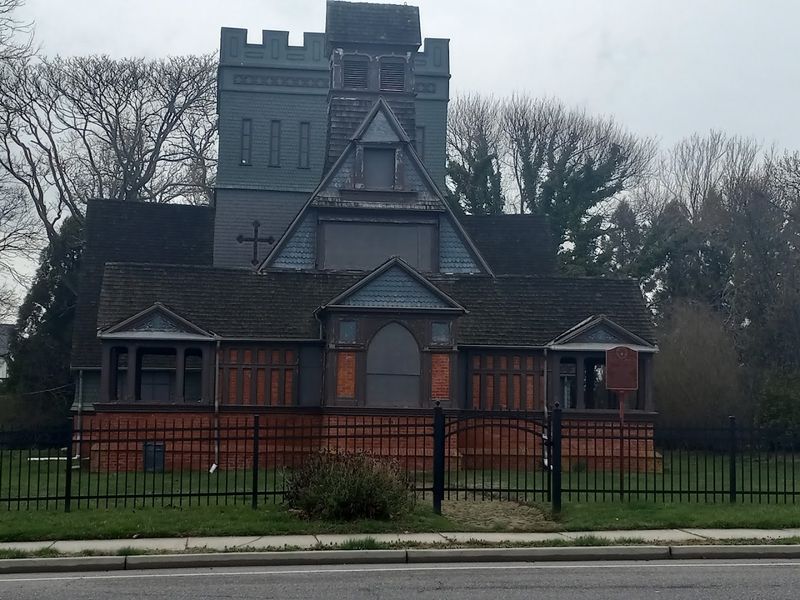
The first thing that grabs you is the silhouette. This is a wooden church with sharp lines, vertical lift, and a kind of handmade elegance that makes many people immediately think Carpenter Gothic.
It has the steep rooflines and picturesque mood that suit that label beautifully. At the same time, state preservation materials describe the building as Shingle Style, which is a useful reminder that historic architecture does not always sit neatly in one box.
That tension is part of the charm. The chapel is not memorable because it fits a textbook definition perfectly.
It is memorable because it feels alive with late-19th-century design energy. Wood was used not as a compromise, but as an artistic material.
The building reads as intricate without feeling fussy, and intimate without feeling plain. There is also something very Jersey Shore about it.
This is not a heavy stone cathedral dropped onto the coast. It is a seasonal chapel shaped by its setting, by summer society, and by architects who knew how to make a relatively small structure feel distinctive.
Labels aside, it has the kind of visual personality that sticks with you.
The Architectural Details That Make the Building So Memorable
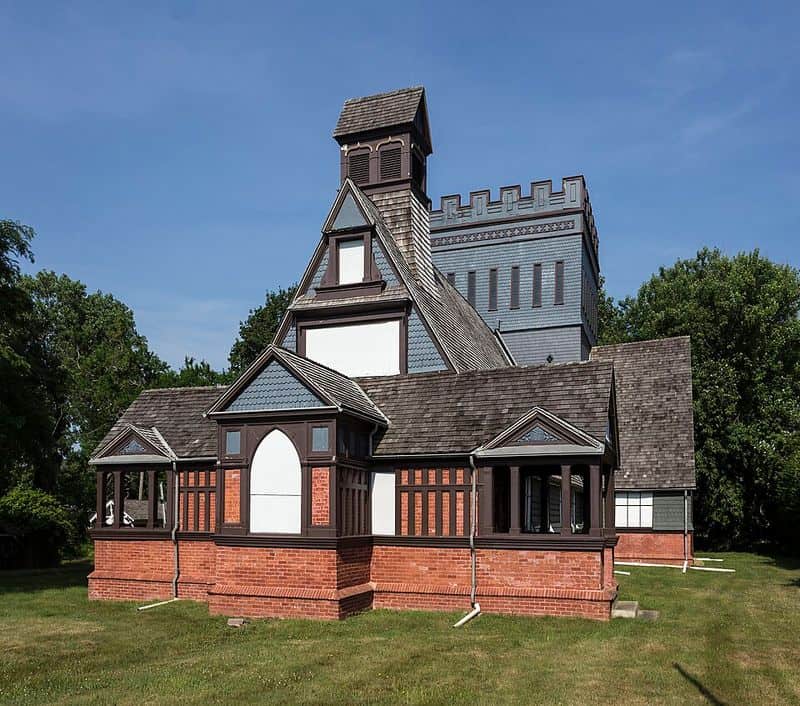
Look closely and the building starts to reveal why it lingers in people’s minds. The chapel’s appeal comes from proportion and detail more than sheer size.
Its rooflines pull the eye upward. The wood exterior gives it warmth.
The windows and trim add texture without tipping into excess. It feels carefully composed, the way the best historic buildings do.
Another major feature is the tower, which was added in 1895. It gives the church extra drama and a stronger presence from the street, though preservation records note that the addition also contributed to structural problems that later required stabilization.
That is one of those classic historic-building twists: the very thing that boosts the look can complicate the survival story. The architects matter here too.
William Appleton Potter and Robert H. Robertson were not improvising a quaint seaside chapel on a whim.
They were serious designers, and the church shows it. Even now, with all the layers of age and change, the building still has an almost cinematic quality.
It looks like it belongs in a story, which is probably why so many people remember it after one visit.
The Garfield Connection Adds Another Layer of American History
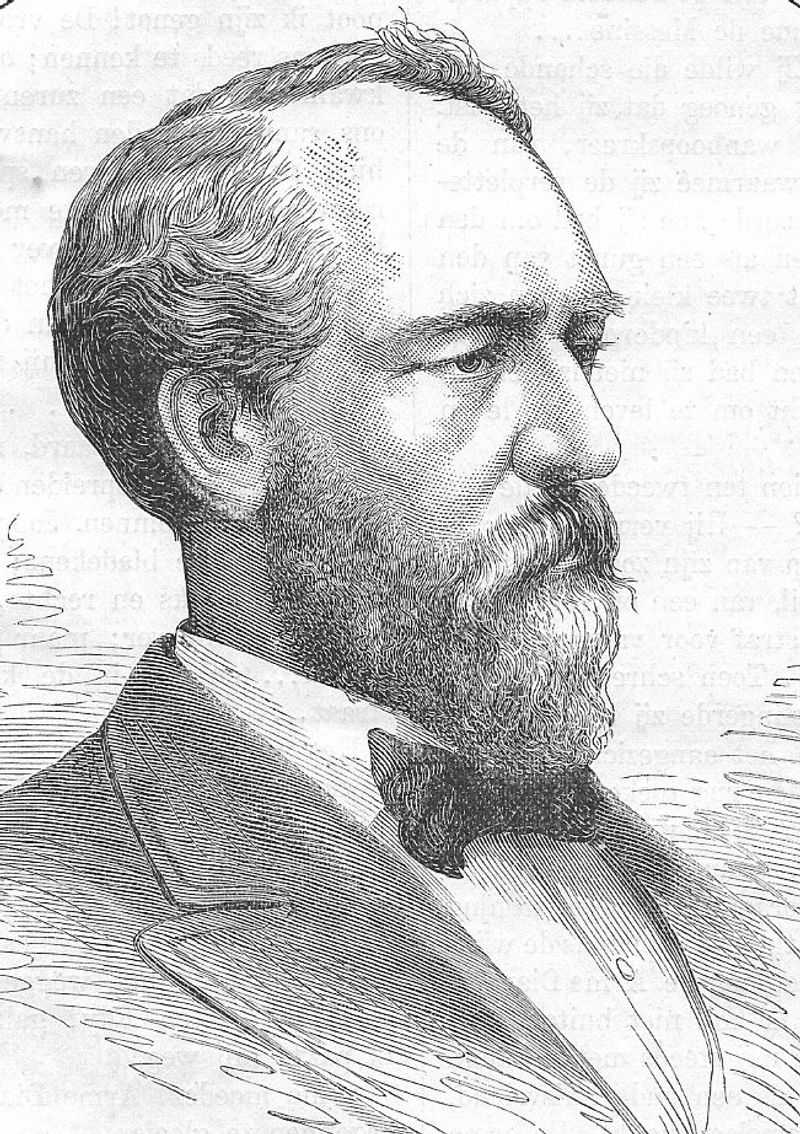
James A. Garfield gives the Long Branch story extra gravity.
His connection to the area was not just social or seasonal. After he was shot in 1881, Garfield was brought to a cottage in Elberon, where people hoped the sea air would help his recovery.
He died there that September, tying Long Branch permanently to one of the most tragic moments in presidential history. That context changes the way you see the church.
It is still charming, still architecturally rich, but it also belongs to a landscape shaped by national crisis. The chapel becomes part of a wider historical map that includes Garfield’s final days, the resort culture of the era, and Long Branch’s brief role as a place where the country’s attention gathered.
For local history lovers, this is the kind of detail that turns a nice landmark into a major one. It connects the building to a real human story, not just a list of VIP names.
And because Garfield’s presence in Long Branch is so well documented, the church’s presidential identity feels grounded in something much more vivid than a trivia fact.
How a Beloved Shore Landmark Became a Preservation Cause
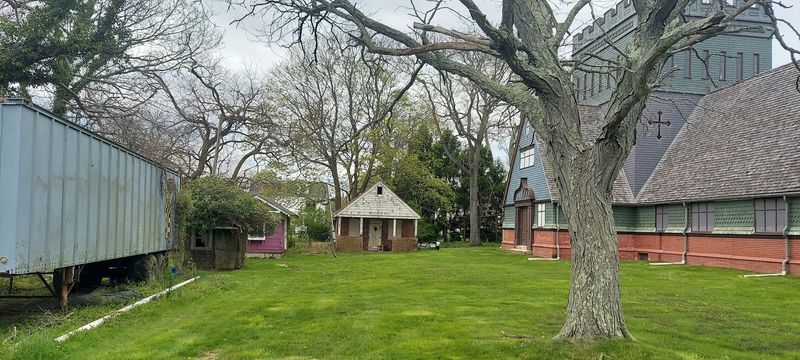
Historic charm is the easy part. Keeping an old wooden building standing near the shore is the hard part.
Over time, the Church of the Presidents faced structural trouble serious enough to close it to visitors. According to New Jersey preservation sources, the tower added in 1895 created deficiencies that later had to be stabilized, and the site eventually became the focus of major preservation efforts.
That chapter matters because it shows how fragile beloved landmarks can be. People may assume a place this famous would be permanently protected by sheer reputation, but history does not work that way.
Famous buildings still need money, planning, advocacy, and plain old persistence. The church survived because people kept insisting it was worth saving.
There is something very New Jersey about that too. We are used to fighting for places with character, especially when development pressure or neglect threatens to erase them.
The Church of the Presidents is not just a relic from Long Branch’s resort past. It is also a case study in why preservation battles matter.
Once a building like this is gone, no amount of nostalgia can rebuild the original.
Why This Long Branch Church Still Captures the Imagination Today
Some historic sites impress you because they are enormous. This one works differently.
The Church of the Presidents stays with people because it feels improbable in the best possible way. It is a shore chapel with presidential pedigree, architectural flair, and a rescue story layered on top.
Every angle gives you a different reason to care. It also captures a version of New Jersey that people often forget.
Long Branch was once a nationally significant resort city, not just a stop on a summer beach run. This little church is one of the clearest surviving windows into that world.
You can stand near it and sense the overlap of local life, vacation culture, political power, and design ambition. And then there is the simple visual pull.
The building has mood. It has shape.
It has the kind of old-wood presence that instantly sparks curiosity. Even readers who arrive for the presidential hook usually end up staying for the architecture and the atmosphere.
That is the real trick this place pulls off. It starts as a history story and ends as a love letter to one of Long Branch’s most unforgettable landmarks.