
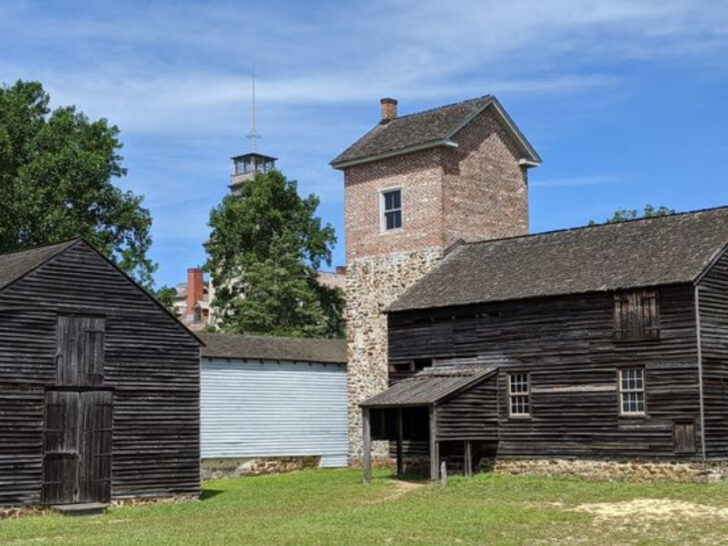
Deep in South Jersey, there’s a hike that starts off all pine needles, white sand, and quiet lake views, then suddenly drops you into one of the strangest scenes in the state. Batsto Village sits in Wharton State Forest looking far too complete to be a ruin and far too hushed to feel ordinary.
One minute you’re walking beneath pitch pines, the next you’re staring at an old ironworks town that once helped supply the Continental Army. That contrast is what makes this place so good.
It’s not a hard trek or some hidden backwoods suffer-fest. It’s an easy, atmospheric walk with a payoff that feels wildly cinematic and very, very Jersey.
Where the Pines Go Quiet and History Starts to Creep In
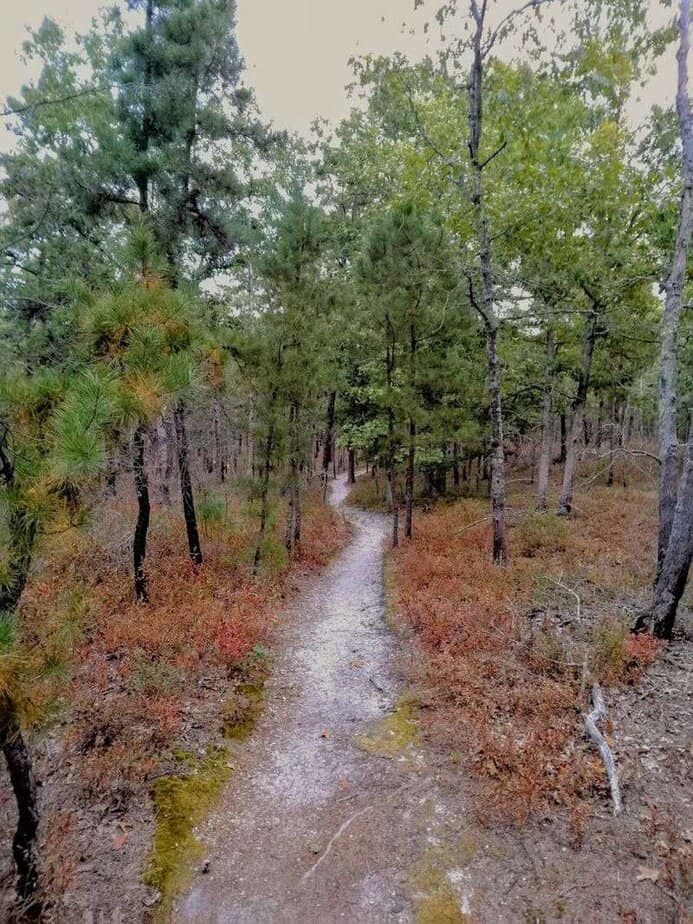
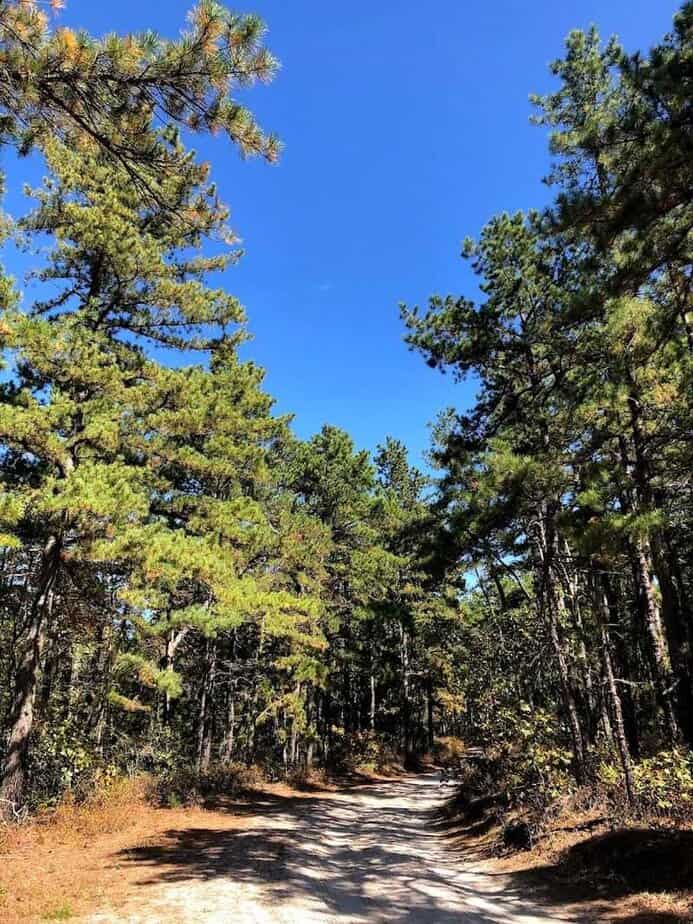
The approach is half the magic. The Batsto Blue Trail is an easy loop of about 1.8 miles, starting near the Batsto Village parking area and winding through classic Pine Barrens terrain with sandy soil, low vegetation, and long stretches of whispery woods.
It’s not dramatic in the mountain-view sense, and that is exactly why it works. The landscape is subtle.
The stillness gets your attention. The pines seem to absorb sound, and the pale sand gives the whole walk an almost moonlit look even in broad daylight.
Then the setting begins to shift. Batsto Lake comes into view.
The forest opens. And suddenly the hike stops feeling like a simple woodland loop and starts feeling like a slow walk into a preserved piece of South Jersey industry.
That transition is the hook. You don’t need fog machines or ghost stories when the real atmosphere is already doing the job.
Batsto Village Feels Like a Ghost Town Hidden in Plain Sight
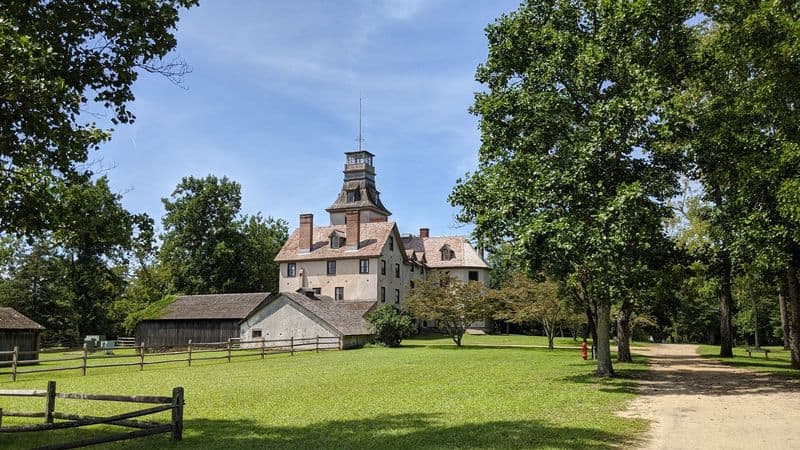
What makes Batsto so memorable is that it does not look like a pile of ruins swallowed by the woods. It looks like a town that everyone stepped out of five minutes ago and never came back.
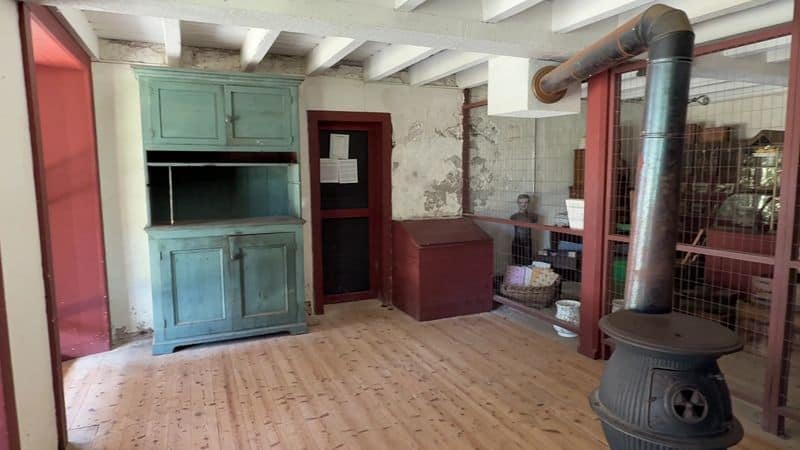
The village has more than 30 historic buildings, and the place is preserved to resemble its late nineteenth-century appearance. That gives it a strangely intact, paused-in-time quality that lands harder than a crumbled foundation ever could.
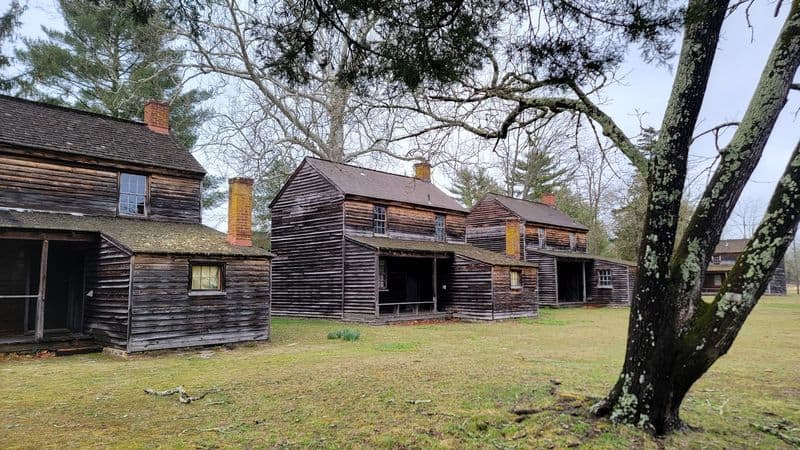
You’ll see the mansion, workers’ homes, industrial buildings, and the old furnace area, all sitting quietly inside Wharton State Forest like this is the most normal thing in the world. That contrast is deliciously weird.
There are families, history buffs, hikers, and casual wanderers around, yet Batsto still manages to feel slightly eerie. It’s not abandoned in the literal sense, but emotionally, it absolutely scratches that deserted-village itch.
For New Jersey locals, it’s one of those places that reminds you how strange and layered the Pine Barrens really are.
The Trail to Batsto Is Easy but the Atmosphere Is Anything But
Nobody gets to brag about surviving this hike, and honestly, that’s part of its charm. The Batsto Blue Trail is considered easy, with a short loop and natural sandy footing that makes it approachable for casual walkers, families, and anyone who wants a low-effort outing with a high-payoff finish.
You’re not grinding uphill for hours here. You’re strolling into one of the coolest historic settings in the state.
Still, easy does not mean forgettable. The Pine Barrens have a talent for making simple terrain feel slightly uncanny.
The sandy paths, dark water, and tall pitch pines create a mood that changes with the light. On a bright afternoon, it feels serene.
Late in the day, it leans spooky in the best possible way. Add the knowledge that this forest once supported a full industrial village, and the walk starts to feel richer with every step.
It’s the rare trail where the physical effort stays light while the atmosphere does all the heavy lifting.
Inside the Iron Village New Jersey Never Quite Left Behind
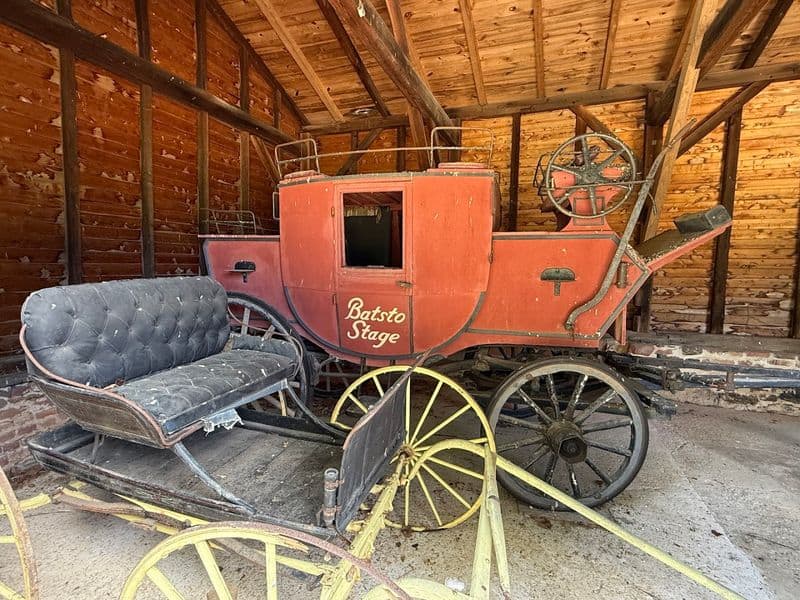
Batsto was founded in 1766 as an ironworks settlement, and this was no minor backwoods experiment. During the American Revolution, its furnace produced iron goods including cannons and cannonballs for George Washington’s Continental Army.
Later, the site adapted, shifting into glass production and other industries as the regional economy changed. That long arc is part of why the village feels so layered.
It was never just one thing. Walking through Batsto today, you can still trace the bones of that working community.
The furnace, the mills, the homes, the mansion, the lake, the forest around it all make practical sense once you remember this place was built to use local resources like bog iron, timber for charcoal, and water power. That history gives the scenery weight.
You are not looking at a staged set piece. You are standing in a place that helped build early New Jersey industry, then somehow held onto its story long enough for modern hikers to wander back into it.
Why This Wharton State Forest Hike Stays With You Long After You Leave
Batsto was founded in 1766 as an ironworks settlement, and this was no minor backwoods experiment. During the American Revolution, its furnace produced iron goods including cannons and cannonballs for George Washington’s Continental Army.
Later, the site adapted, shifting into glass production and other industries as the regional economy changed. That long arc is part of why the village feels so layered.
It was never just one thing. Walking through Batsto today, you can still trace the bones of that working community.
The furnace, the mills, the homes, the mansion, the lake, the forest around it all make practical sense once you remember this place was built to use local resources like bog iron, timber for charcoal, and water power. That history gives the scenery weight.
You are not looking at a staged set piece. You are standing in a place that helped build early New Jersey industry, then somehow held onto its story long enough for modern hikers to wander back into it.
The Best Part of This Hike Is Stepping Straight Into Another Century
Plenty of historic sites are interesting on paper and flat in person. Batsto is not one of them.
The real thrill is how quickly the place pulls you out of the present. You go from trail mode to time-travel mode almost instantly, and the preserved buildings do a lot of the work.
This isn’t just a plaque-and-foundation situation. The village still has presence.
You can picture furnaces roaring, workers moving through town, and boats or wagons serving an operation that once mattered far beyond the Pines. That is why the hike feels bigger than its mileage.
The payoff is not distance. It is immersion.
In under two miles, you get forest, water, history, and a village that seems to hover between museum piece and ghost town. For a New Jersey day trip, that’s a ridiculous return on investment.
Batsto manages to be scenic, educational, eerie, and deeply local all at once. Not bad for a walk that starts in the sand and ends in the eighteenth century.