
Some places announce themselves with giant signs and packed parking lots. This one does the opposite.
The Watershed Institute in Pennington feels more like the sort of place locals quietly keep in their back pocket for the right kind of afternoon.
The reserve spans 950 acres in Hopewell Township, with forests, meadows, wetlands, farmland, and a trail network that stretches beyond 10 miles, so there’s real room to roam without feeling like you’re on top of everyone else.
That mix is part of the charm. You can come for a calm walk, a dose of fresh air, or a closer look at Central Jersey habitats that still feel wonderfully intact.
Then, right in the middle of all that open space, you find the butterfly house, which gives the whole place an unexpectedly magical twist. It’s not flashy.
It’s better than flashy. It feels discovered.
Why This Pennington Nature Retreat Feels Like One of New Jersey’s Best Kept Secrets
Some places announce themselves with giant signs and packed parking lots. This one does the opposite.
The Watershed Institute in Pennington feels more like the sort of place locals quietly keep in their back pocket for the right kind of afternoon.
The reserve spans 950 acres in Hopewell Township, with forests, meadows, wetlands, farmland, and a trail network that stretches beyond 10 miles, so there’s real room to roam without feeling like you’re on top of everyone else.
That mix is part of the charm. You can come for a calm walk, a dose of fresh air, or a closer look at Central Jersey habitats that still feel wonderfully intact.
Then, right in the middle of all that open space, you find the butterfly house, which gives the whole place an unexpectedly magical twist. It’s not flashy.
It’s better than flashy. It feels discovered.
Inside the Butterfly House Where Native Species Take Center Stage
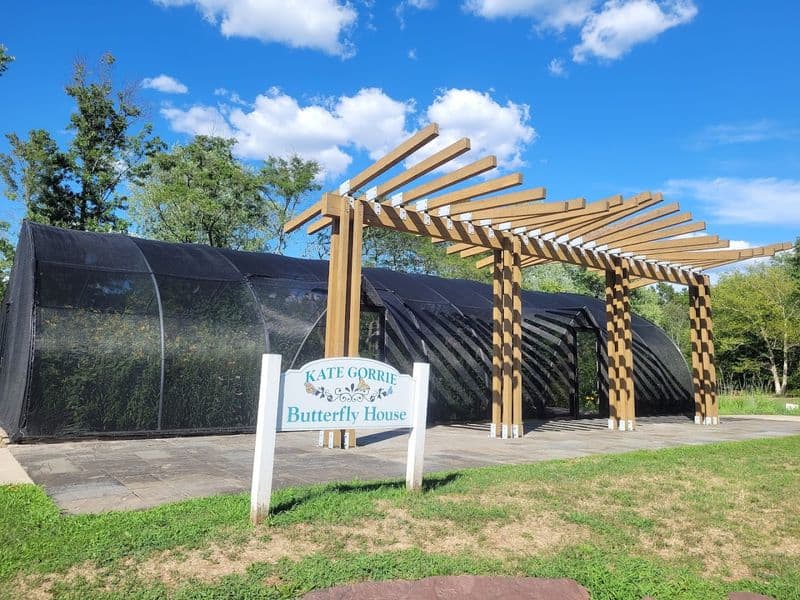
What makes this butterfly house so memorable is that it doesn’t go for a theme-park version of nature. The Kate Gorrie Butterfly House was created to showcase native butterflies and the native plants that support them, so the experience feels grounded in New Jersey rather than staged for spectacle.
The outdoor structure first opened in 2000 and was built in memory of Kate Gorrie, whose family helped create it as a tribute to her love of nature.
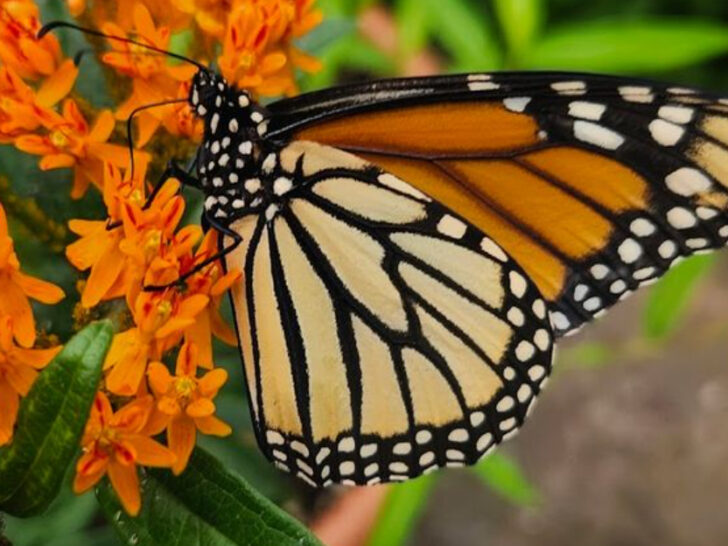
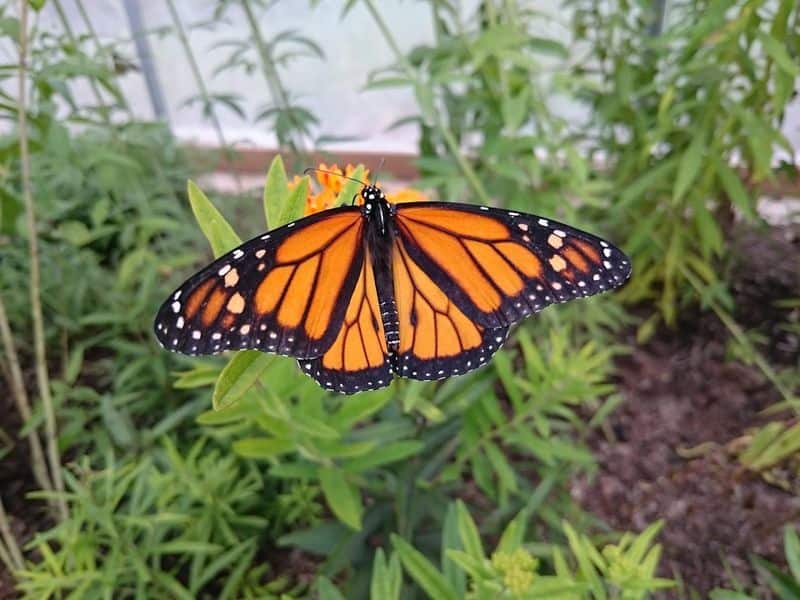
When it’s open for the season, usually from mid-June into early fall, you can walk through and watch local species move among the plantings designed for feeding, shelter, and egg-laying.
That detail matters because it turns a pretty stroll into something more interesting. You’re not just admiring butterflies.
You’re seeing a small ecosystem at work, right in front of you, with the kinds of species and plant relationships that belong right here in Central New Jersey.
How the Gardens Were Designed to Mirror Central New Jersey’s Wild Habitats
Plenty of butterfly gardens are lovely. This one is smarter than that.
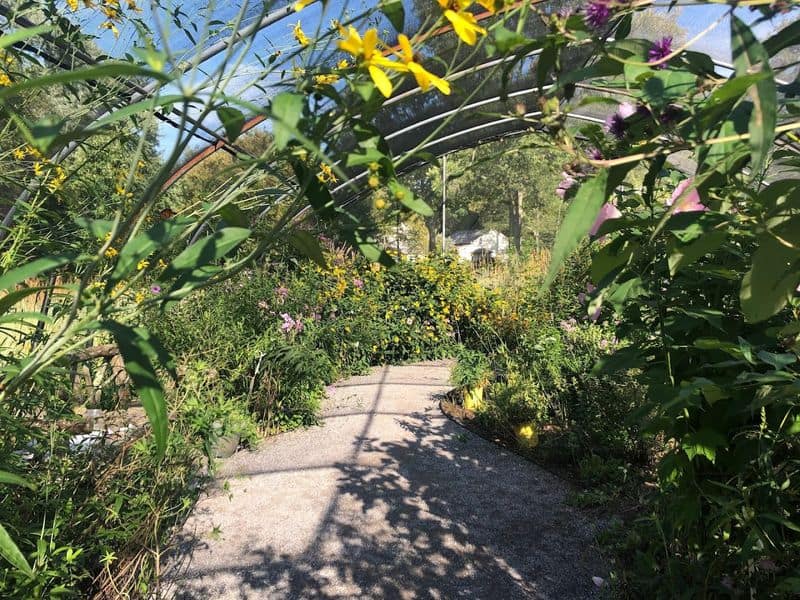
The plantings inside the sanctuary were designed to reflect the habitats butterflies use across Central New Jersey, including wetlands, wet meadows, fields, and forest edges. That gives the butterfly house more personality than a simple flower patch packed with pretty blooms.
It feels layered, a little wilder, and much more rooted in place. You’ll notice host plants and nectar plants working together, which is exactly the point.
Butterflies need more than something colorful to land on. They need the right food sources at different life stages, and the gardens here are arranged to show that in a way visitors can actually see.
It also helps explain why the house feels so alive. The movement isn’t random decoration.
The butterflies are responding to a space built around their actual needs, which makes the whole walk-through experience feel more intimate and more authentic.
What You’ll See Beyond the Butterflies on the Reserve’s Wooded Trails and Boardwalk
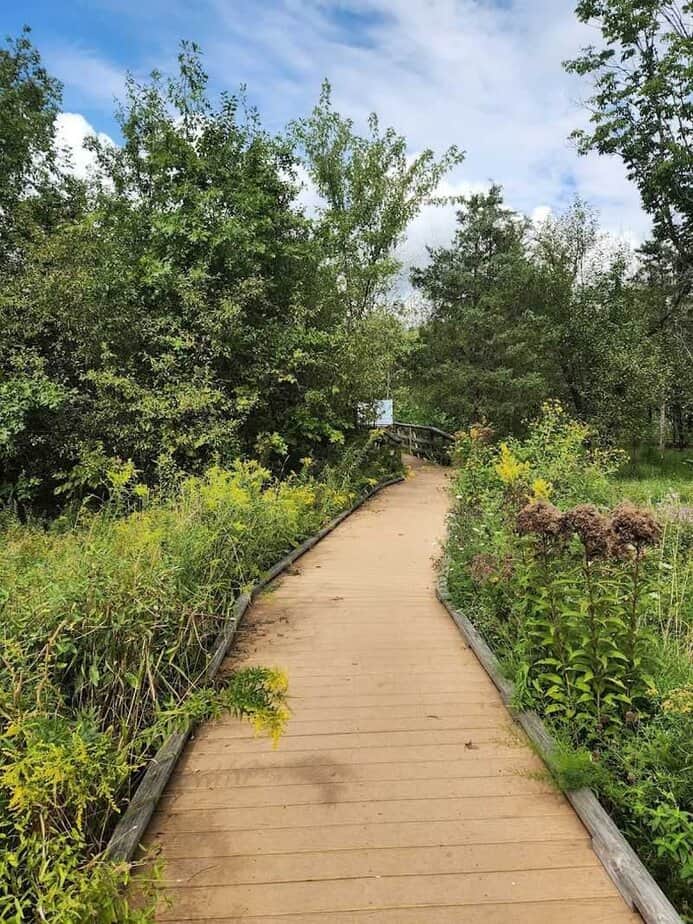
The butterfly house may be the headline act, but the rest of the reserve easily fills out the day. More than 10 miles of trails wind through woods, meadows, wetlands, and farmland, so you can shift from a close-up nature moment to a bigger landscape view in about five minutes.
There’s a boardwalk section that gives you that classic marshy, slow-down-and-look-around energy, plus a pond and stream areas that make the whole property feel varied instead of repetitive. This is the kind of place where one stretch is shady and hushed, and the next opens up into tall grasses and sky.
That variety is what keeps a walk here from feeling like a loop you’ve already figured out. Even the built spaces fit the mood.
The Watershed Center itself sits on the property as a LEED-Platinum environmental center, so the reserve manages to be educational without losing its peaceful, unpolished feel.
Why Families, Garden Lovers, and Nature Photographers Will All Find Something to Love Here
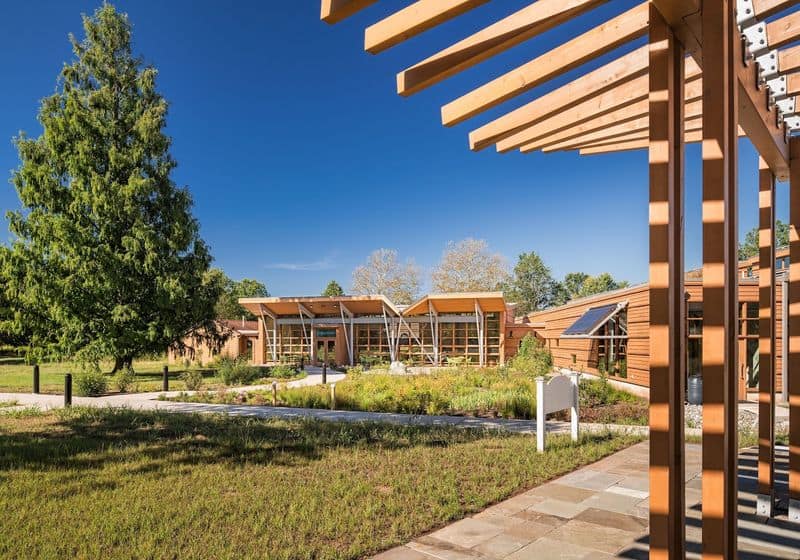
Different kinds of visitors end up liking this place for different reasons, which is usually a good sign. Families get an outing that feels outdoorsy without being exhausting, especially since the butterfly house adds a clear focal point for kids who might not be thrilled by the phrase nature reserve.
Garden lovers can pay attention to the native plantings and come away with actual ideas, not just inspiration-board fluff. Photographers get movement, texture, and changing light, with butterflies, meadow views, boardwalk scenes, and all those little close-up details that make a camera day worthwhile.
The butterfly house is also free and handicap accessible, which makes it easier for more people to enjoy without turning the visit into a whole production. Best of all, the place doesn’t feel overprogrammed.
You can learn something here, absolutely, but you can also just wander, look around, and let the reserve do what it does best.
The Best Time to Visit This Peaceful New Jersey Escape for the Full Experience
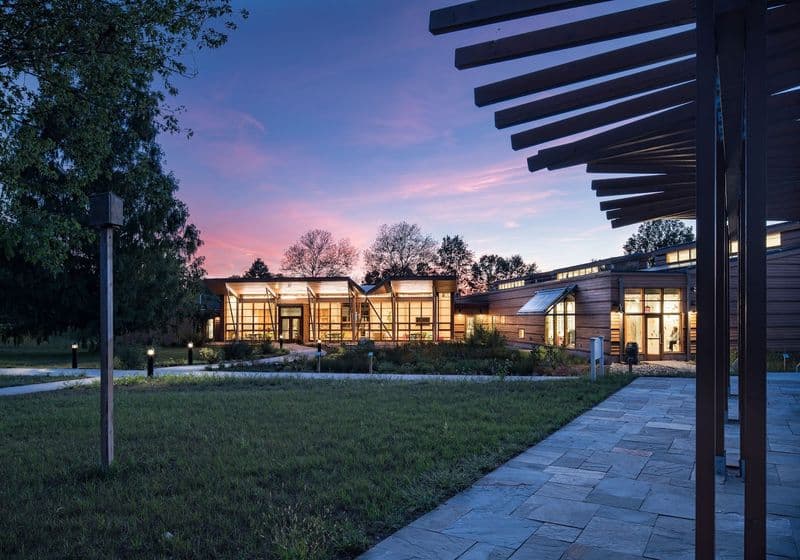
Timing matters here, because the butterfly house is seasonal. The sweet spot is summer into early fall, when the Kate Gorrie Butterfly House is typically open from mid-June through early fall and the reserve is at its most lush.
That’s when you get the full package: active butterflies, thriving native plantings, green trails, and the kind of warm-weather calm that makes an easy afternoon outside feel unusually restorative. Mornings are especially good if you want a quieter visit and softer light on the trails.
Later in the day can be lovely too, but summer weekends tend to bring a little more energy. Even outside butterfly season, the reserve is still worth visiting for the trails alone, but the house is what gives the place its extra spark.
If you want the version that really earns the drive, go when the sanctuary is open and let yourself linger a bit longer than you planned.