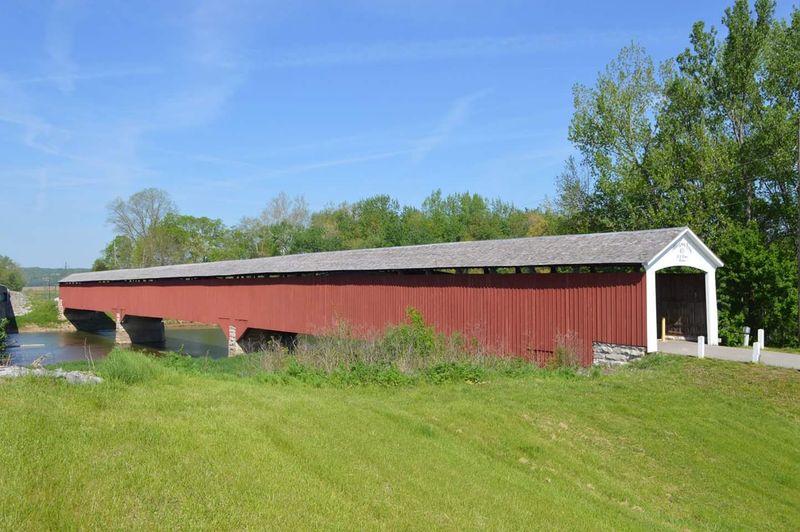
Some record holders shout about it. This one just sits over the East Fork of the White River in southern Indiana and lets people find it on their own.
It was built in 1861, back when Abraham Lincoln was a brand-new president, and it is still standing today. Cars no longer cross it, but feet are welcome, and the walk is long enough to make you check how far you have gone.
There is no ticket booth, no gate, and no closing time. There are picnic tables, a boat ramp, history plaques, and one very special dinner held right inside the bridge once a year.
Keep reading to learn where this long wooden giant hides, why it matters to Hoosiers, and how to plan a cheap and easy day trip around it.
A Record Holder on a Quiet State Road
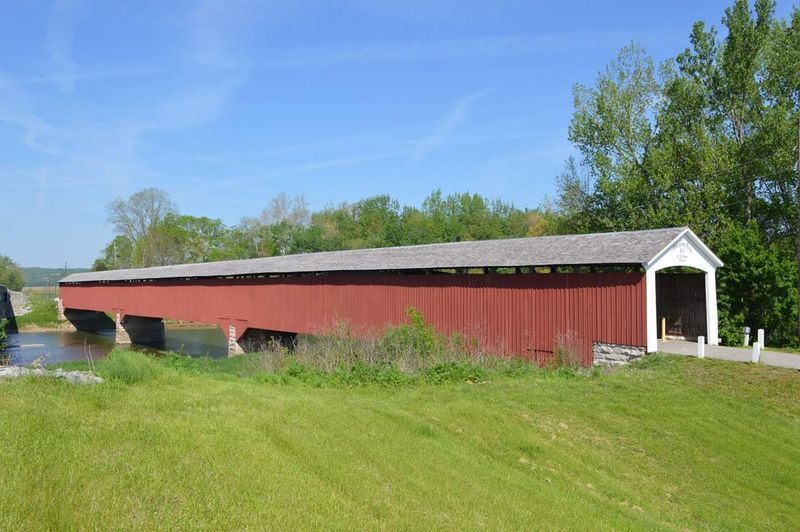
The star of this story is the Historic Medora Covered Bridge. You will find it at IN-235, Vallonia, IN 47281, in southern Indiana, United States.
It is widely known as the longest historic covered bridge in the country. Some people call it the longest in Indiana, and many call it the longest in the whole United States.
The bridge sits near the small town of Medora and is often linked with nearby Seymour as a local landmark. It is listed as a historical landmark, and it carries a strong 4.8-star standing from hundreds of people who have made the trip.
Here is the fun part. The bridge is easy to reach and not far off Interstate 65.
That makes it a smart stop for road-trippers heading north or south through the state. A short detour can turn a boring drive into a history lesson with a view.
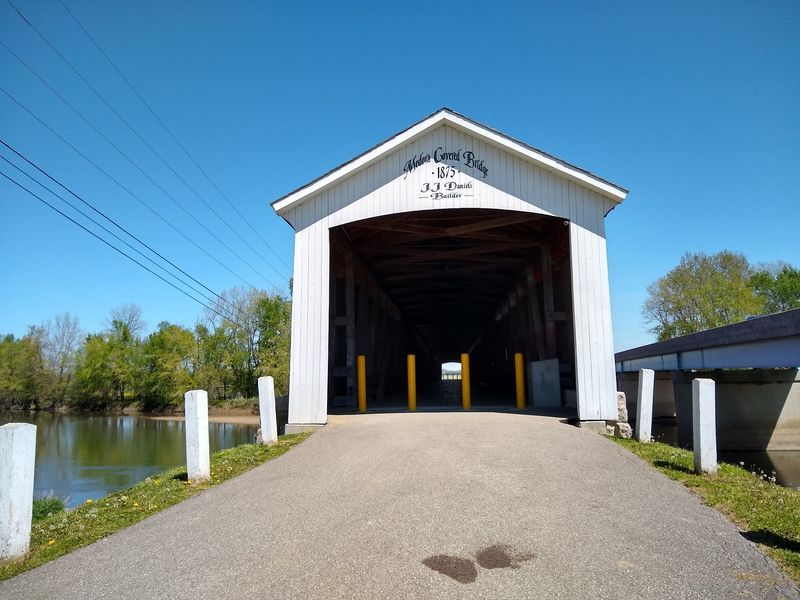
The bridge is no longer open to cars. A newer bridge carries traffic right beside it, so the old one gets to rest and welcome people on foot instead.
So what makes a wooden bridge from the 1800s worth a special drive? The answer starts with its age.
Born in 1861
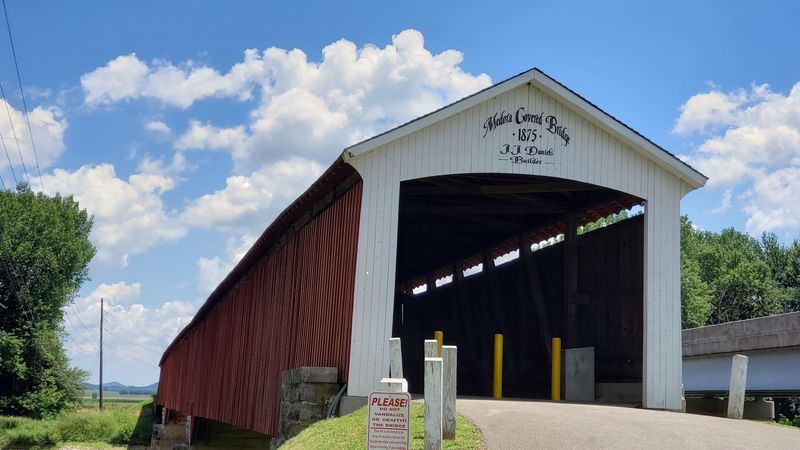
The year was 1861. The Civil War was just beginning, and crews in Jackson County were finishing a bridge meant to last.
It did. More than 160 years later, the Medora bridge still spans the river.
For many decades, it was part of daily life. Farmers, families, and travelers crossed it on their way to town and back home again.
Standing at one end, many people find themselves thinking about what life was like back then. Horses, wagons, and early cars all once rolled across these boards.
The bridge also tells a story about its builder. Covered bridge fans say there is a lot of history about both the structure and the man who made it, and the plaques on site help explain that story.
Here is a quick fun fact. Covered bridges got roofs to protect the wooden framework from weather, which helped them last far longer than open wooden bridges.
That clever choice is a big reason this one is still around to show off. Old does not always mean fragile, and this bridge proves the point every single day.
Three Arches, One Long Walk
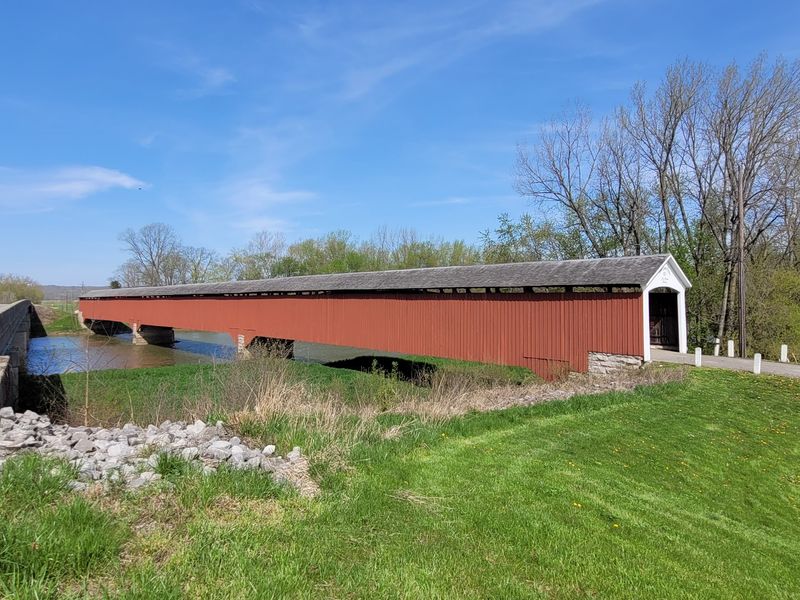
Count the spans and you get three. That simple number is part of what makes this bridge stand out from the many covered bridges across Indiana.
The three-span design stretches the bridge across the White River in a way few others can match. It is long enough that a first-timer often does a double take.
People who travel the state to photograph covered bridges call it truly magnificent. Some describe it as the only one of its size.
The arches are more than decoration. They help carry the weight across such a long distance, which is why the design was a big deal for its time.
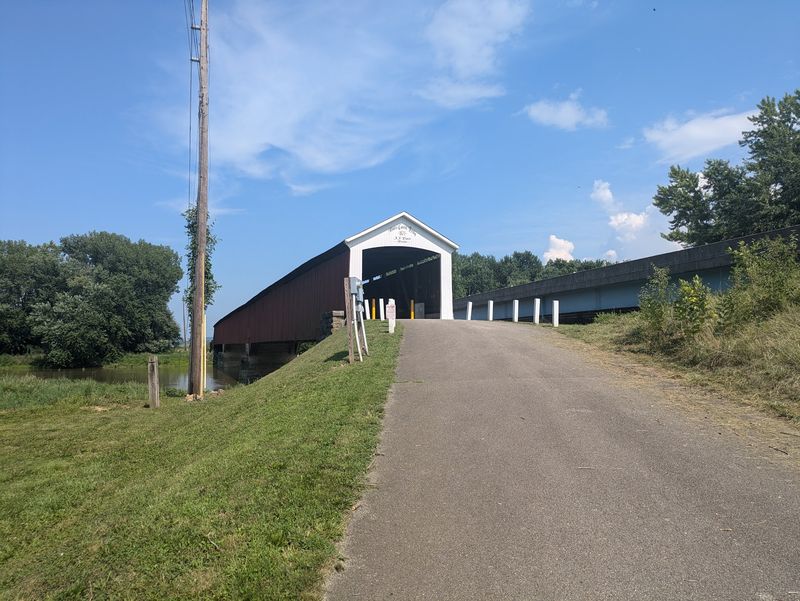
From the riverbank, you can see the full shape of the bridge at once. That side view is where the length really sinks in.
Bring a camera or a phone with plenty of storage. Photographers love this angle, and it is easy to see why.
Length gets the headlines, yet the real craftsmanship waits inside. That is where the next surprise lives.
Original Beams and Old-School Woodwork
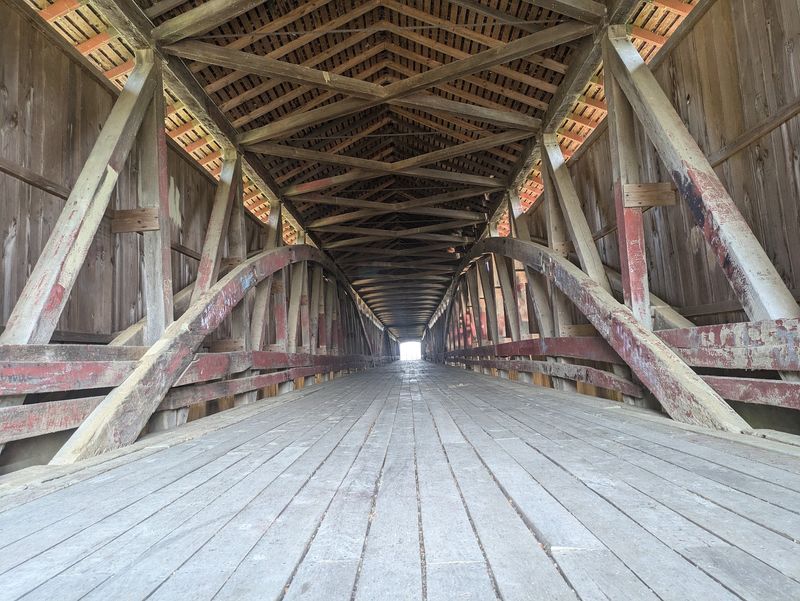
Look up once you step inside. The interior woodwork is the part that leaves many people impressed.
The beams are original. That means the timber holding this bridge together has been doing its job since the 1800s.
The framework is a puzzle of crossing beams and careful joints. It was all built by hand, long before power tools made the job easier.
History fans often point out a clear contrast. A modern bridge sits right next to the covered bridge, and comparing the two shows just how detailed the older work is.
The new bridge does its job just fine. Still, it does not have the same level of care and detail that went into the old one.
Take your time on the walk through. Each section of framing shows a little more of how the builders solved the challenge of such a long span.
Kids often enjoy spotting patterns in the beams. Adults tend to enjoy guessing how many hours it all took.
Either way, nobody leaves thinking they saw just a plain old wooden tunnel.
Feet Welcome, Cars Retired
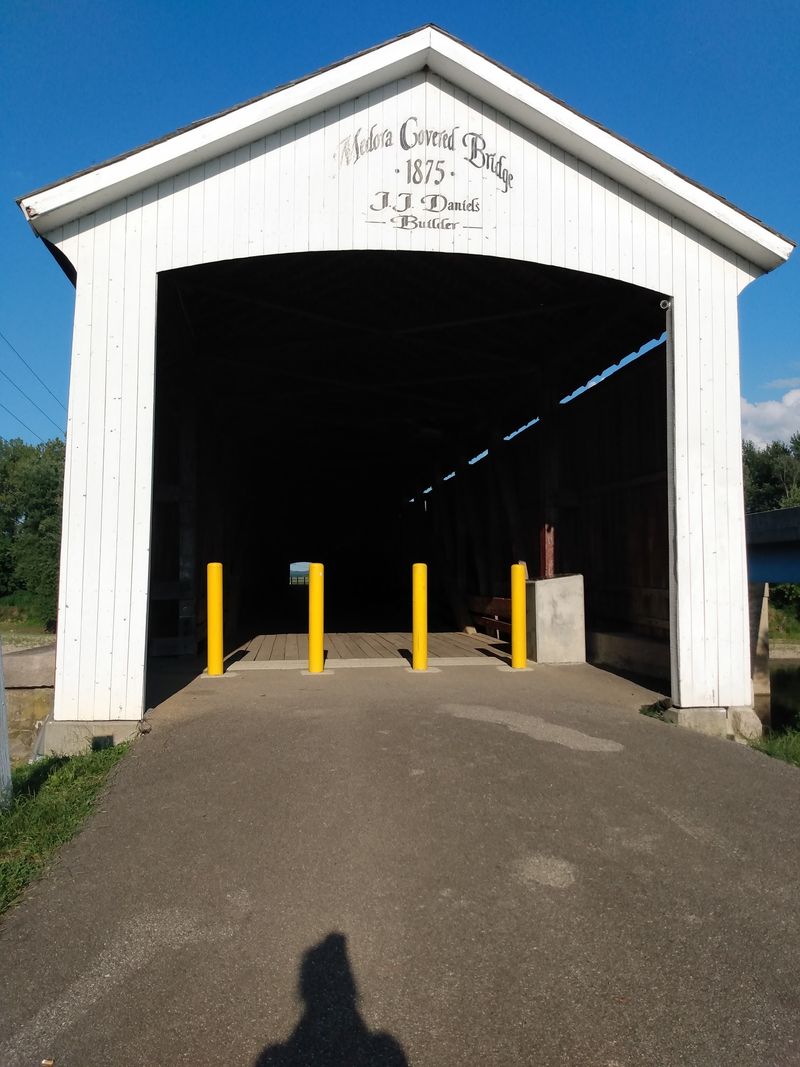
Good news for walkers. You can stroll the full length of the bridge from one end to the other.
Cars, on the other hand, have been retired from duty here. Traffic now uses the newer bridge next door, which keeps the old structure safe.
For many first-time visitors, the walk is the highlight. People who had never been on a covered bridge before often say crossing the longest one was the best way to start.
The walk is flat and simple. It works for most ages, and families with kids can make a little adventure of it.
Both ends of the bridge have access. You can start on either side, walk across, and turn back whenever you like.
Some couples treat the crossing like a bucket list item. More than a few people mark it off a list they have been keeping for years.
The pace is up to you. Walk fast, walk slow, or stop every few steps to read the beams like a history book.
There is no wrong way to cross, as long as you do it on foot.
Plaques That Do the Storytelling
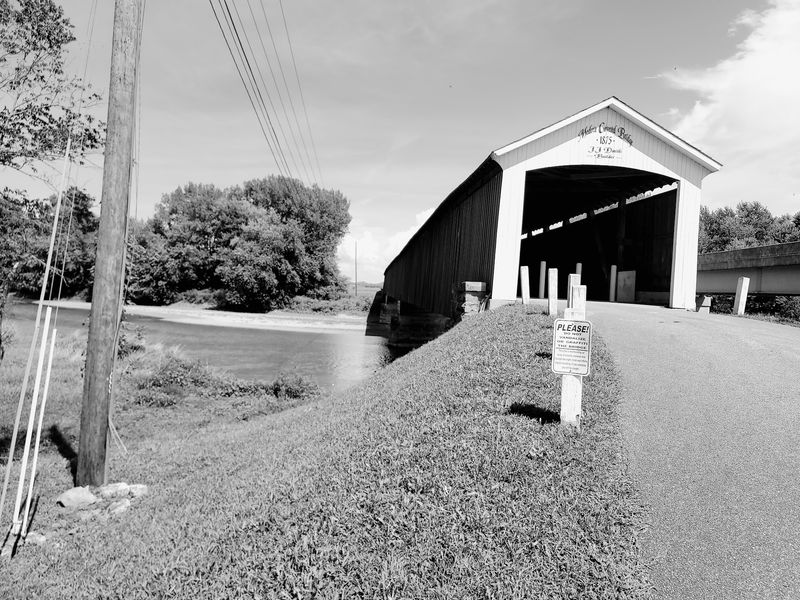
History buffs, this part is for you. At the parking lot end of the bridge, a set of plaques shares the story of the structure.
The plaques cover the history of the bridge and the efforts made to preserve it. They give useful background before or after your walk across.
Reading them first is a smart move. It turns a nice stroll into a walk with real meaning behind every beam.
Families have found the plaques helpful for kids, too. Learning about the bridge becomes part of the outing rather than a lecture.
The preservation story matters. Keeping a wooden bridge from 1861 standing takes real work and care over many years.
Some longtime fans of the bridge hope for even more restoration work in the future. That shows how much people care about keeping it in good shape.
Spend five or ten minutes here. It is a small investment that pays off in a much richer visit.
Picnic Tables With a Landmark View
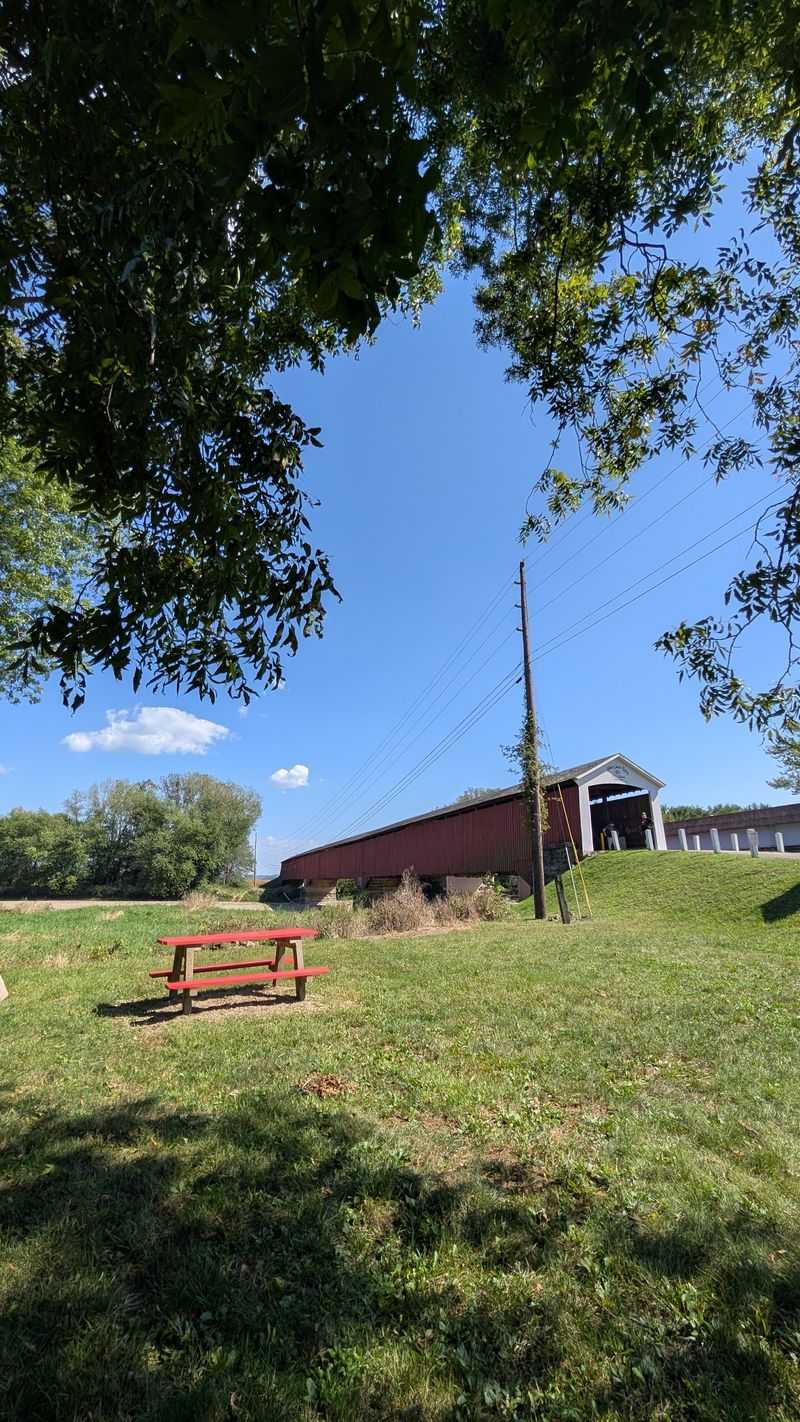
Pack a lunch. That might be the best tip anyone can give before heading to Medora.
A small park sits next to the bridge on the town side of the river. It offers picnic tables, with about four of them available for use.
The area is known for being clean and well kept. That makes it an easy place to settle in for a meal.
Picnics come up again and again when people talk about this spot. It is one of the most popular ways to enjoy the bridge.
Road-trippers often stop here to stretch their legs and eat. Travelers heading to other states have used it as a handy break.
The best part for budget fans is the cost. A homemade lunch plus a free landmark equals a very cheap outing.
Bring a blanket if the tables are taken. And maybe pack a few extra snacks, because history has a way of making people hungry.
River Access, Boat Ramp and Bank Fishing
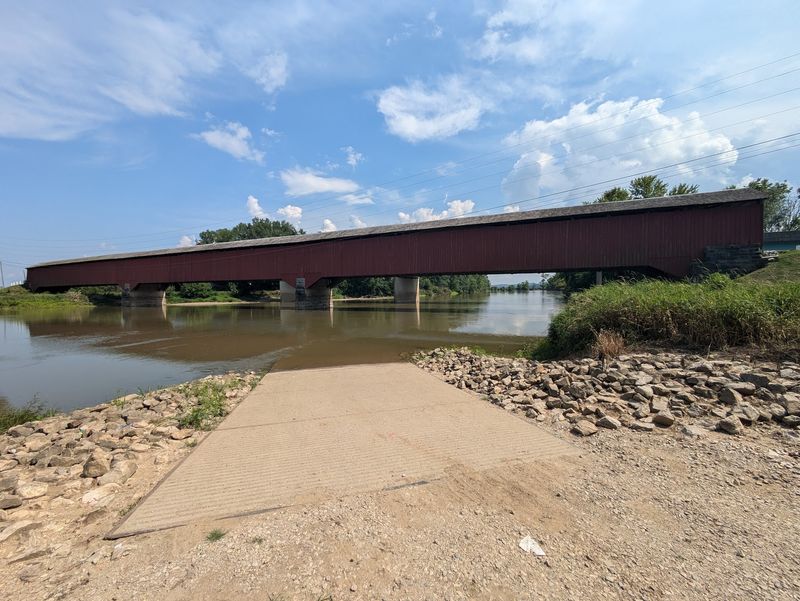
The bridge is not the only draw here. The river below it brings its own reasons to visit.
A boat launch sits right next to the bridge. It gives easy access to the White River for anyone bringing a small boat.
Anglers have also found this to be a good spot. Bank fishing is possible along the river, so you do not need a boat to cast a line.
People passing through have spotted folks fishing while they ate lunch nearby. It adds a relaxed, small-town touch to the setting.
The park area and river access go hand in hand. You can picnic, walk the bridge, and spend time by the water all in one stop.
Remember to follow Indiana fishing rules if you plan to cast. A valid license is part of being a good river neighbor.
For families, the river adds variety. Some can fish while others explore the bridge, and everyone ends up happy.
Dinner Under a Wooden Roof
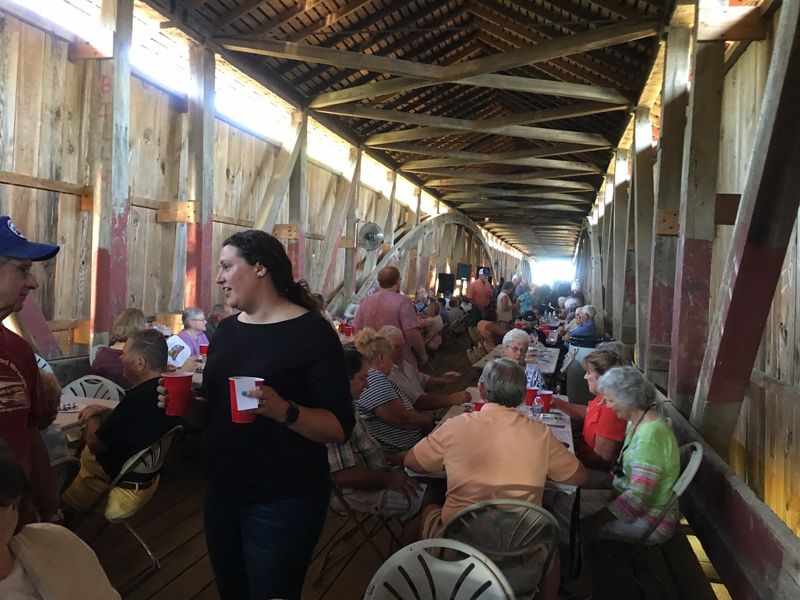
Here is a detail that surprises a lot of people. Once a year, a sit-down dinner is held right on the bridge.
Tickets are sold for the event. Guests get to share a meal inside one of the most famous covered bridges in America.
Many who visit on a regular day leave wanting to come back for it. The dinner has a way of landing on wish lists fast.
It is easy to see the appeal. Eating inside a bridge from 1861 is not something most people get to do.
The event also shows how the community uses and values its landmark. The bridge is not just a relic, it is still part of local life.
Details like dates and ticket costs change from year to year. Check with local sources ahead of time if you hope to snag a seat.
Plan early, since special events like this tend to have limited space. A table under these old beams makes for a story worth telling.
The Bridge Next Door
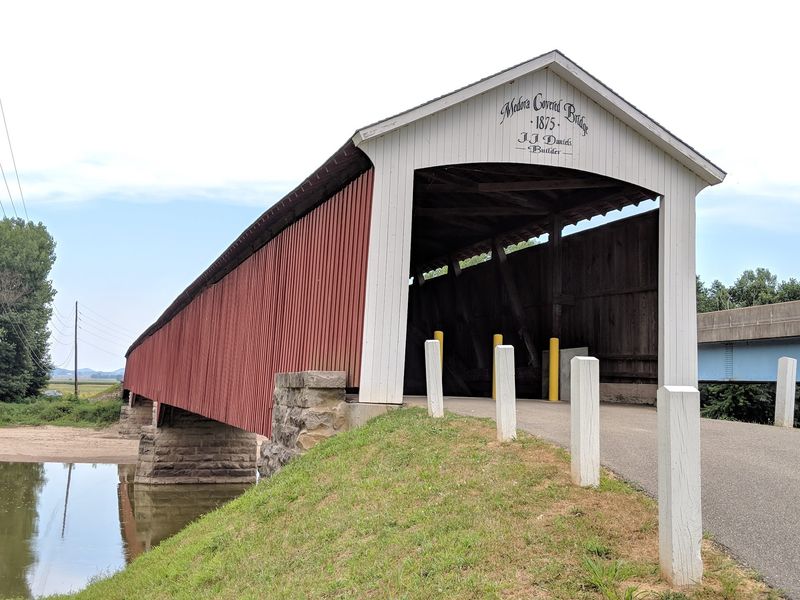
Two bridges, one river, and about 150 years of difference. That side-by-side view is one of the most interesting parts of a visit.
A modern bridge carries cars on IN-235 right next to the old covered bridge. The two make a striking pair.
History fans enjoy comparing them. The newer one is practical and plain, while the old one shows off detailed handwork everywhere you look.
The contrast helps people understand how bridge building has changed. Speed and cost now matter more, while the old style focused on craftsmanship.
The modern bridge also has a big role in protecting the covered one. Since traffic moved over, the historic bridge no longer has to carry heavy loads every day.
Snap a photo with both bridges in the frame. It tells a whole story in a single picture.
Old and new, side by side, each doing the job it does best.
Good Company for Every Kind of Traveler
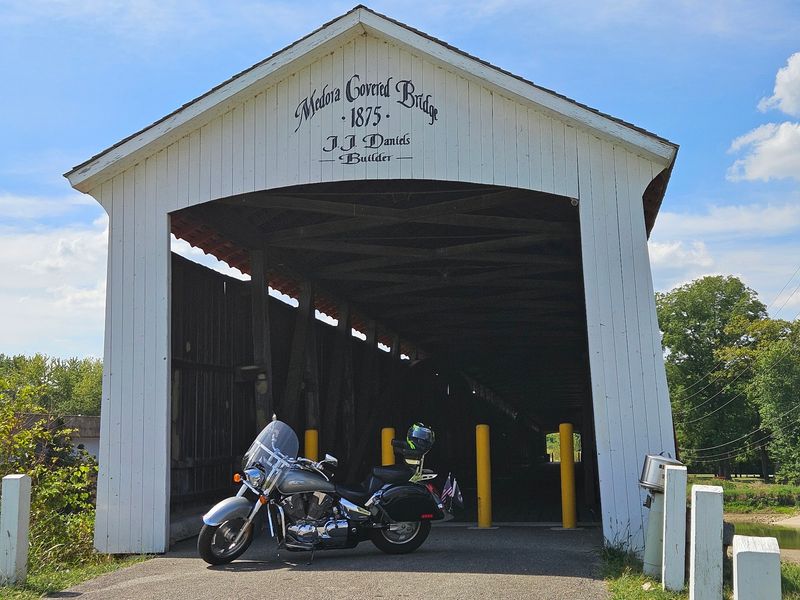
Motorcycle riders, campers, couples and families all seem to find their way here. The bridge has a broad fan club.
Bikers love it as a stop on country rides. The parking area works well, even for motorcycles.
Families camping nearby have used it as an easy outing. One group even found it to be a perfect rainy-day activity, since the bridge roof keeps the walk covered.
Couples often treat it as a bucket list trip. Friends make a day of it together.
People call the setting serene and peaceful. It is a quiet spot, not a crowded theme park.
The area has stayed fairly free of graffiti. Cameras have been installed to help keep it that way, which adds to the clean feel.
History lovers, photographers and casual drivers all leave with something. That wide appeal is a big reason the bridge holds such a high standing.
Bring whoever you like, because nobody gets left out here.
Free, Open Anytime and Close to I-65
Here is the budget-friendly headline. Visiting the bridge costs nothing.
There is no entry fee to walk across or enjoy the park. That makes it one of the cheapest outings in southern Indiana.
The site is listed as open 24 hours, every day of the week. Still, daylight is the best time to see the woodwork and read the plaques.
Getting there is simple. The bridge is not far off I-65, so a short detour gets you there from the interstate.
Parking sits near one end of the bridge, close to the plaques. The lot handles cars and motorcycles without much fuss.
Plan for about an hour if you want to walk, read, and snap photos. Add more time for a picnic or fishing.
For more background, the bridge has a listing on the Bridges and Tunnels website. It is a handy resource before you go.
Free, flexible and easy to find. A day trip rarely gets simpler than that.
Worth the Detour, Every Time
Some places earn a spot on the map through sheer staying power. The Medora bridge is one of them.
It has stood since 1861 and still welcomes people on foot. It holds a national record and does it without any fuss.
The visit checks a lot of boxes. There is history, a long walk, a clean park, river access and a yearly dinner that people dream about.
It also costs nothing to enjoy. For Indiana families watching their budget, that is a big win.
The bridge rewards curiosity. The more you read and look, the more you appreciate the work that went into it.
Hoosiers have a lot to be proud of here. A national record holder sits quietly in a small southern Indiana town, waiting for the next road trip.
So pack a lunch, grab your crew and head toward Medora. The longest historic covered bridge in America has been waiting since 1861, and it is still in no rush.