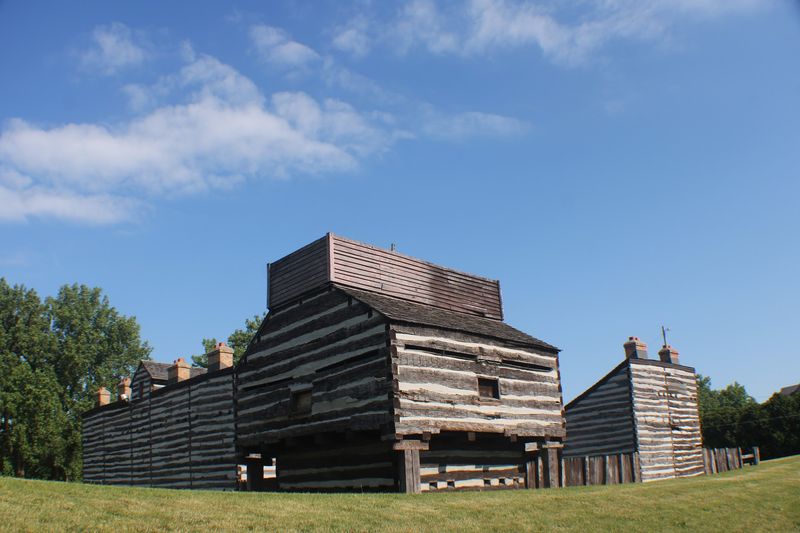
A city in northeast Indiana carries the name of a Revolutionary War general, and the reason sits right beside a busy road near downtown. Wooden walls rise from a grassy hill, cannons wait for their next big day, and log buildings stand where soldiers once braved long northern winters.
Somewhere between 50 and 75 men lived inside a post like this, which is hard to believe once the size of the rooms sinks in. The best part for families on a budget is simple: the grounds are free, the tours are free, and the parking across the street is free too.
Big reenactment weekends bring musket drills, blacksmith work, and cannon fire that kids talk about all the way home. Keep reading to learn the story, the best days to go, and a few smart tips that make the trip worth the drive.
A Frontier Outpost on Spy Run Avenue
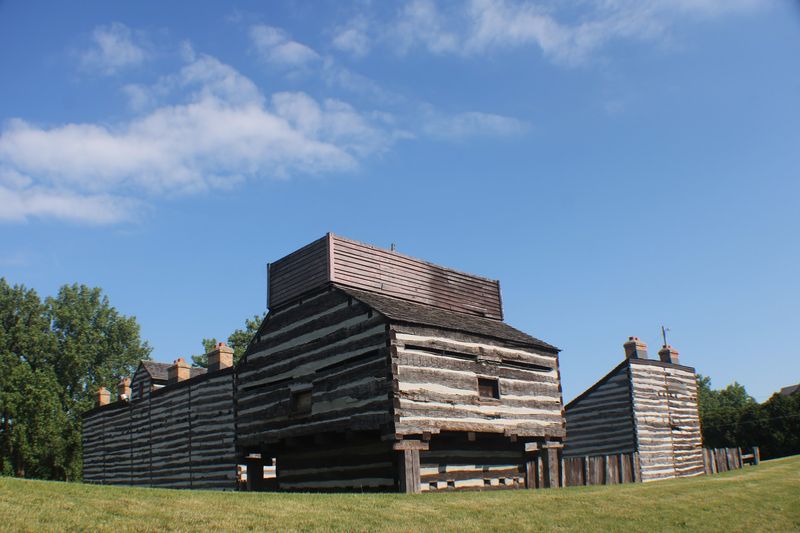
Fort Wayne owes its very name to the spot this article is all about. The Historic Old Fort stands at 1201 Spy Run Ave, Fort Wayne, IN 46805, in the northeast corner of Indiana.
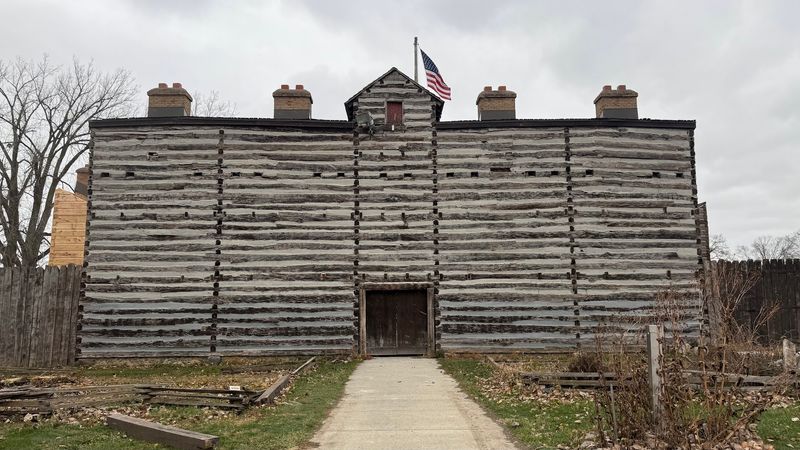
The fort is a reconstruction of a 19th-century military post. It is not the original building, but it was built to show how the soldiers who held this ground actually lived.
Inside the walls, a cluster of log buildings forms a small complex. Living history exhibits and demonstrations bring the place to life on special event days.
The location makes it easy to fit into a city outing. It sits along U.S.
Route 27, close to downtown Fort Wayne and the rivers that shaped the town.
One detail surprises many first-timers. The hill with its old timber walls sits within sight of modern downtown, so the old and the new appear side by side in the same view.
That contrast is part of the charm. A short stop here turns a regular city day into a lesson about where the whole community began, and it all starts with a simple walk through the gate.
The General Behind the Name
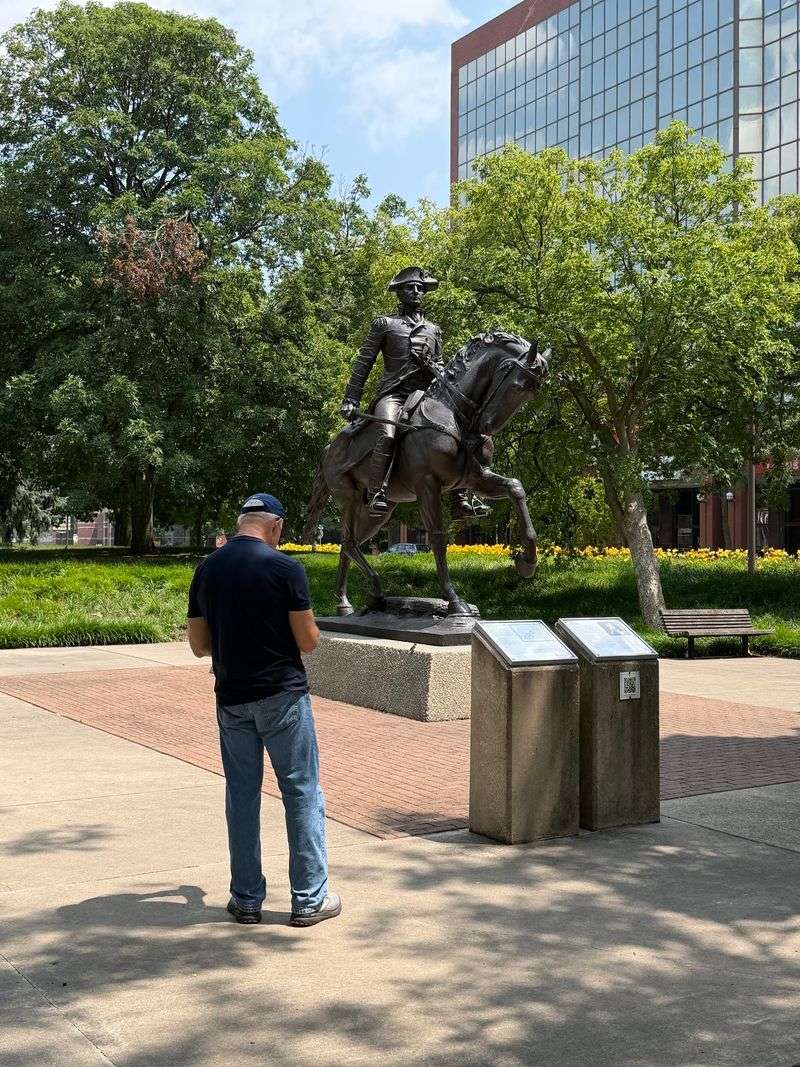
Revolutionary War General Anthony Wayne gave this city its name. The fort that carried his name came first, and the city grew up around it.
That makes the Old Fort more than a pretty set of log walls. It is the reason the city exists in the form people know today.
The fort also played a role in the War of 1812. The famous Siege of 1812 is the event the site now celebrates with its biggest reenactment weekends.
Life inside the walls was tough. Somewhere between 50 and 75 men lived in quarters like these, and they did it through hard Northern Indiana winters.
Seeing the buildings in person makes that history feel real. Books and websites can share dates, but standing in the actual space gives a clearer sense of how tight and hardworking daily life must have been.
The official parks website offers a short but helpful history of the fort for anyone who wants a quick primer before arriving. Reading it first gives every building a little more meaning once the gate swings open.
Cannons, Muskets and the Siege of 1812
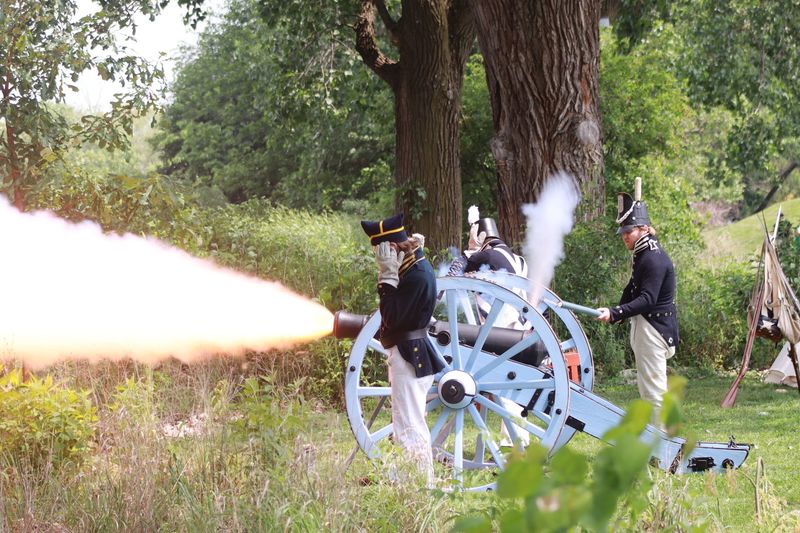
Mark the calendar, because event days are when this fort truly wakes up. The War of 1812 reenactment draws the biggest crowds and the most excitement.
Reenactors arrive in full period uniforms. They demonstrate cannon firing, musket drills, and the gear soldiers carried two centuries ago.
Camps are set up around the grounds to show living conditions from the era. Families can walk between tents and see how soldiers cooked, slept, and stored supplies.
Cannon fire is the crowd favorite. Kids tend to remember that boom long after the day ends.
The Siege of 1812 weekend also brings in history authors. Past events have included book signings, so it is smart to bring a little spending money for a souvenir read.
Festival-style days offer plenty to learn without feeling like a classroom. The reenactors explain what they are doing and why it mattered.
Event schedules change from year to year. Checking the parks event calendar ahead of time is the best way to catch the action instead of arriving on a quiet day.
Blacksmiths, Woodworkers and Pioneer Crafts
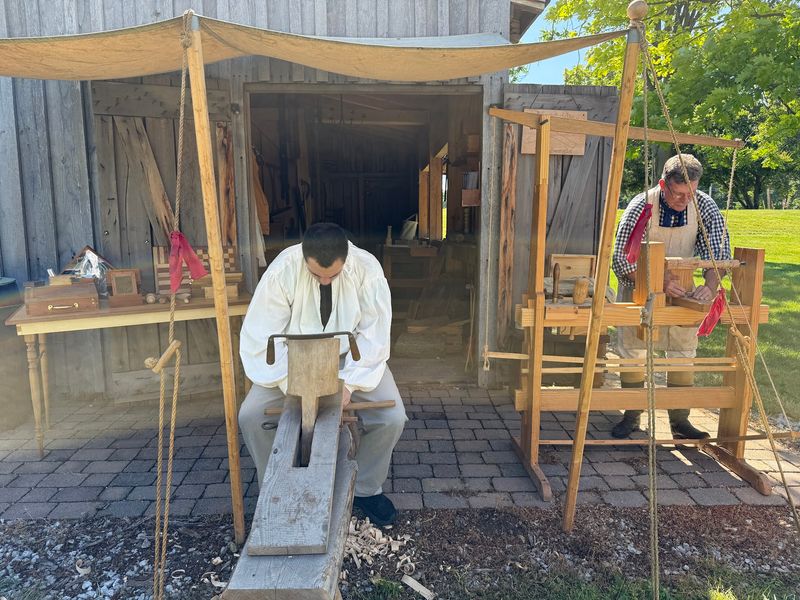
Hammers and hand tools get a starring role here. Living history days feature a working forge, where blacksmith demonstrations show how metal goods were made by hand.
Woodworking demos are part of the lineup too. Watching a craftsman shape wood without power tools gives kids a new appreciation for everyday objects.
Many different characters and crafts appear across the grounds on event days. Each station shows a different skill that frontier life depended on.
An outdoor oven stands out as one of the most interesting features of the complex. It is a reminder that every meal took real effort and planning.
The houses and buildings are kept in good condition. That care helps the scenes feel believable rather than staged.
Some guests leave wishing they could watch period cooking in action. That kind of wish says a lot about how engaging the craft demos can be.
For curious kids and handy adults alike, these stations are where the past stops being abstract. Seeing a hinge or a tool made in front of you sticks better than any textbook chapter.
River Trails and a Bridge Worth Crossing
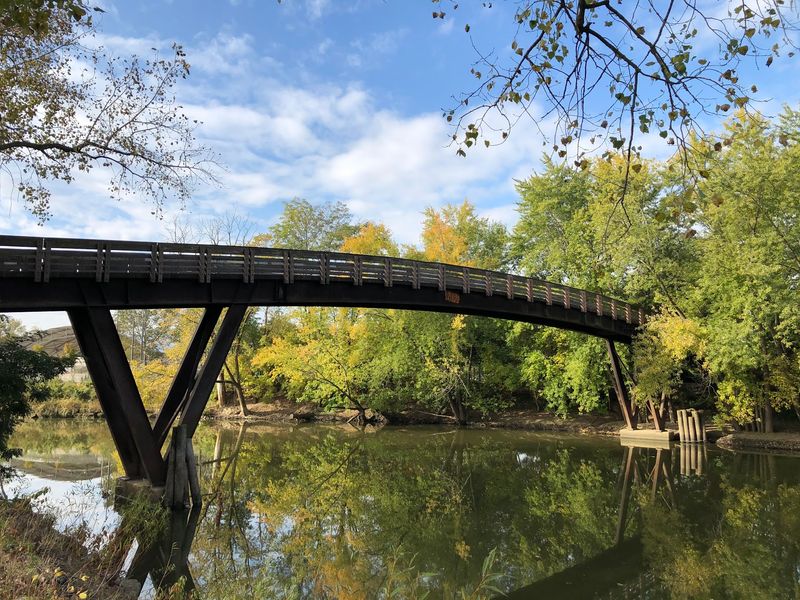
Getting to the gate can be half the adventure. The fort connects to the local trail and park system that follows the rivers through Fort Wayne.
A popular route follows the St. Marys pathway from a parking area. The easy walk takes about 20 minutes.
Along the way, the path passes views of the St. Marys River, a viewing deck, and a wall of eye-catching graffiti art. Photo stops come up often.
A bridge over the river leads toward the fort, and many people count it as a highlight of the outing. The walking is easy, with several points to cross the rivers.
After exploring the fort, crossing the bridge to Headwaters Park adds another chapter. The area tells the story of Fort Wayne as a pioneer fort, a railroad hub, and a river transport center.
Hikers and casual strollers both find something to like. The trails turn a quick history stop into a relaxed afternoon outdoors.
Comfortable shoes are a good call. The fort is the destination, but the riverside path deserves its own spot on the itinerary.
Who Will Love This Little Fort
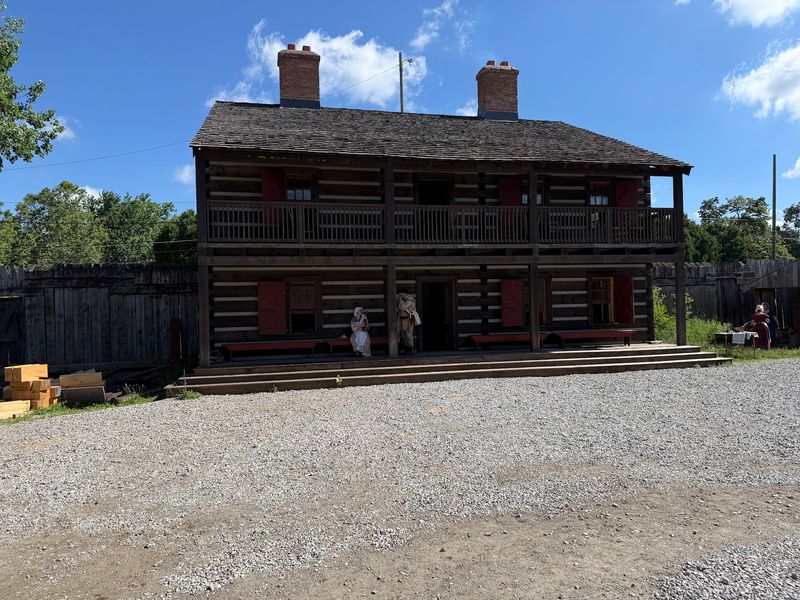
History fans are the obvious match, but the guest list runs wider than that. Families with kids find plenty to see and learn, especially on event weekends.
Children enjoy the characters, the crafts, and the chance to step inside old buildings. Adults tend to appreciate the context and the conversations with guides.
The complex is small. A free hour is usually enough to explore the grounds and read up on the story.
That size makes it a great add-on rather than a full-day trip for long-distance drivers. Pairing it with other Fort Wayne stops makes the drive more rewarding.
Bold explorers might even try a winter visit. Cold weather offers a small taste of what fort life demanded, though it is not for everyone.
Expectations matter here. On quiet days, many structures may be closed off, and some guests have wished for more hands-on activities outside of event days.
Planning around a reenactment solves most of that. Go on the right day, and this modest fort punches well above its size.
Hours, Parking and Free Admission
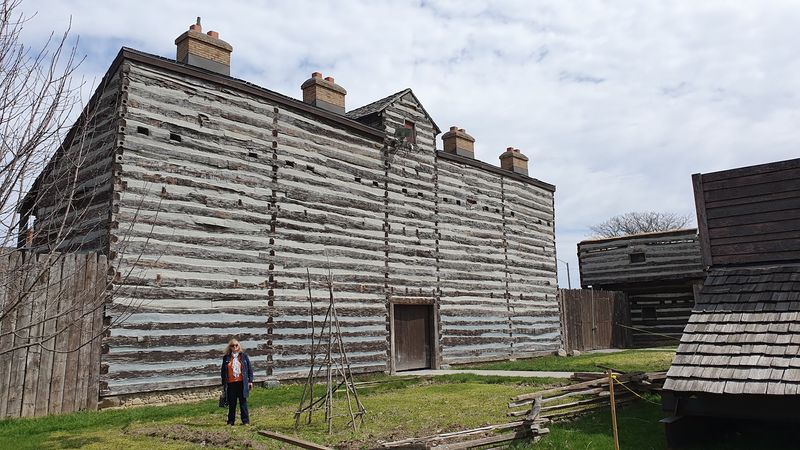
Good news for the wallet comes first. The tours are free, and parking across the street is free as well.
Guided tours run about 30 minutes. Guides are friendly and knowledgeable, and they happily share dates for upcoming reenactments.
Current listed hours are Wednesday through Saturday from 10 AM to 5 PM. Sunday hours run from noon to 4 PM.
The fort is closed Monday and Tuesday. Showing up on those days means a view from outside only.
On a regular Sunday, the inside of the fort may not be open. The outside grounds remain free to explore, and a restroom is available.
The site has gone through periods of closure for rebuilding and historic preservation. Listed hours have not always matched reality, so a quick check with the Fort Wayne Parks website before driving is wise.
One safety note deserves attention. Crossing from the parking area means crossing three lanes on a busy street without a dedicated crosswalk, so take extra care, especially in the afternoon.
Worth the Drive on the Right Day
Free history is a rare find, and Fort Wayne delivers it right where the city began. The Historic Old Fort holds a solid 4.4-star standing across hundreds of opinions, which says plenty about its appeal.
Its strongest days are clear. Reenactment weekends bring cannons, muskets, forges, and camps that turn the hill into a living classroom.
Quieter days still offer something. The grounds, the river trails, and the view of old walls beside modern towers make a pleasant hour.
Smart planning makes all the difference. Check the event calendar, confirm the hours, and avoid Mondays and Tuesdays.
Pair the fort with a walk along the St. Marys pathway and a stop at Headwaters Park. That combo turns a short visit into a full Fort Wayne story.
For Indiana families looking for a low-cost outing, this one checks the boxes. It is educational, outdoors, and free from start to finish.
Two centuries separate today from the soldiers who wintered here. A single afternoon, and not a dime, is all it takes to close that gap.