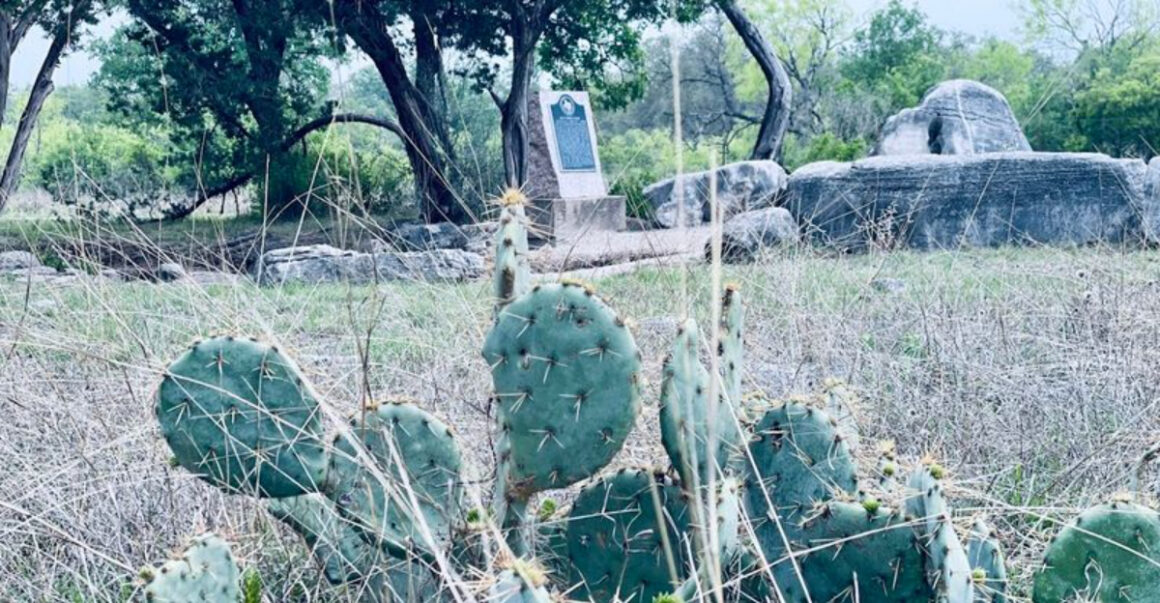
Just off a quiet country road near Marble Falls, a 155-foot vertical cave holds one of Texas Hill Country’s darkest secrets. Dead Man’s Hole earned its grim name during the Civil War when Confederate sympathizers used it as a dumping ground for murdered Unionists. What happened here between 1861 and 1865 reads like a horror story, but every chilling detail is rooted in historical fact that still echoes across the Texas landscape today.
1. A Natural Death Trap That Became a Murder Scene
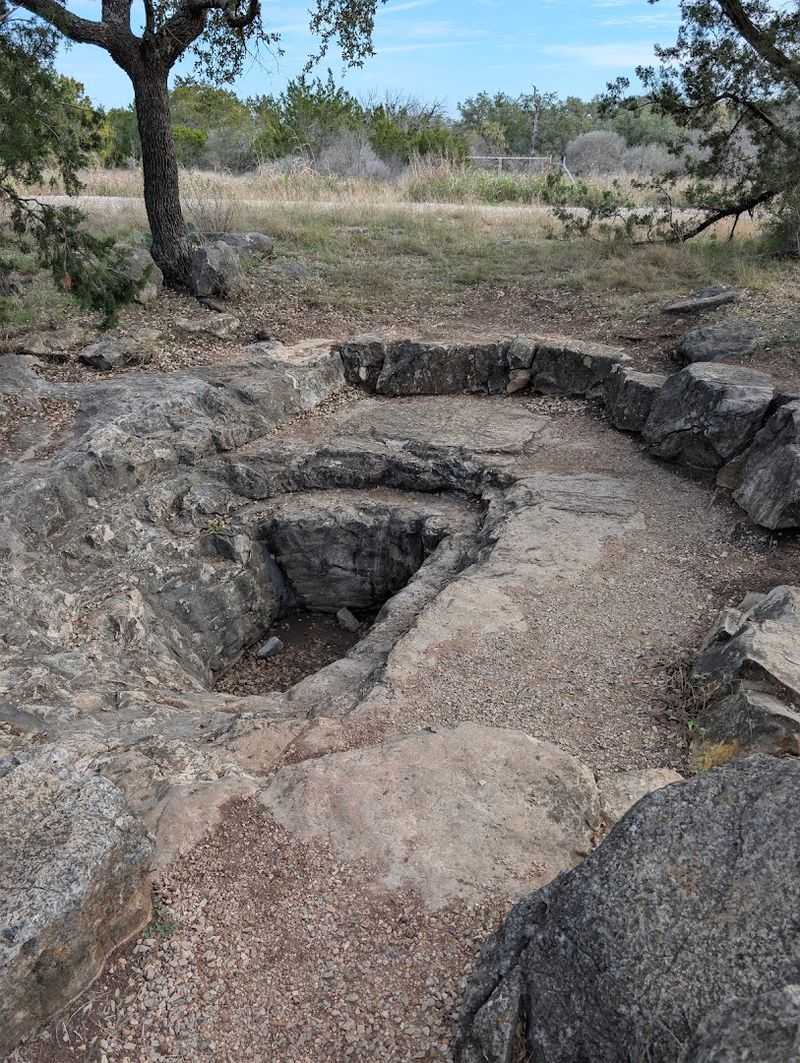
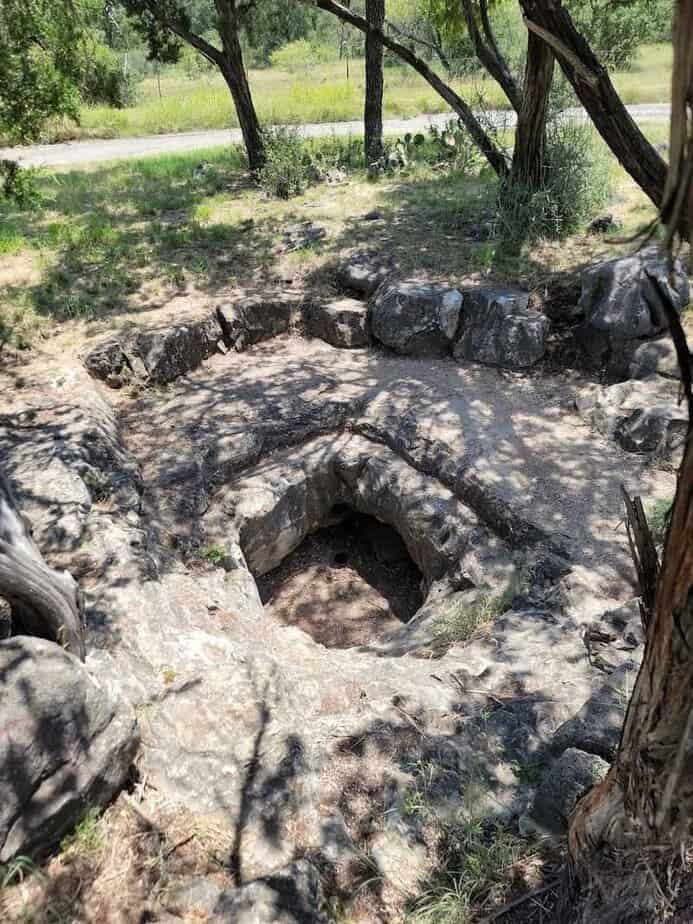
The geological formation known as Dead Man’s Hole existed long before humans gave it such a haunting name. This natural limestone sinkhole plunges straight down into the earth, creating a nearly perfect vertical shaft that drops 155 feet into darkness. Early settlers discovered it while exploring the rugged Hill Country terrain, never imagining the sinister purpose it would eventually serve.
During the Civil War, the remote location and sheer depth made it ideal for disposing of evidence. Confederate vigilantes realized that bodies thrown into this abyss would vanish completely from sight. The natural cave system swallowed secrets whole, and the isolation meant witnesses were few and far between.
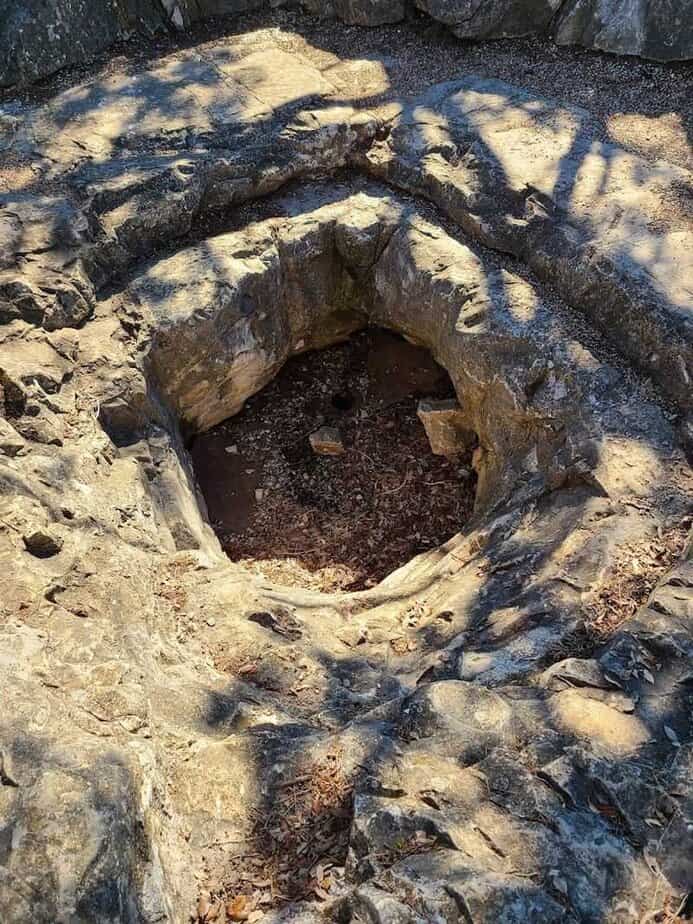
Geologists believe the hole formed over thousands of years as acidic groundwater dissolved the limestone bedrock. The circular opening measures just a few feet across at the surface, but the shaft widens as it descends into chambers below. Standing at the edge today, you can barely see the bottom even with a flashlight.
The cave’s natural ventilation creates eerie sounds when wind passes through the opening. Local folklore claims you can still hear echoes rising from the depths, though scientists attribute these noises to air pressure changes and underground water movement.
2. Civil War Tensions Turned Deadly in the Hill Country
When Texas seceded from the Union in 1861, not everyone in the Hill Country supported the decision. German immigrants who had settled around Fredericksburg and Comfort maintained strong Union sympathies, creating a dangerous divide in communities that once lived peacefully together. These political differences quickly escalated from heated arguments to deadly violence.
Confederate authorities viewed Union sympathizers as traitors who threatened Texas security. Loyalty oaths became mandatory, and those who refused faced harassment, property seizure, or worse. The Hill Country’s isolation made it easier for vigilante groups to operate without oversight from official military channels.
Pro-Union residents tried keeping low profiles, but their accents and cultural traditions made them easy targets. Some organized secret meetings to discuss escaping to Mexico, where they hoped to join Union forces. Confederate spies infiltrated these gatherings, gathering names and plotting retribution against those they considered enemies of the Southern cause.
The violence peaked between 1862 and 1863 when roving bands of Confederate irregulars hunted suspected Unionists. These weren’t formal military operations but rather extrajudicial killings carried out by locals who took the law into their own hands. Dead Man’s Hole became their preferred disposal site for victims.
3. The Brutal Murders That Gave the Hole Its Name
Historical records document at least seventeen men who disappeared near Marble Falls during the Civil War years. Their families reported them missing after Confederate vigilantes dragged them from homes in the middle of the night. Most victims were German immigrants or native Texans who openly opposed secession and refused to fight for the Confederacy.
The killings followed a brutal pattern. Armed groups would arrive after dark, sometimes wearing hoods or masks to conceal their identities. They’d bind their victims’ hands and force them onto horses for the ride to the isolated sinkhole.
Some victims were already dead when thrown into the shaft, while others may have been alive when they plummeted into darkness.
One particularly tragic case involved a father and son taken together from their farm. Neighbors heard the commotion but were too terrified to intervene, knowing they might become the next targets. The family waited weeks for the men to return before accepting they were gone forever.
Confederate sympathizers spread rumors that these men had fled to Mexico or were killed in skirmishes with Confederate troops. The truth remained hidden until years after the war ended, when locals finally felt safe enough to speak about what really happened in the Hill Country darkness.
4. Discovery of Bodies Decades After the War
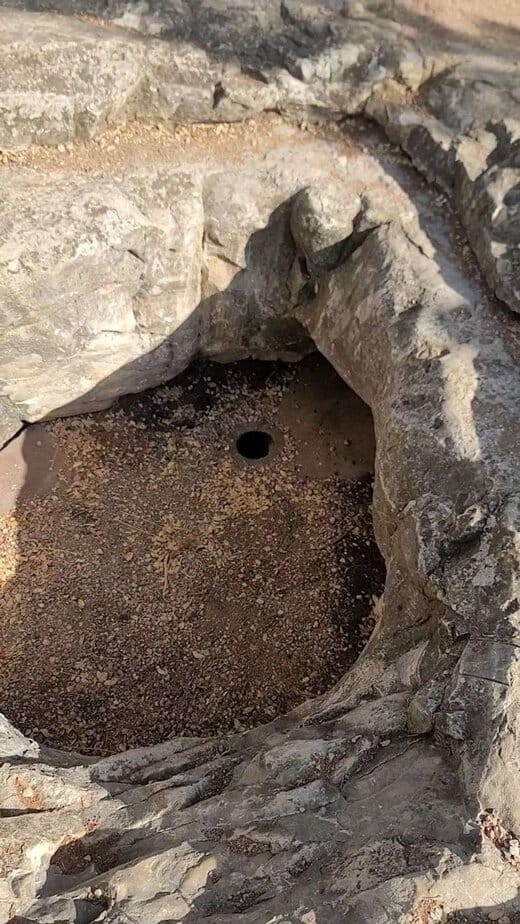
The first bodies weren’t discovered until the 1890s, nearly three decades after the Civil War ended. A local man exploring the cave system rappelled partway down the shaft and spotted human remains wedged on a limestone ledge about forty feet below the surface. His discovery prompted a more thorough investigation that revealed the hole’s gruesome history.
Recovery efforts proved extremely dangerous given the vertical nature of the descent and primitive equipment available at the time. Volunteers lowered themselves on ropes, finding skeletal remains scattered at various depths where bodies had caught on rock protrusions during their fatal plunge. Personal items like belt buckles, buttons, and fragments of clothing helped identify some victims.
Families who had spent decades wondering about missing relatives finally received confirmation of their worst fears. Some remains were retrieved and given proper burials, though recovering every victim proved impossible. The deepest chambers remained inaccessible with 1890s technology, meaning some bodies stayed entombed in the limestone forever.
The discoveries sparked renewed anger about Civil War atrocities that many Texans wanted to forget. Newspapers published accounts of the murders, and survivors provided testimony about the vigilante groups responsible. However, most perpetrators had died by then, escaping earthly justice for their crimes against neighbors and fellow Texans.
5. Why This Location Was Chosen for Such Dark Deeds
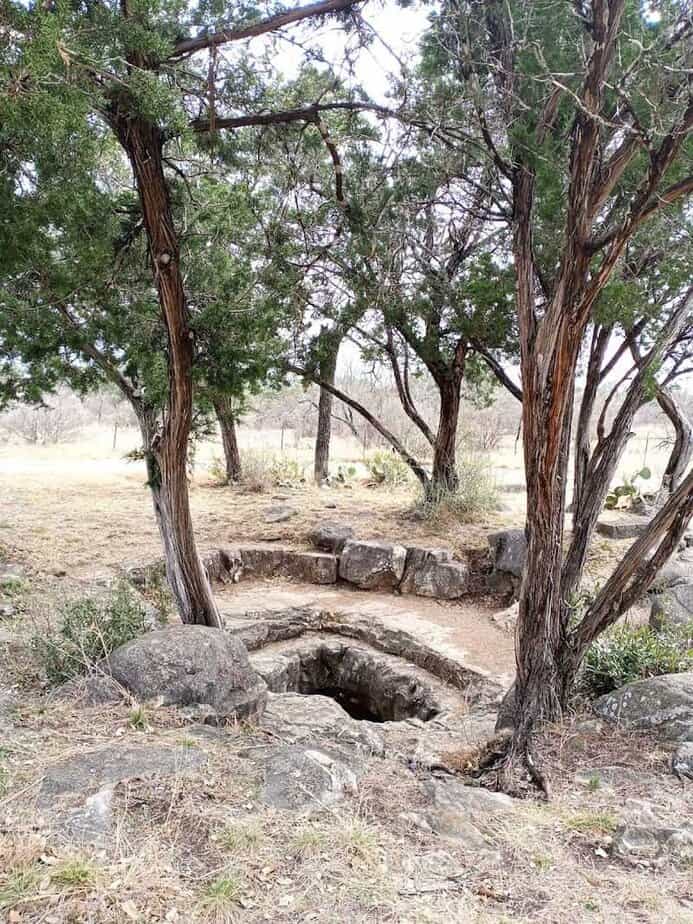
Confederate vigilantes didn’t randomly select Dead Man’s Hole for their murderous purposes. The location offered several strategic advantages that made it perfect for concealing crimes. Situated miles from the nearest town on rough terrain accessible only by horseback, the site guaranteed privacy for nighttime activities that required absolute secrecy.
The sinkhole’s vertical shaft meant bodies would vanish instantly from view once thrown inside. Unlike shallow graves that animals might disturb or heavy rains could expose, this natural tomb kept secrets buried deep beneath tons of limestone. No telltale mounds of freshly turned earth would alert passersby to foul play occurring in the area.
The surrounding landscape provided cover for approaching the site unseen. Dense cedar brakes and rocky outcroppings allowed vigilantes to move their victims cross-country without using main roads where witnesses might observe suspicious activity. The isolation also meant screams wouldn’t carry to nearby farms or settlements.
Local Confederate sympathizers knew about the hole from hunting and exploring the Hill Country before the war. They recognized its potential as a disposal site where evidence would remain hidden indefinitely. The natural formation did their dirty work for them, requiring no digging or construction that might leave traces of their crimes for future generations to discover.
6. The German Texans Who Paid the Ultimate Price
German immigrants comprised the majority of Dead Man’s Hole victims, targeted specifically for their strong anti-slavery beliefs and Union loyalty. These families had fled political oppression in Europe during the 1840s, seeking freedom in Texas only to face persecution again during America’s bloodiest conflict. Their accents and cultural traditions made them easily identifiable targets for Confederate extremists.
Many German Texans had established prosperous farms and businesses in the Hill Country before the war. They built tight-knit communities around Fredericksburg and Comfort, maintaining their language and customs while contributing to Texas development. Their success bred resentment among some Anglo neighbors who viewed them as outsiders refusing to assimilate completely into Southern culture.
When war broke out, German communities largely opposed secession through peaceful means. They held meetings, signed petitions, and voted against leaving the Union whenever given the chance. This political stance put them at odds with Confederate authorities who demanded absolute loyalty and military service from all able-bodied men in Texas.
The persecution forced many German families to flee their homes permanently. Some escaped to Mexico, while others moved to Union-controlled territories after the war. Those who stayed lived with trauma and loss, remembering neighbors and relatives who disappeared into Dead Man’s Hole simply for believing in freedom and opposing slavery in Texas.
7. How the Historical Marker Preserves This Dark Chapter
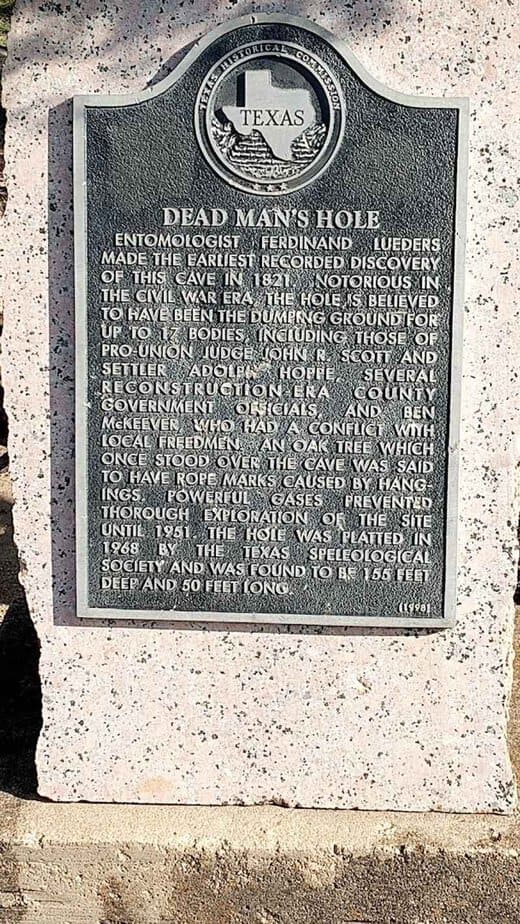
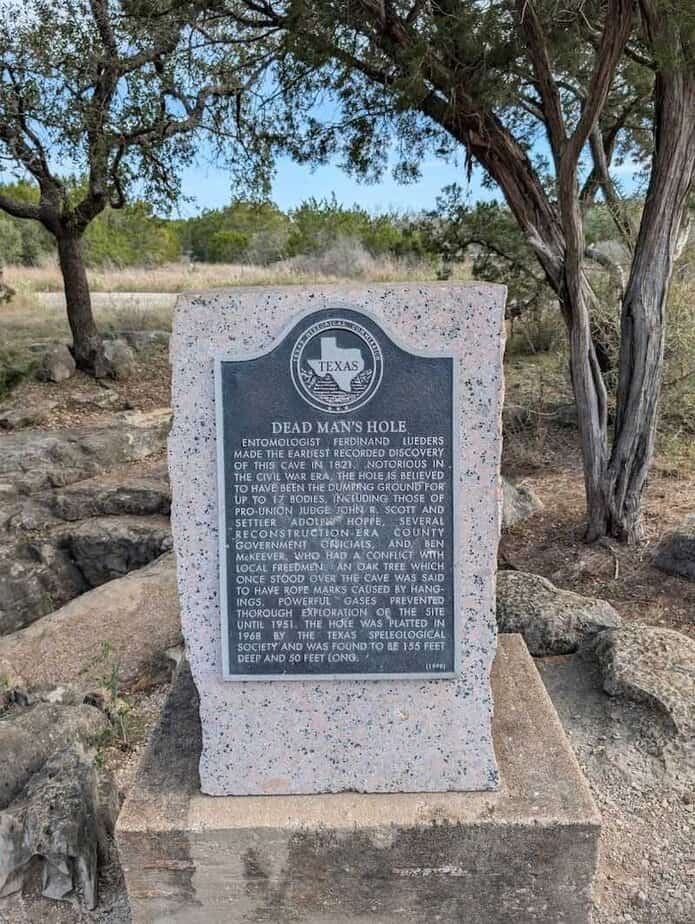
A Texas Historical Commission marker now stands at Dead Man’s Hole, ensuring visitors understand the site’s significance beyond its eerie appearance. The marker provides factual details about the Civil War murders, naming victims when possible and explaining the political tensions that led to such violence. It represents Texas’s willingness to confront uncomfortable truths about its past rather than whitewashing history.
The marker’s installation sparked debate about how states should memorialize tragic events. Some argued that highlighting Confederate atrocities dishonored Southern heritage, while others insisted that victims deserved recognition and remembrance. Ultimately, historical accuracy won out, and the marker presents documented facts without editorial commentary on either side.
Visitors often leave the site with a deeper understanding of Civil War complexity in Texas. The conflict wasn’t just distant battles between uniformed armies but also intimate violence between neighbors who once lived peacefully together. Dead Man’s Hole illustrates how political divisions can escalate to murder when extremism goes unchecked by law and order.
The marker has become an important educational tool for school groups and history enthusiasts exploring Texas’s complicated past. Teachers use the site to discuss topics like political violence, immigrant experiences, and the importance of protecting minority rights even during wartime. The physical presence of the hole itself makes the history tangible in ways textbooks cannot achieve.
8. Visiting the Site Today and What to Expect
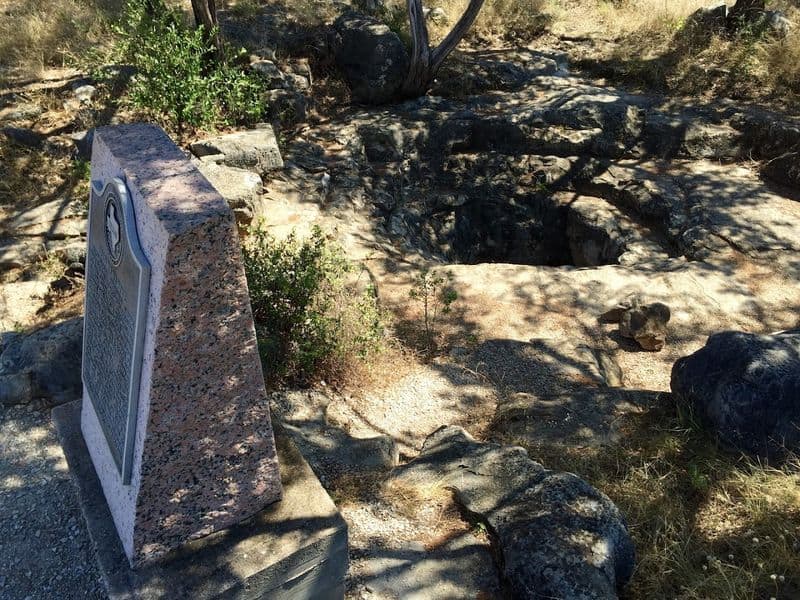
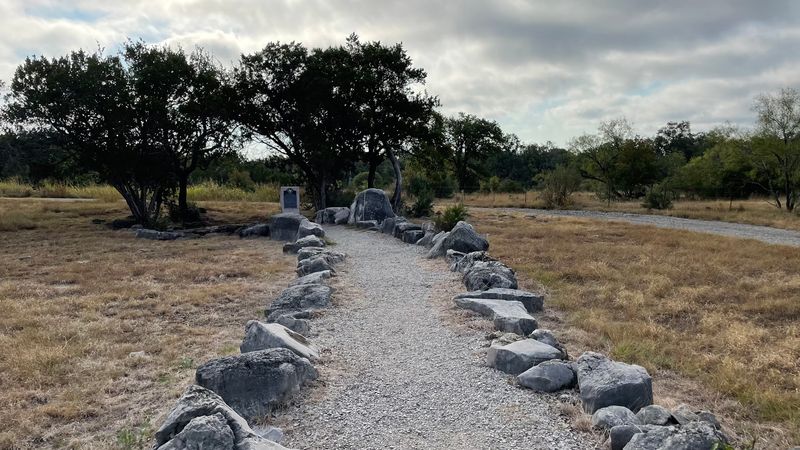
Dead Man’s Hole remains accessible to the public year-round, though visitors should prepare for a rustic experience. The site sits along County Road 401, about three miles off Highway 281 near Marble Falls. Parking is limited to a small gravel area, and the short walk to the hole follows an uneven rock path through typical Hill Country vegetation.
The sinkhole entrance is now capped with a metal grate for safety, preventing accidents while allowing visitors to peer into the darkness below. A ventilation opening lets air circulate through the cave system, sometimes creating haunting sounds that add to the location’s eerie atmosphere. Bringing a flashlight helps you see deeper into the shaft, though the bottom remains invisible from the surface.
Most visitors spend fifteen to twenty minutes reading the historical marker and contemplating the site’s significance. The remote setting provides a quiet space for reflection, though the isolation that once made it perfect for murder now contributes to its peaceful character. Wildflowers bloom around the area in spring, creating a beautiful contrast to the dark history beneath your feet.
The site lacks amenities like restrooms or water fountains, so plan accordingly before making the detour. Cell phone service is spotty in this rural area. Visitors should respect the location as a memorial to murder victims and avoid treating it as merely a curiosity or photo opportunity.
9. Why This Story Matters for Understanding Texas History
Dead Man’s Hole challenges the romanticized narrative of the Old West that Hollywood often presents. Real frontier justice was frequently brutal, arbitrary, and targeted vulnerable populations who lacked power to defend themselves. This site proves that Texas history includes shameful chapters alongside the heroic tales of independence and pioneering spirit we celebrate more readily.
The murders highlight how political extremism can flourish in isolated areas where law enforcement is weak or complicit. Confederate vigilantes operated with impunity because local authorities either supported their actions or feared becoming targets themselves. This breakdown of civil society during wartime created conditions where neighbors could murder neighbors without facing consequences.
Understanding this history helps modern Texans recognize warning signs when political tensions escalate toward violence. The same dynamics that led to Dead Man’s Hole murders—dehumanizing opponents, viewing dissent as treason, and operating outside legal systems—remain relevant today. History doesn’t repeat exactly, but human nature shows consistent patterns across generations.
The site also honors victims who died simply for their beliefs about freedom and human rights. These German Texans and Union sympathizers deserve remembrance as much as Confederate soldiers or Texas Rangers celebrated elsewhere. Preserving sites like Dead Man’s Hole ensures that all voices from Texas history receive recognition, creating a more complete and honest understanding of our shared past.