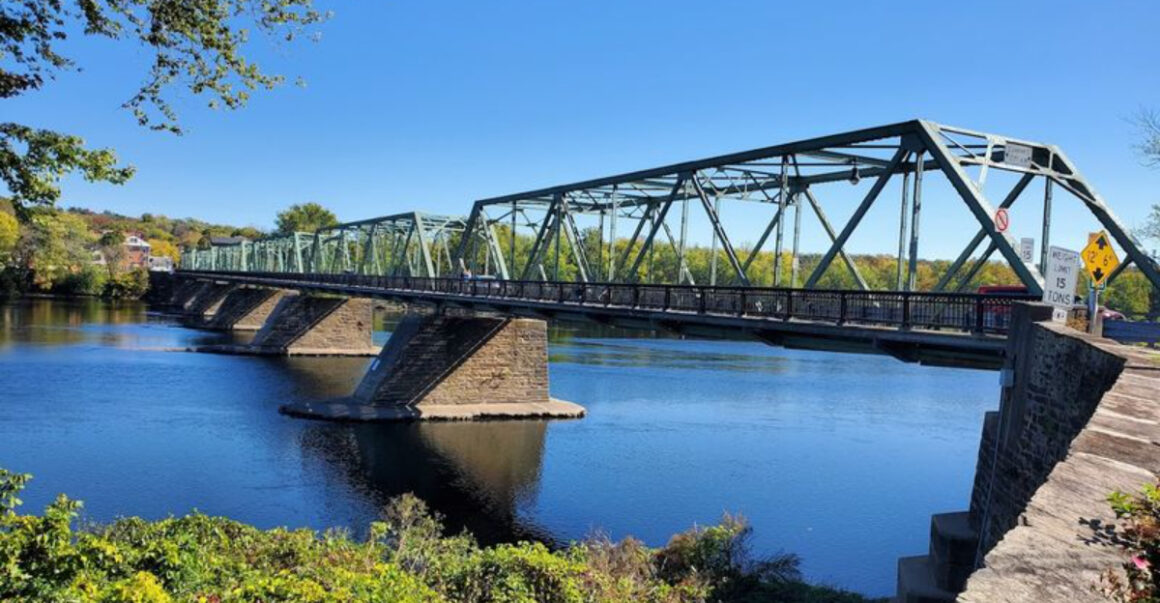
There are plenty of bridges in New Jersey, but not many make you slow down on purpose. The Uhlerstown-Frenchtown Bridge does exactly that.
Spanning the Delaware River between Frenchtown, New Jersey, and Uhlerstown, Pennsylvania, this narrow steel truss crossing is one of those places that feels more interesting the second you step onto it.
Cars creep across at a low speed, the river opens up on both sides, and in a few minutes you can literally walk out of one state and into another.
Not in an airport-terminal way, either. In a charming, small-town, river-valley kind of way.
The bridge dates to 1931, sits on much older 1840s masonry supports, and recently got a safer, wider pedestrian path, which makes the whole experience even better for walkers.
Add in Frenchtown’s lively main street and Uhlerstown’s canal-side quiet, and this is less a crossing than a very good excuse to make an afternoon of it.
Why This Little New Jersey Bridge Feels Like a Two-State Adventure
Some places sound bigger on paper than they feel in real life. This bridge does the opposite.
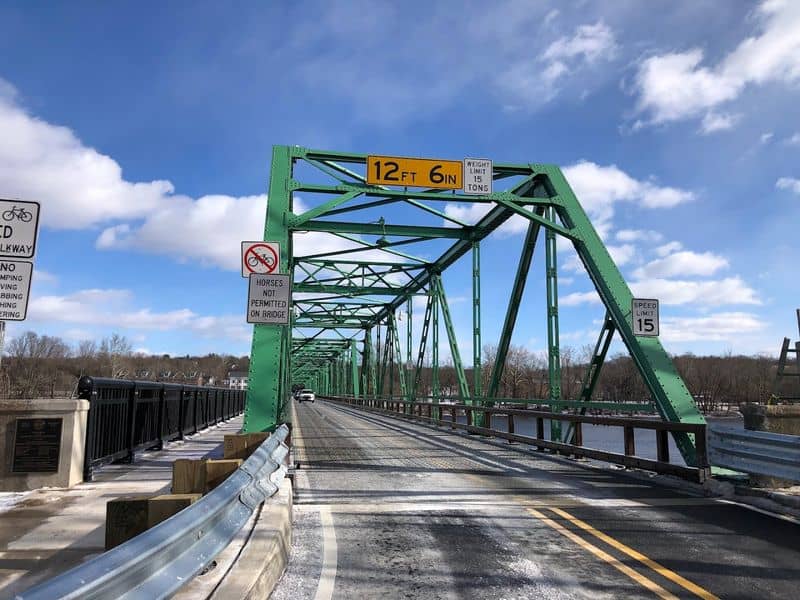
The Uhlerstown-Frenchtown Bridge is only about 950 feet long, but crossing it on foot gives you that satisfying little thrill of doing something oddly memorable with almost no effort. One minute you are in Frenchtown, with its compact downtown and easy river-town buzz.
A few minutes later, you are standing in Pennsylvania looking back at New Jersey from a completely different angle. That quick switch is the fun of it.
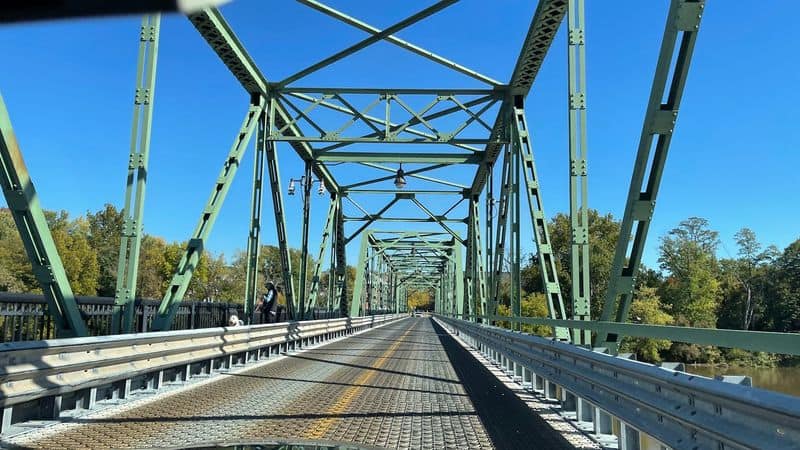
Part of the appeal is that it still feels human-scale. The bridge is narrow, the traffic moves slowly, and the walkway puts you right out over the Delaware instead of sealing you off from it.
You notice the water, the tree line, the old steel, the sound of tires humming past, and the fact that this is not some giant anonymous highway crossing. It feels personal.
That is what makes the stroll stick in your head. You are not just getting from one side to the other.
You are crossing a state line in a place that still has character.
The Story Behind the Uhlerstown-Frenchtown Bridge
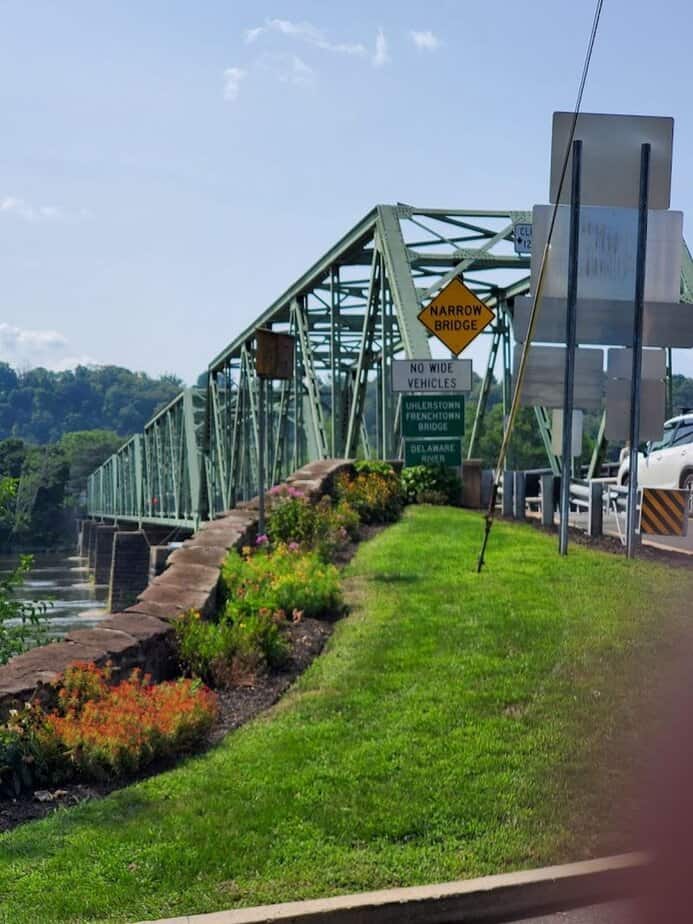
The version you see today opened in 1931, but the crossing itself goes back much further. An earlier covered bridge was built here in the 1840s, using stone piers and abutments that helped anchor travel and commerce between the two river communities.
That older bridge was damaged by floods over time, and by the early 20th century parts of it had already been rebuilt in steel. Eventually, the current riveted Warren-truss bridge replaced the aging structure, while still reusing the original 1840s masonry substructure below.
That layered history is part of what gives the bridge its unusual charm. It was once privately operated as a toll bridge, then purchased jointly by New Jersey and Pennsylvania in 1929 and made toll-free.
Today it is maintained by the Delaware River Joint Toll Bridge Commission, which cares for a long list of Delaware River crossings. The bridge is also part of the Frenchtown Historic District, which tells you this is more than a useful piece of infrastructure.
In other words, this is not just an old bridge. It is a working piece of regional history that has survived changing traffic, changing towns, and more than a few Delaware River moods.
What It’s Like to Walk From New Jersey Into Pennsylvania
Start on the New Jersey side and the mood shifts fast. Frenchtown gives you storefronts, sidewalks, and that neat little sense that something is happening nearby.
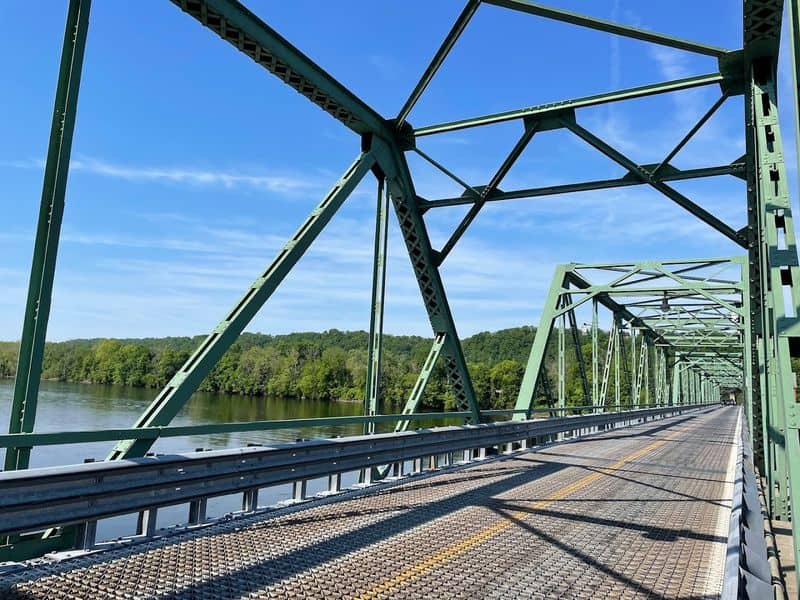
Step onto the bridge, though, and everything opens up. The Delaware River spreads out beneath you, the steel framing creates a slightly old-school tunnel effect, and suddenly the whole walk feels more cinematic than you expected from something this short.
The experience is simple, which is exactly why it works. You are not dealing with a long hike or a complicated route.
You just move at your own pace, glance upstream, glance downriver, and watch one state recede while the other gets closer. The bridge’s traffic moves under a 15 mile-per-hour speed limit, so the crossing feels calmer than a typical road bridge.
The pedestrian side is also more comfortable now than it used to be, thanks to recent work that widened the walkway. By the time you reach Pennsylvania, you have had a real transition, not just a technical one.
The scenery changes, the rhythm changes, and the walk earns that tiny bragging right of saying you crossed a state line on foot before lunch.
The Delaware River Views That Make the Crossing Worth It
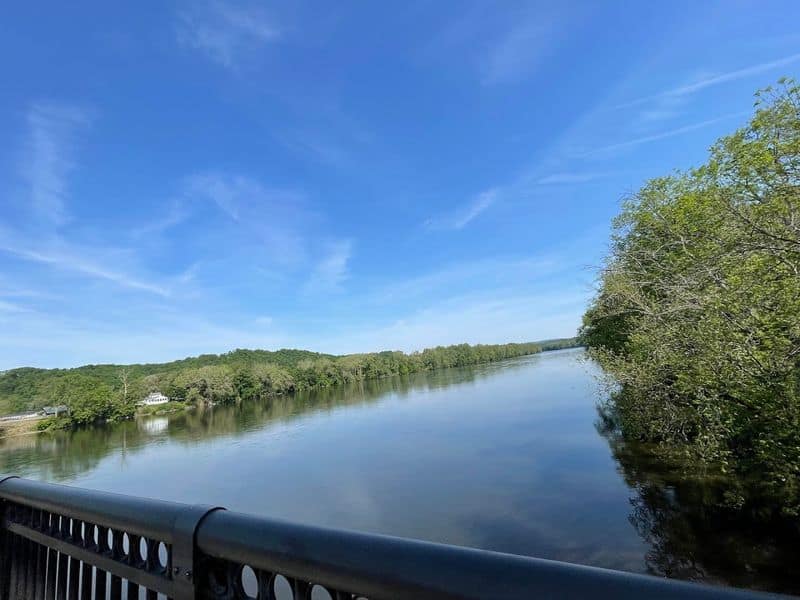
Plenty of scenic overlooks require parking lots, signs, and some dramatic promise of the best view ever. This bridge is less needy.
It just quietly gives you a very good vantage point over the Delaware River and lets the landscape do the work. From the walkway, you get water in both directions, wooded banks, and the kind of layered river-valley scenery that looks different depending on the season, the light, and the water level.
On a clear day, the appeal is in the details. You can pick out the shoreline edges, watch the river move below, and see how the two towns sit differently against the landscape.
Frenchtown feels a little more active and gathered together. Uhlerstown feels tucked in, almost hidden.
That contrast is part of the view. The bridge itself helps, too.
Because it is an older steel truss, the structure frames the river rather than blocking it completely. You get those glimpses through beams and braces that make the crossing feel textured instead of wide open and bland.
No, it is not a grand canyon moment. It is better than that in a Jersey way.
It feels close, real, and pleasantly unshowy.
How the Bridge Got a Safer and Wider Pedestrian Path
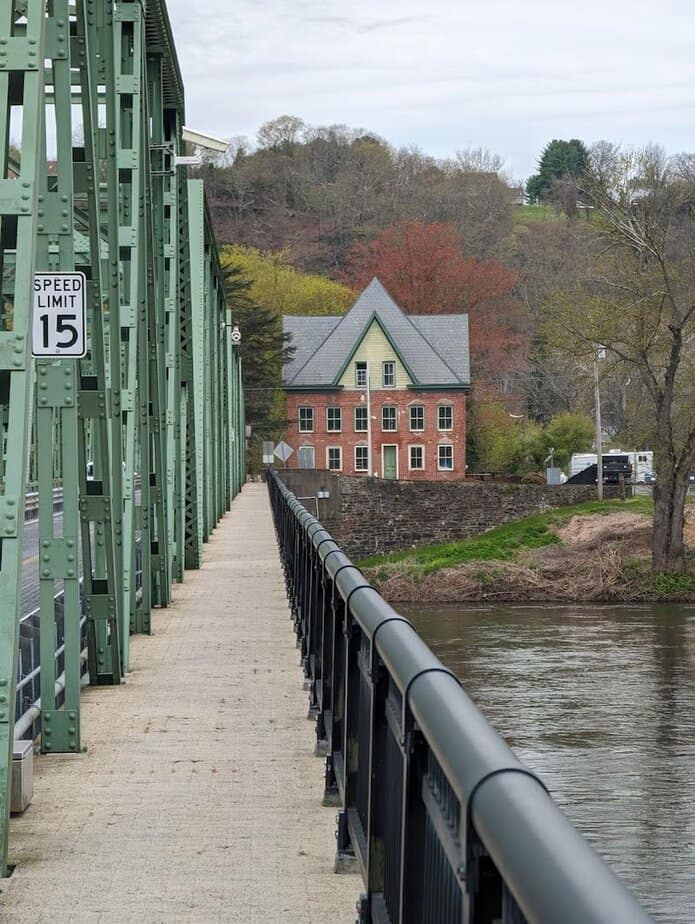
For years, the walkway here was one of those features locals appreciated while also probably wishing it had a little more breathing room. During the bridge’s 2025 rehabilitation project, that wish finally got some real steel behind it.
The Delaware River Joint Toll Bridge Commission widened the pedestrian walkway from 3 feet 9 inches to 5 feet, while also adding new support steel and architectural lighting as part of a broader overhaul of the 93-year-old span. That matters because the path is not just decorative.
It is the reason the bridge works as a walkable two-state experience instead of a place you admire only from shore. A wider walkway makes the crossing feel more comfortable and less like a balancing act, especially when you want to slow down for the view instead of hustling across.
The rehabilitation project also included cleaning and repainting the steel truss, along with other structural work meant to preserve the bridge long term. So the upgrades were not only about appearances.
They were about keeping this old crossing useful, safe, and pleasant to use. That is good news for everyone who likes their history with a side of practical improvement.
Why Frenchtown Is the Perfect Town to Pair With the Walk
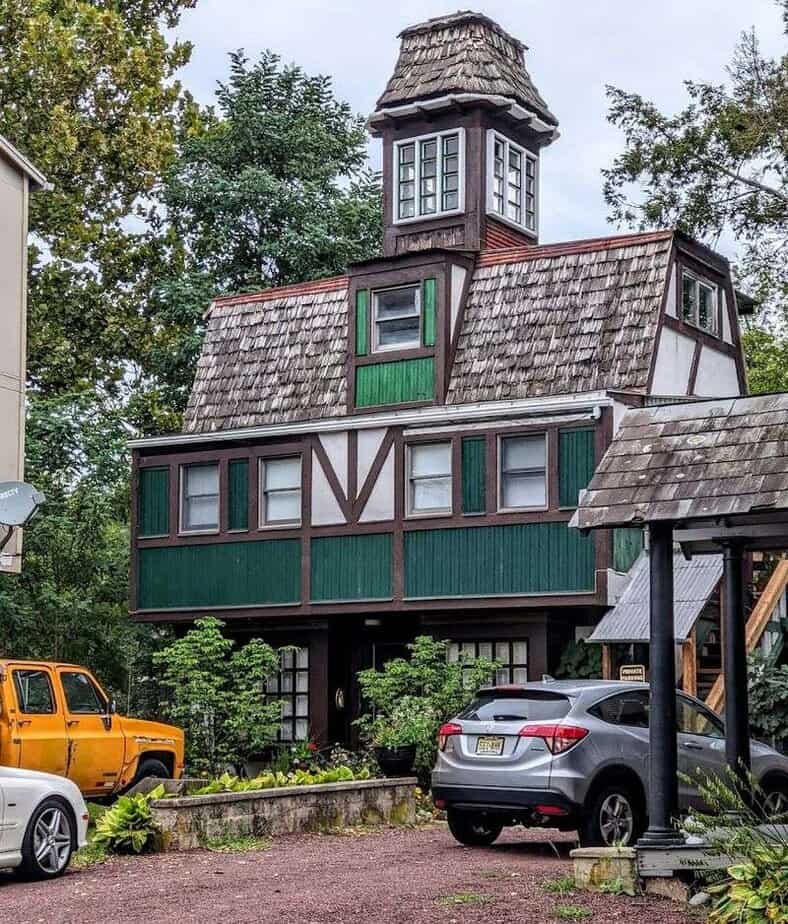
The smartest way to do this bridge is not to treat it like a standalone attraction. Treat it like part of a Frenchtown outing.
That is where the day gets better. Frenchtown has the kind of compact downtown that rewards wandering without turning it into a project.
You can grab coffee, browse a few shops, look at the old buildings, and then head toward the river for the walk. Afterward, you are right back in town and ready for a snack, a longer stroll, or another lap if the weather is showing off.
The town also makes sense geographically. Frenchtown sits along the Delaware and near the Delaware and Raritan Canal State Park corridor, which helps explain why the area feels outdoorsy without losing its small-business personality.
It is scenic, but it is not sleepy. There is enough going on to keep the visit from feeling like you drove all that way just to stand on a bridge for eight minutes.
That balance is the magic. Frenchtown gives the crossing context.
The bridge gives Frenchtown a great little signature move. Together, they make a much more memorable stop than either would on its own.
What You’ll Find on the Pennsylvania Side in Uhlerstown
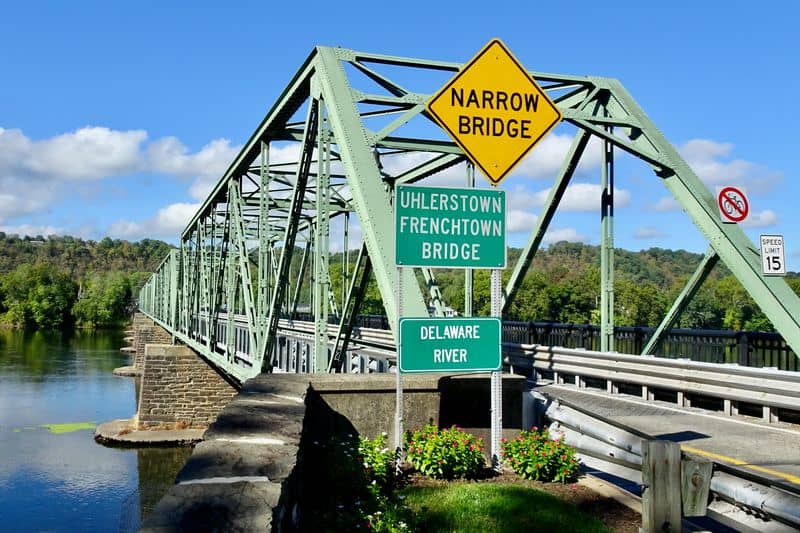
Cross into Pennsylvania and the mood drops a few notches in the best possible way. Uhlerstown is quieter, smaller, and more tucked into the landscape, which makes it feel like a gentle comedown after Frenchtown’s busier main-street energy.
This is where the crossing starts to feel less like a novelty and more like a glimpse into the older canal life of the Delaware Valley. Uhlerstown sits within a historic district shaped by the Delaware Canal and the commerce that once moved through the area.
The village is known for its preserved 19th-century character, canal-related structures, and that lovely sense that not everything here was redesigned to entertain you.
Nearby, the Delaware Canal State Park towpath stretches for nearly 59 miles, offering a scenic route for walking and cycling through one of Pennsylvania’s most intact canal landscapes.
That is what makes the Pennsylvania side worth more than a quick turnaround. Even if you only wander a little, you get a different texture over there.
Stone buildings, canal history, and a slower pace give the bridge crossing a payoff. It feels like you arrived somewhere, not just somewhere else.
Why This Historic River Crossing Still Feels Special Today
A lot of historic infrastructure gets admired from a distance and used without much thought. This bridge avoids both fates.
People notice it because it still offers something immediate and enjoyable: a short, walkable, state-line crossing in a setting that feels charming without trying too hard. It is useful, yes, but it is also an experience.
That is a rare combination. The bridge still carries local traffic, still links two communities, and still looks unmistakably like itself.
It has survived floods, earlier reconstructions, ownership changes, and modern rehab projects without losing the qualities that make it interesting. The result is a crossing that feels alive rather than frozen in history.
You can read about its past, then go walk it yourself five minutes later. There is also something very New Jersey about how unpretentious the whole thing is.
No giant spectacle. No overbuilt visitor experience.
Just a handsome old steel bridge, a river, a good walkway, and the pleasure of getting somewhere on foot. That is why it sticks.
Not because it is the biggest or flashiest bridge around, but because it turns an ordinary crossing into a small, deeply satisfying outing.