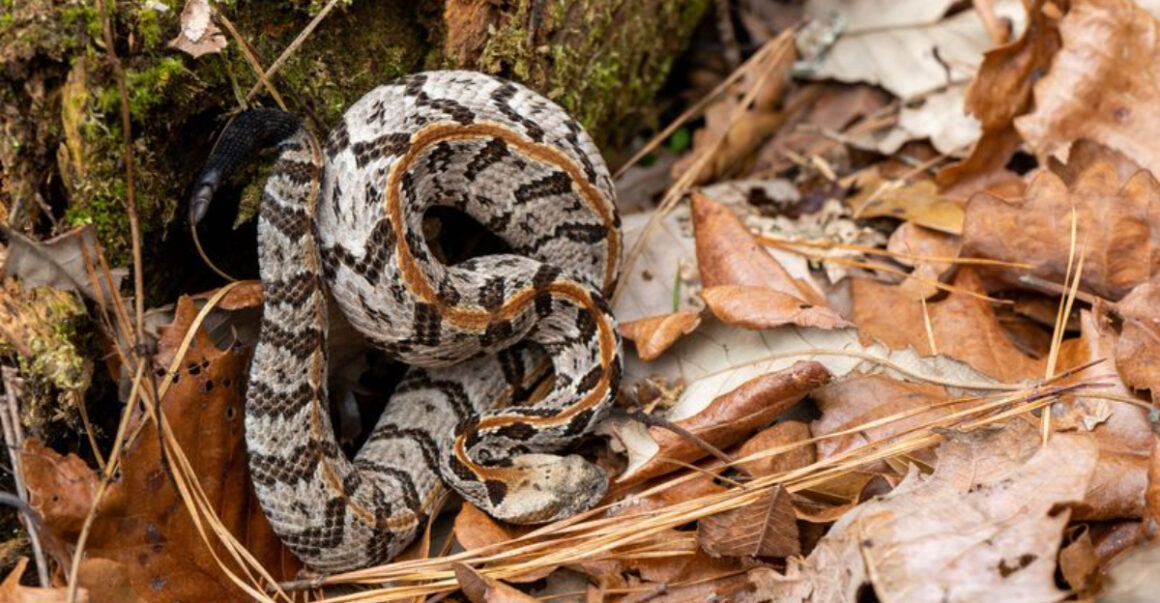
Southern Ohio holds more secrets than rolling hills and quiet hollers. In these rugged forests, timber rattlesnakes still thrive, camouflaged among oak leaves, sandstone outcrops, and sun warmed clearings.
If you love hiking or herping, knowing where and when to watch your step can turn nerves into respect. Let this guide help you explore smartly, stay safe, and appreciate one of Ohio’s most elusive native reptiles without disturbing their fragile hold on the landscape.
1. Shawnee State Forest (Scioto & Adams Counties)
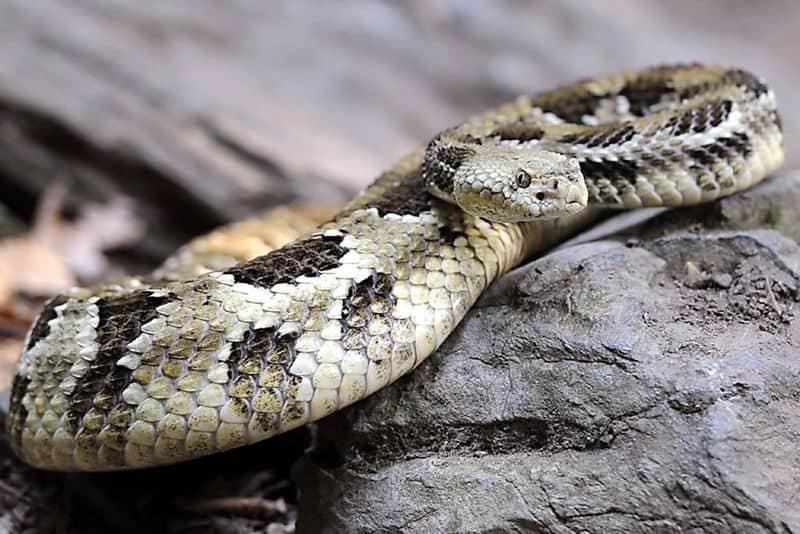
South facing slopes, rocky ledges, and oak hickory canopy create perfect basking pockets here. You will notice brushy edges near old fire roads and powerline cuts, where snakes warm up after cool nights.
Quiet steps and careful scanning reduce surprises, especially in late spring and early fall.
Shawnee State Forest’s expansive acreage in Scioto and Adams Counties keeps encounters rare but possible. Timber rattlesnakes prefer solitude, so give them space and avoid flipping cover.
Stick to marked trails, wear boots, and keep dogs leashed. If you hear a buzz, pause, locate, and back away calmly.
2. Tar Hollow State Forest (Ross & Hocking Counties)
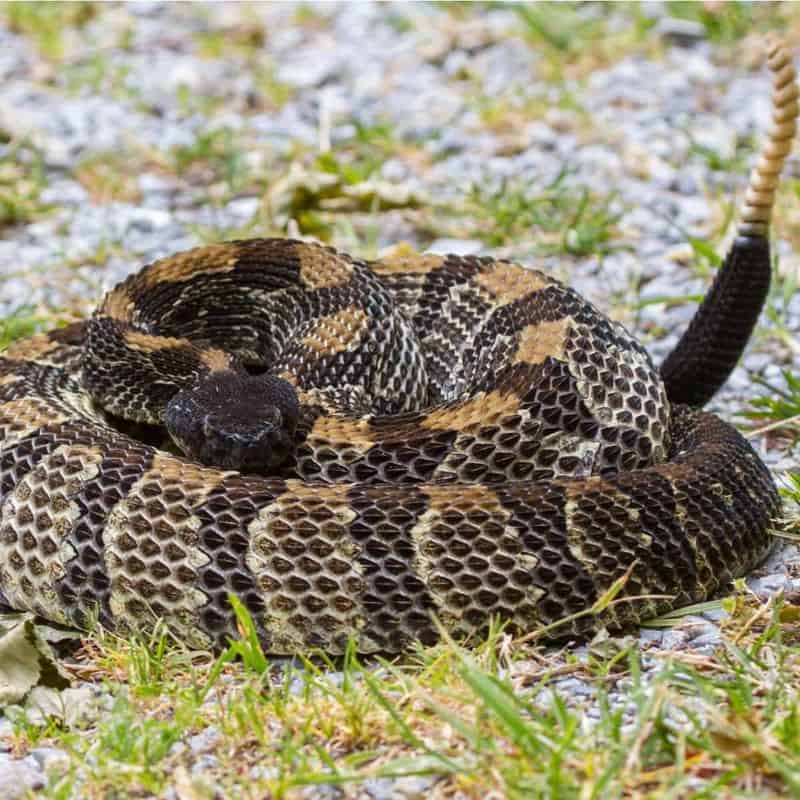
Deep hollows and rugged ridgelines make this forest feel remote fast. You will find narrow trail corridors bordered by blueberry, mountain laurel, and bracken, all good for small mammal prey.
Those food sources support snakes that lounge near warm rocks by midmorning.
Tar Hollow’s maze of trails can distract hikers, so slow down where sunlight slices across the path. Rattlesnakes usually avoid people, yet stepped on tails cause most bad encounters.
Keep hands out of crevices, watch dogs closely, and never attempt relocation. Snap photos from a distance, then let the forest settle again.
3. Vinton Furnace State Forest (Vinton County)
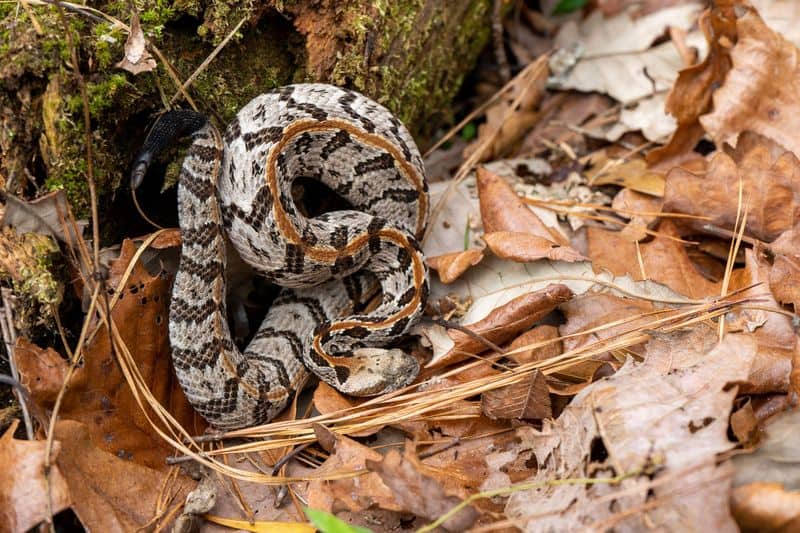
Experimental forestry plots and secluded ridges shape a landscape full of edges and light gaps. You will see slash piles, rock rubble, and decaying logs that concentrate rodents, which in turn attract rattlesnakes.
Midday basking often happens near small openings bordered by scrub oak.
Vinton Furnace feels quieter than bigger parks, so surprises can come at close range. Step on logs, not over, so hidden snakes are visible before feet follow.
Use a trekking pole to probe brush, and keep noise low but attention high. Respect closures and research areas to protect sensitive habitat.
4. Wayne National Forest (Athens, Vinton & Lawrence Counties)
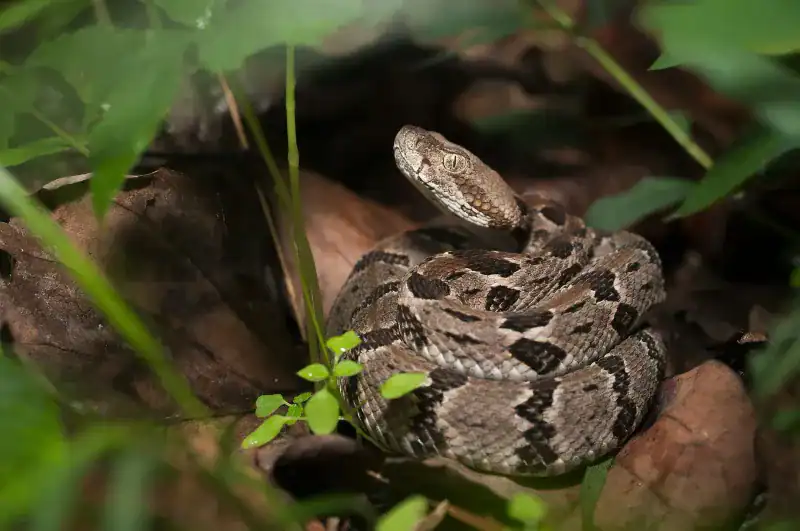
Mosaic habitats stretch across multiple districts, from reclaimed mines to oak pine ridges and rocky benches. You will encounter sunny cutovers, bluffs, and utility corridors that provide thermal spots for snakes.
Crepuscular movement increases in warm months, especially after rain clears.
Wayne National Forest spans Athens, Vinton, and Lawrence Counties, so conditions vary widely. Stick to open tread, carry a light for dusk exits, and let the rattle be your boundary.
Photographers should use zoom, not bravado. Report observations through citizen science apps without sharing exact den locations to protect the species.