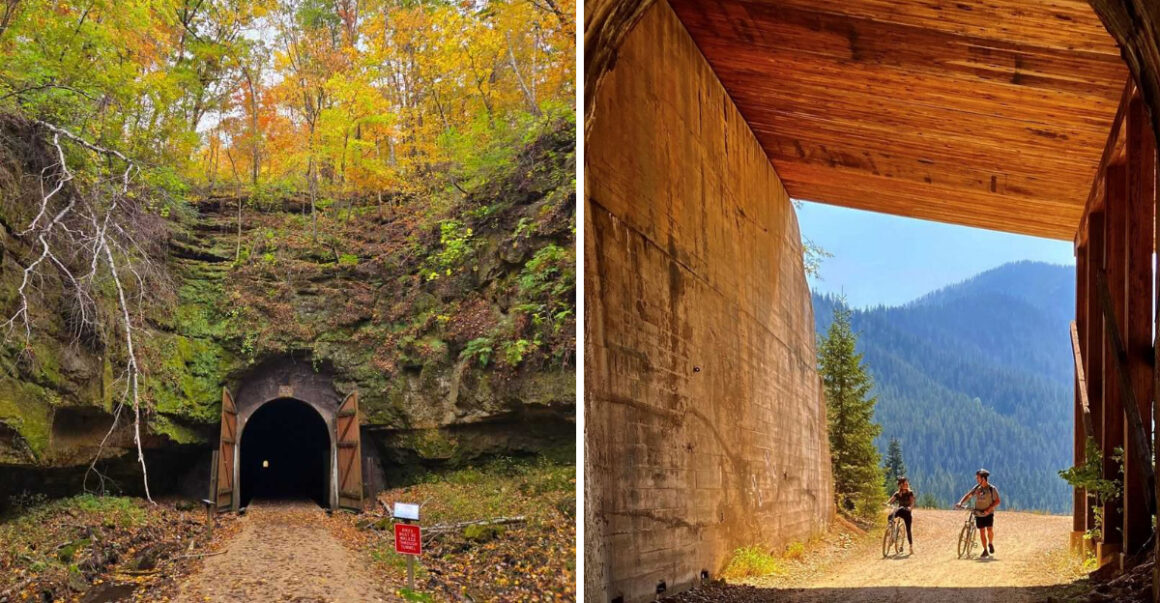
Abandoned railway corridors across America’s northern states have been transformed into spectacular pathways for bikers, hikers, and outdoor enthusiasts. These rail trails offer smooth, gentle grades through some of the country’s most breathtaking landscapes—from mountain passes and dense forests to lakeshores and rolling farmland. Pack your water bottle and lace up your shoes as we explore fourteen incredible northern rail trails that showcase America’s natural beauty from an entirely new perspective.
1. Kettle Moraine State Trail (Sheboygan County, Wisconsin)
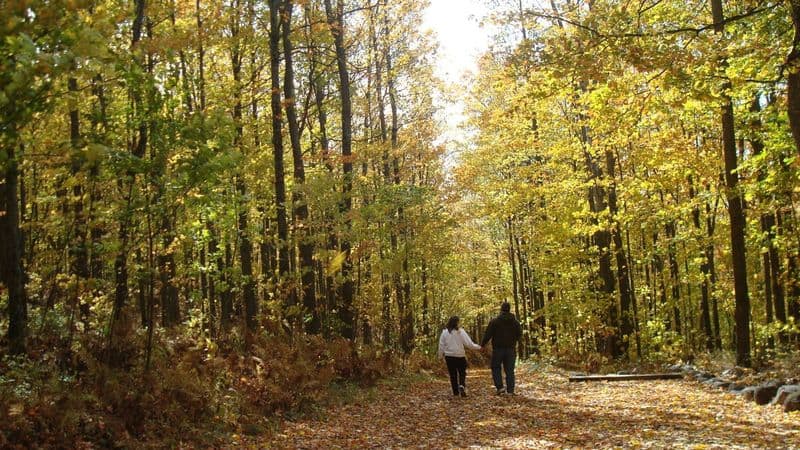
Glaciers shaped this stunning landscape thousands of years ago, creating the rolling hills and kettle depressions that give this trail its distinctive character. The 30-mile path cuts through dense maple and oak forests that explode with color each autumn.
Wildlife abounds along the route—deer frequently dash across the path while hawks soar overhead. Small wooden bridges carry cyclists over bubbling streams and wetlands teeming with life.
The northern section offers the most dramatic terrain, with steep climbs rewarded by sweeping views of farmland patchwork below. Several small towns along the way provide perfect rest stops with local cheese shops and homemade ice cream stands to refuel hungry travelers.
2. Elroy-Sparta State Trail (Elroy, Wisconsin)
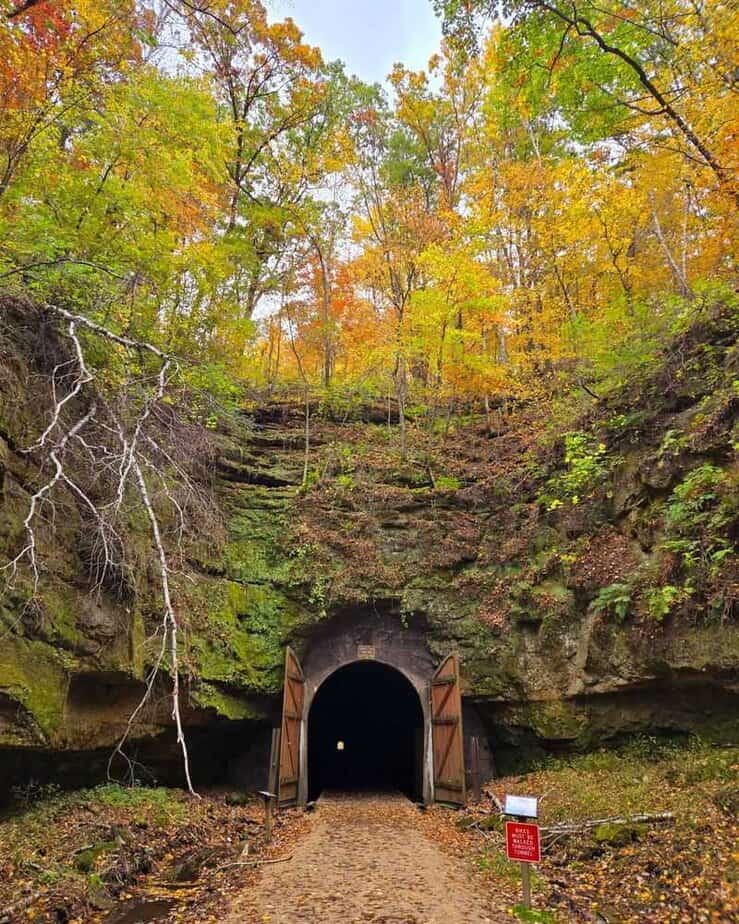
America’s first rail-to-trail conversion still stands as one of its most remarkable. Three massive hand-carved tunnels, each nearly a quarter-mile long, punctuate this 32-mile route through Wisconsin’s serene countryside.
Riders should bring flashlights—the cool, dripping tunnels remain pitch black in their centers. Farm fields stretch to the horizon between small towns where old train depots have been lovingly preserved as trail headquarters.
Summer brings wildflower displays along the trail edges while limestone bluffs rise dramatically in sections. Local legend claims the longest tunnel is haunted by railroad workers from the 1870s. Listen for their whispers as you pedal through the darkness before emerging into Wisconsin’s dazzling countryside.
3. Iron Horse Trail (Snoqualmie Pass, Washington)
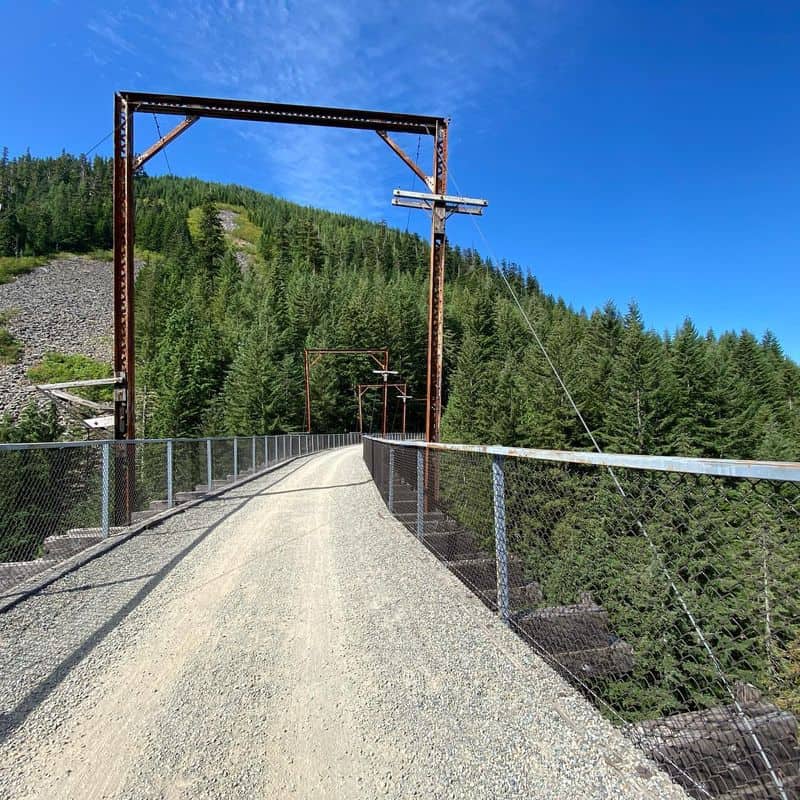
Carved through the mighty Cascade Mountains, this engineering marvel offers some of Washington’s most spectacular alpine views. The trail’s highlight is the 2.3-mile Snoqualmie Tunnel—a cool, dark passage through solid rock that emerges to reveal breathtaking mountain vistas.
Cedar and fir forests line much of the route, opening occasionally to showcase snow-capped peaks and dramatic valleys. Trestle bridges span rushing mountain streams where salmon fight their way upstream each fall.
Mountain bikers particularly love the western section for its smooth surface and gentle descent toward Seattle. During summer months, huckleberries grow wild along the trail edges—a sweet natural treat for hungry adventurers who know where to look.
4. North Country Trail (Michigan/Wisconsin/Minnesota)
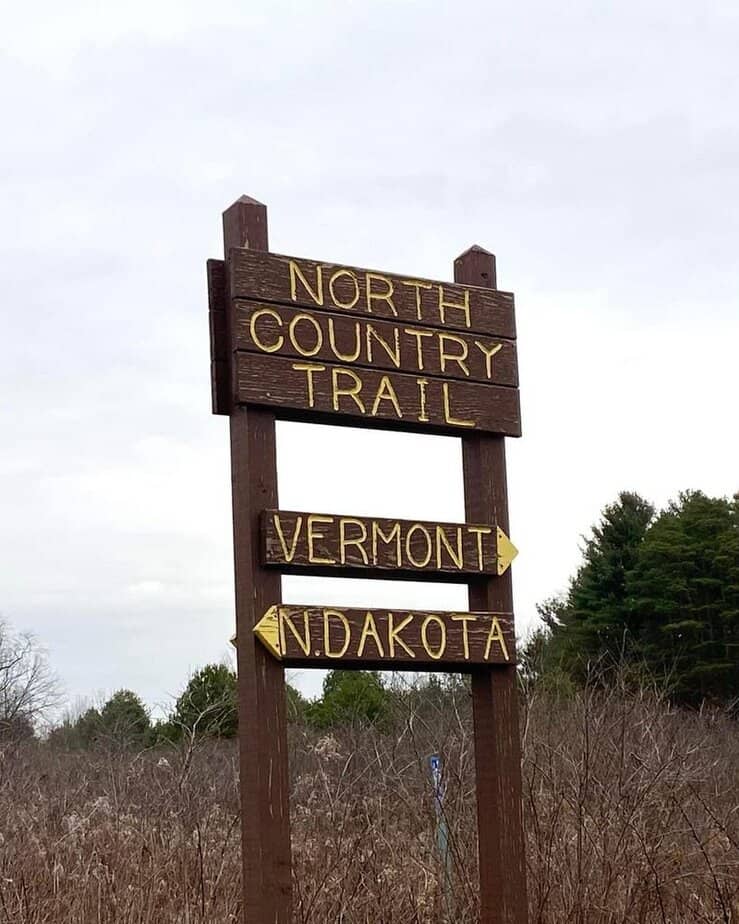
America’s longest National Scenic Trail incorporates numerous rail-trail sections across its northern route. The converted railroad corridors provide accessible entry points to this mammoth 4,600-mile adventure stretching from New York to North Dakota.
Michigan’s Upper Peninsula sections offer particularly stunning views where the trail hugs the southern shore of Lake Superior. Ancient hemlock forests provide cool shade while periodic openings reveal the vast inland sea stretching to the horizon.
Former mining towns dot the route, with interpretive signs explaining how railroads once transported copper and iron ore to distant markets. Lucky travelers might spot moose, black bears, or wolves in the more remote sections—wild Michigan still roams these forests.
5. Trail of the Coeur d’Alenes (Plummer, Idaho)
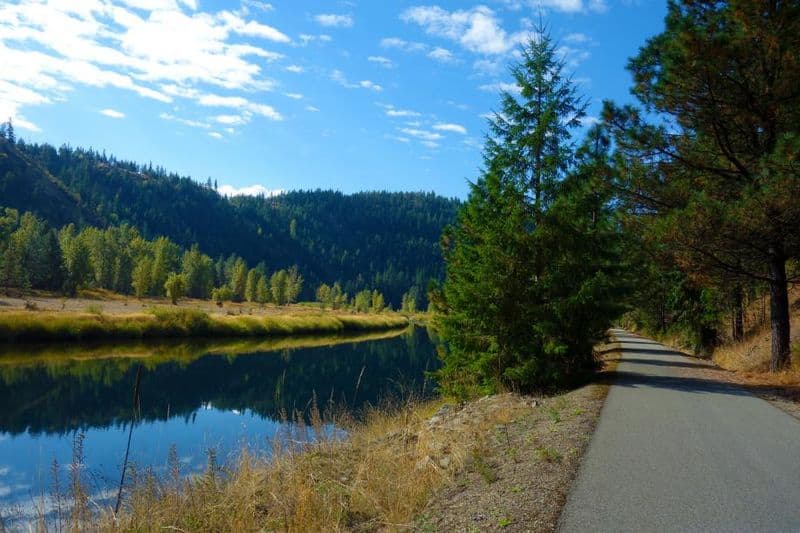
Silver mining history meets natural splendor on this immaculately maintained 73-mile paved pathway through Idaho’s panhandle. The trail’s centerpiece crosses Lake Coeur d’Alene on a converted railroad trestle that seems to float above the water’s surface.
Moose frequently wade in the marshes along the route, seemingly unbothered by passing cyclists. The Cataldo Mission, Idaho’s oldest building, sits just off the trail—a brilliant white landmark against the green mountain backdrop.
Heron, osprey, and bald eagles patrol the waterways alongside the path. Spring brings an explosion of wildflowers while autumn transforms the surrounding forests into a golden wonderland. The trail’s smooth surface and minimal grade make it perfect for families and riders of all abilities.
6. White Pine Trail (Grand Rapids, Michigan)
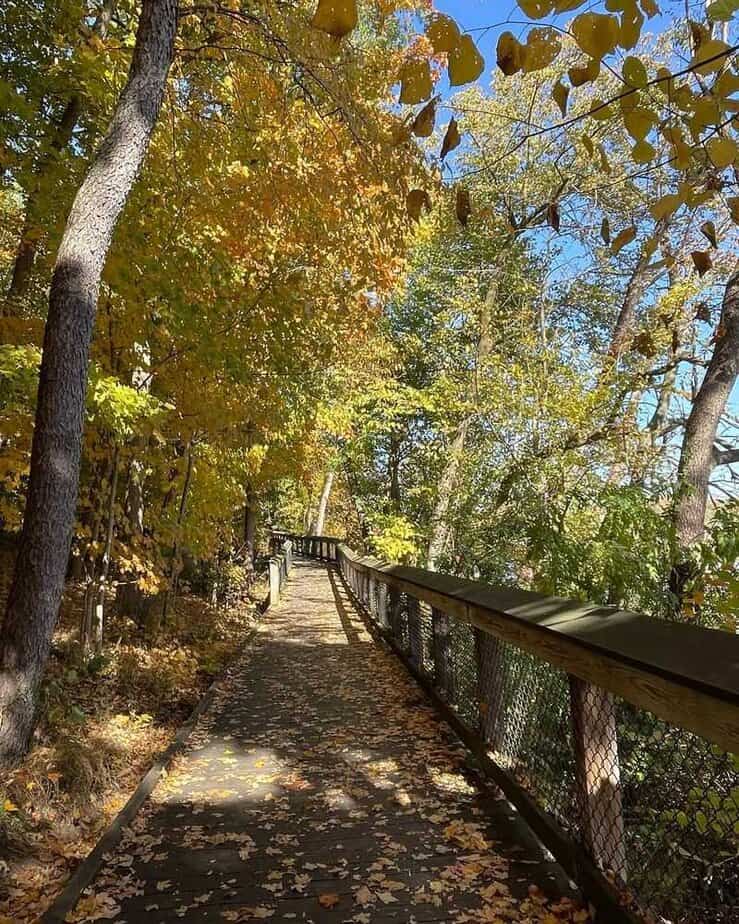
Follow the path of the White Pine Express as it once hauled timber from Michigan’s northern forests. This 92-mile trail connects Grand Rapids to Cadillac, passing through 15 communities that grew alongside the railroad.
Fishermen cast lines where the trail crosses the Muskegon River—one of Michigan’s premier trout streams. The southern portions offer a paved surface perfect for road bikes, while northern sections retain a more rugged character with crushed limestone surfaces.
Cedar and white pine forests (the trail’s namesake) create natural tunnels in sections. Berry farms and orchards border parts of the route, with farm stands offering fresh produce to hungry travelers during summer months. Winter transforms the trail into a snowmobile route connecting the state’s southern cities with northern playground.
7. Root River Trail (Lanesboro, Minnesota)
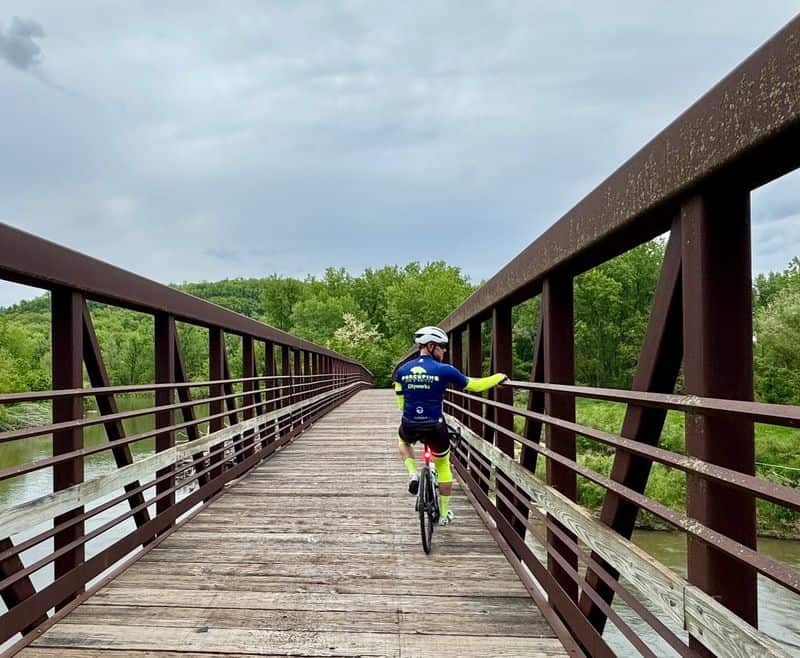
Limestone bluffs tower above this gentle trail as it follows the Root River through southeastern Minnesota’s unique Driftless Area—a region untouched by ancient glaciers. The resulting landscape features dramatic hills and valleys unlike anything else in the Midwest.
Amish farmers work their fields with horse-drawn plows alongside sections of the trail. Their roadside stands offer fresh-baked goods to hungry cyclists. The charming town of Lanesboro serves as the trail’s unofficial headquarters, with Victorian bed and breakfasts housed in buildings that once served the railroad.
Spring brings spectacular wildflower displays, while trout fishermen wade the clear waters year-round. The paved surface allows for easy riding, though summer weekends bring crowds escaping from nearby cities to enjoy this slice of rural paradise.
8. Taconite State Trail (Ely, Minnesota)
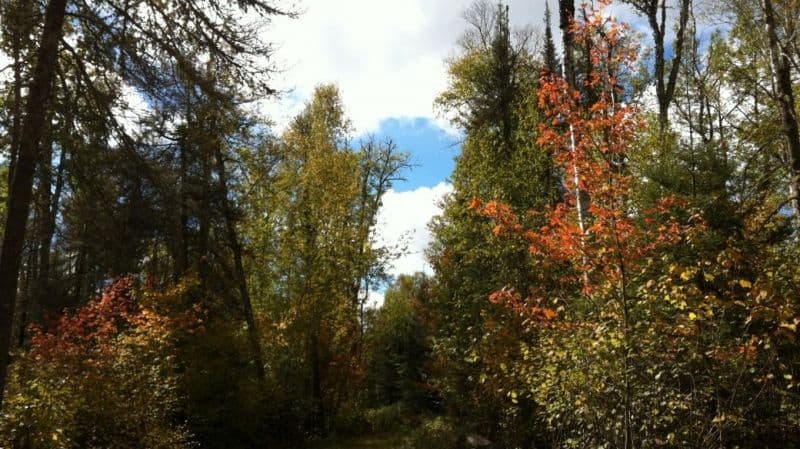
Raw wilderness defines this rugged trail through Minnesota’s legendary Iron Range. Unlike many rail trails, the Taconite maintains a wild character with sections that challenge even experienced riders and hikers.
Mining history comes alive along the route. Massive open pit mines visible from certain vantage points reveal where taconite—a low-grade iron ore—was extracted to fuel America’s industrial might. Wolf tracks sometimes appear in muddy sections, a reminder that this remains true wilderness.
Winter transforms the trail into one of Minnesota’s premier snowmobile routes. Summer travelers should pack bug spray—the mosquitoes and black flies can be fierce in the boggy sections! The reward comes in solitude and glimpses of wildlife rarely seen on more developed trails.
9. Glacial Drumlin State Trail (Cottage Grove, Wisconsin)
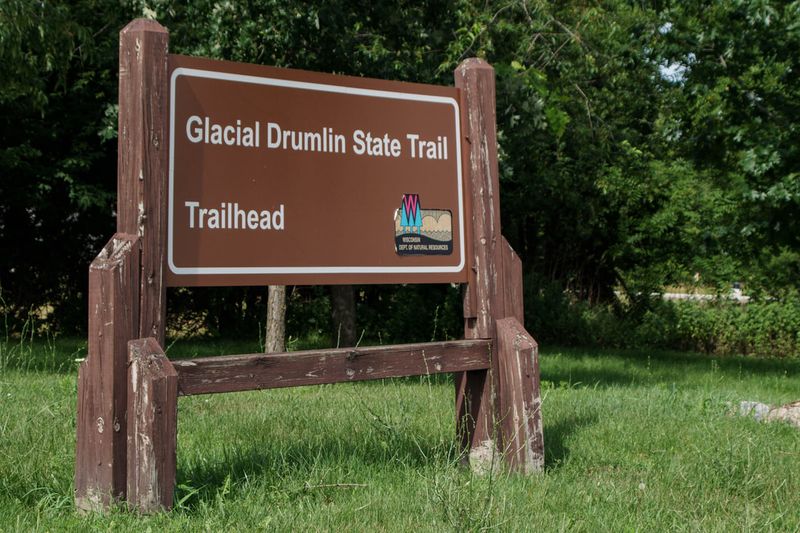
Oval-shaped hills called drumlins—formed by retreating glaciers—give this trail its distinctive name and rolling character. The 52-mile route connects Wisconsin’s two largest cities through a pastoral landscape seemingly unchanged for generations.
Wetlands teem with birds and frogs, creating natural symphonies for passing cyclists. Wooden observation platforms allow wildlife viewing without disturbing sensitive habitats. The trail surface alternates between smooth asphalt and packed limestone, accommodating various riding styles.
Farmhouses dating to the 1800s dot the landscape, many still working family operations. Small towns every few miles offer ice cream shops and cafés in buildings that once served railroad passengers. History buffs appreciate the interpretive signs explaining how glaciers sculpted this quintessentially Wisconsin landscape.
10. Paul Bunyan State Trail (Brainerd, Minnesota)
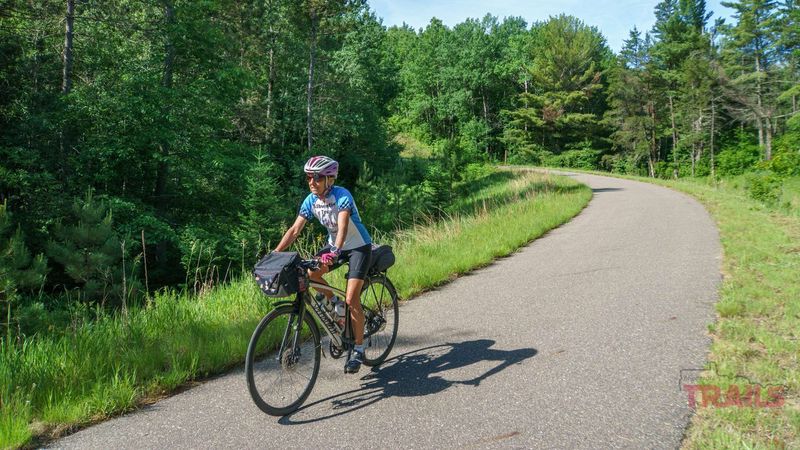
Named for the legendary lumberjack, this 120-mile route ranks as Minnesota’s longest paved trail. The path connects the tourist town of Brainerd with Bemidji—home to the famous Paul Bunyan and Babe the Blue Ox statues.
Crystal-clear lakes appear around seemingly every bend, with fishing piers and swimming beaches accessible directly from the trail. Pine forests create fragrant tunnels in sections, while other areas open to expansive views across northern Minnesota’s lake country.
Former railroad towns have reinvented themselves as trail-user havens with bike shops and craft breweries. Winter brings cross-country skiers to the groomed surface. The trail follows the route of the old Soo Line railroad, which once transported timber from the great northern forests to sawmills in Minneapolis.
11. Bizz Johnson Trail (Susanville, California)
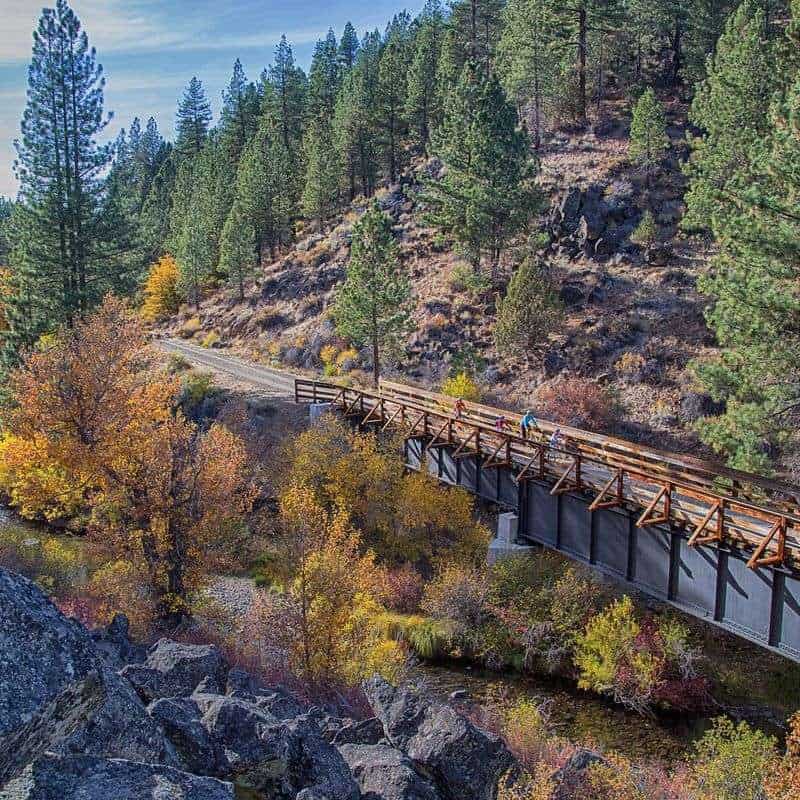
High desert meets mountain forest along this remarkable trail following the Susan River canyon. Once part of the Fernley and Lassen Railroad serving the logging industry, the route now offers 25 miles of spectacular scenery in northeastern California.
Two tunnels and 12 bridges cross and recross the river as it tumbles down the canyon. Desert sage gives way to ponderosa pine as the trail climbs toward Westwood. Interpretive signs explain how the devastating 1988 wildfire changed the landscape—with new growth now reclaiming burned areas.
Fall brings spectacular color when aspens turn golden along the riverbanks. The trail’s remote location means fewer crowds than many rail trails, though deer, black bears, and mountain lions are regular visitors. Pack extra water—the high desert sections can be surprisingly hot even in spring and fall.
12. Chippewa River State Trail (Eau Claire, Wisconsin)
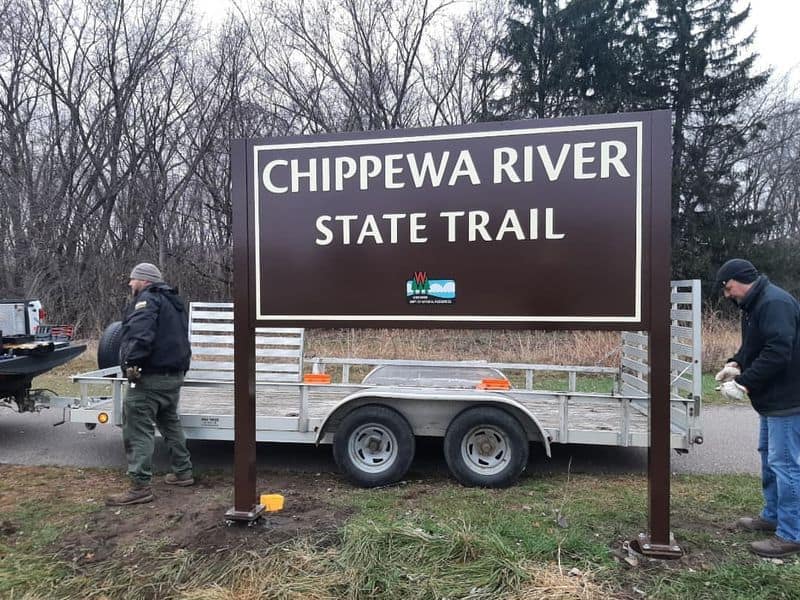
Riverside scenery dominates this picturesque trail connecting the university towns of Eau Claire and Menomonie. The route hugs the Chippewa River for much of its 30-mile length, offering constant water views and cooling breezes on summer days.
Historic railroad bridges—now retrofitted for bikes and pedestrians—provide dramatic river crossings. Fishermen cast for smallmouth bass and walleye from rocks along the shore. The trail’s smooth limestone surface accommodates riders of all abilities.
Downtown Eau Claire’s section passes through Phoenix Park, where summer concerts provide a soundtrack for evening rides. Old lumber mills dot the riverside, reminders of when the Chippewa carried massive log rafts downstream to sawmills. Autumn brings spectacular color reflections on the water’s surface as maples and oaks turn brilliant red and gold.
13. Heart of the Hills Trail (Kerrville, Texas)
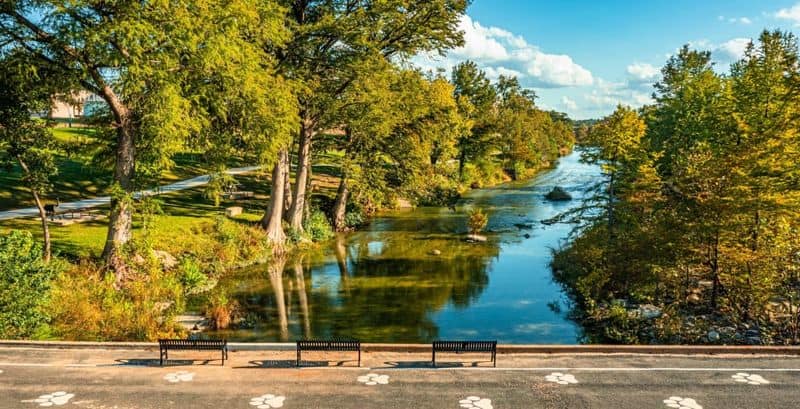
Texas Hill Country shows its gentler side along this six-mile trail connecting Kerrville to its outskirts. Though technically in central Texas rather than the far north, the trail’s higher elevation provides relief from Texas heat with shady sections and creek crossings.
Limestone cliffs rise alongside portions of the route while native wildflowers—including the famous Texas bluebonnets—create spectacular spring displays. The paved surface accommodates strollers and wheelchairs, making this trail unusually accessible.
Historic markers explain how the railroad brought growth to this ranching region in the late 1800s. The trail passes the Kerrville Folk Festival grounds, where for two weeks each summer, musicians gather for Texas’ longest-running music festival. Morning rides offer the best wildlife viewing—watch for white-tailed deer and armadillos along the edges.
14. Hiawatha Trail (Wallace, Idaho)
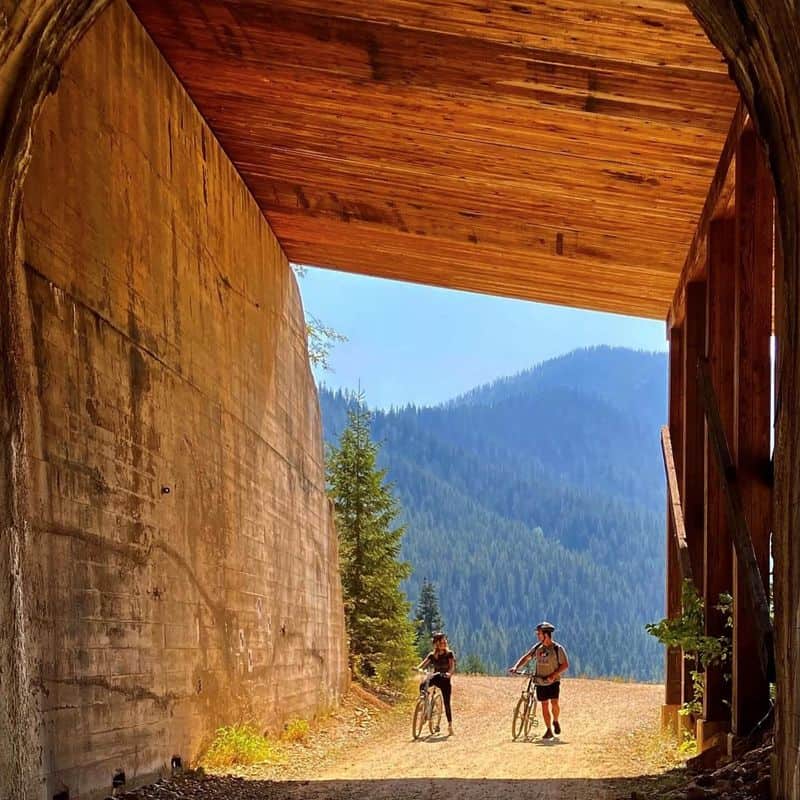
Engineering marvels await on what many consider America’s most spectacular rail trail. Ten tunnels and seven sky-high trestles carry riders through the rugged Bitterroot Mountains along the Idaho-Montana border.
The route’s crown jewel—the 1.6-mile-long St. Paul Pass Tunnel—burrows straight through the mountain beneath the state line. Riders emerge from darkness onto trestles standing nearly 300 feet above mountain valleys. The trail follows the route of the Milwaukee Road’s famous Olympian Hiawatha passenger train.
Mountain goats sometimes appear on distant cliffs while dense forests of cedar and pine line much of the route. The 15-mile trail drops 1,000 feet with a gentle 2% grade, perfect for families. Shuttle services return tired riders to the top for a gravity-assisted adventure requiring minimal pedaling effort.